Once you have picked a steel railing, the next choice shapes almost everything you notice day to day. It is the infill, the material between the top rail and the bottom that fills the open space and keeps people from passing through. Glass, cable, steel picket, or perforated mesh. Each one changes the view, the safety, the upkeep, and the cost.
This is a fabricator’s guide to railing infill for homes in Vancouver and North Vancouver. We compare the four common types, explain the code rule they all have to meet, and lay out which one fits which situation so you can choose with open eyes.
The rule they all have to meet
Before the look, there is safety. The BC building code sets a rule for openings in a guard. No 100 mm sphere may pass through the infill. That size is set to protect small children from slipping through or getting stuck. Every infill type has to meet it, and that shapes how each one is built.
Pickets are spaced under 100 mm apart. Cables are tensioned so the gap between them stays small enough. Mesh and perforated panels use small openings. Glass is a solid panel, so it passes easily. We design every railing to meet this rule and confirm it against your permit in Vancouver or North Vancouver before we build. For more on how guard rules work, see our guide to custom railings approach in our broader railing content.
Glass: the clearest view
Glass gives the most open view of any infill. You look straight through a tempered panel with almost nothing in the way. On a North Vancouver deck facing the mountains or the water, that clear sightline is usually the reason people choose it. It also blocks wind while keeping the view, which makes a deck usable on a breezy day.
The trade is cleaning. Rain spots, salt, and fingerprints show on glass, and on a coastal deck near the sea air, that means regular wiping to keep the clear look you paid for. The glass itself is durable and does not fade, but the surface needs upkeep. We use tempered glass in steel frames and detail the fittings for outdoor coastal life. Glass and cable are compared head to head in our post on glass vs cable railing.
Cable: near invisible lines
Cable railing uses thin horizontal stainless cables stretched tight across the frame. From a few steps back, the cables mostly disappear, so the view stays open much like glass but with a lighter, more industrial look. Cable suits modern Vancouver homes and works well on both decks and stairs.
The main upkeep is tension. Cables settle over time and shift a little with temperature, so they can need a re-tension to keep the gaps small and the look crisp. Stainless cable resists rust well in the local climate. We size and tension cables to meet the opening rule, and we go deep on this in our post on cable railing tension and BC code.
Steel picket: strong, simple, low upkeep
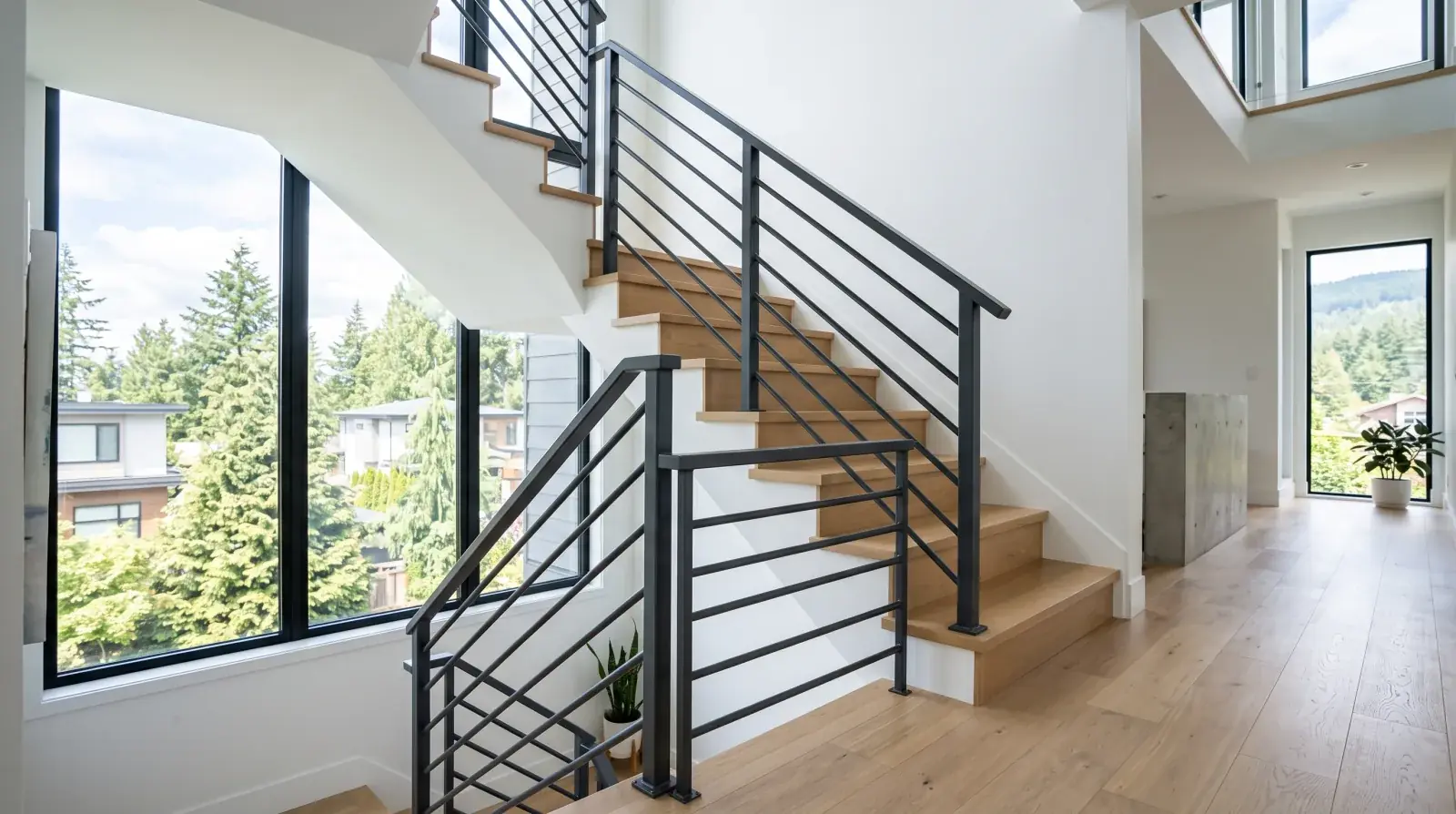
Steel pickets are vertical bars set close together in the frame. Built the way we build them, clean and straight in matte black with no twists or ornament, they read as modern, not traditional. Pickets are strong, they need very little maintenance, and they are usually easier on the budget than large glass panels.
Pickets block a bit more of the view than glass or cable because you see the bars, but the gaps still let plenty of light and sightline through. For a home where strength and low upkeep matter more than a perfectly open view, pickets are a solid, cost-effective choice. We keep the detailing minimal so the railing looks contemporary on a Vancouver or North Vancouver home.
Perforated and mesh: privacy and texture
Perforated metal and mesh panels give a filtered view. You can see through them partly, but they add privacy, texture, and often a design pattern. On a North Vancouver deck that faces a neighbour, or a side where you want shelter from wind, mesh gives some cover while still feeling open. It also brings a distinct modern look that glass and cable do not.
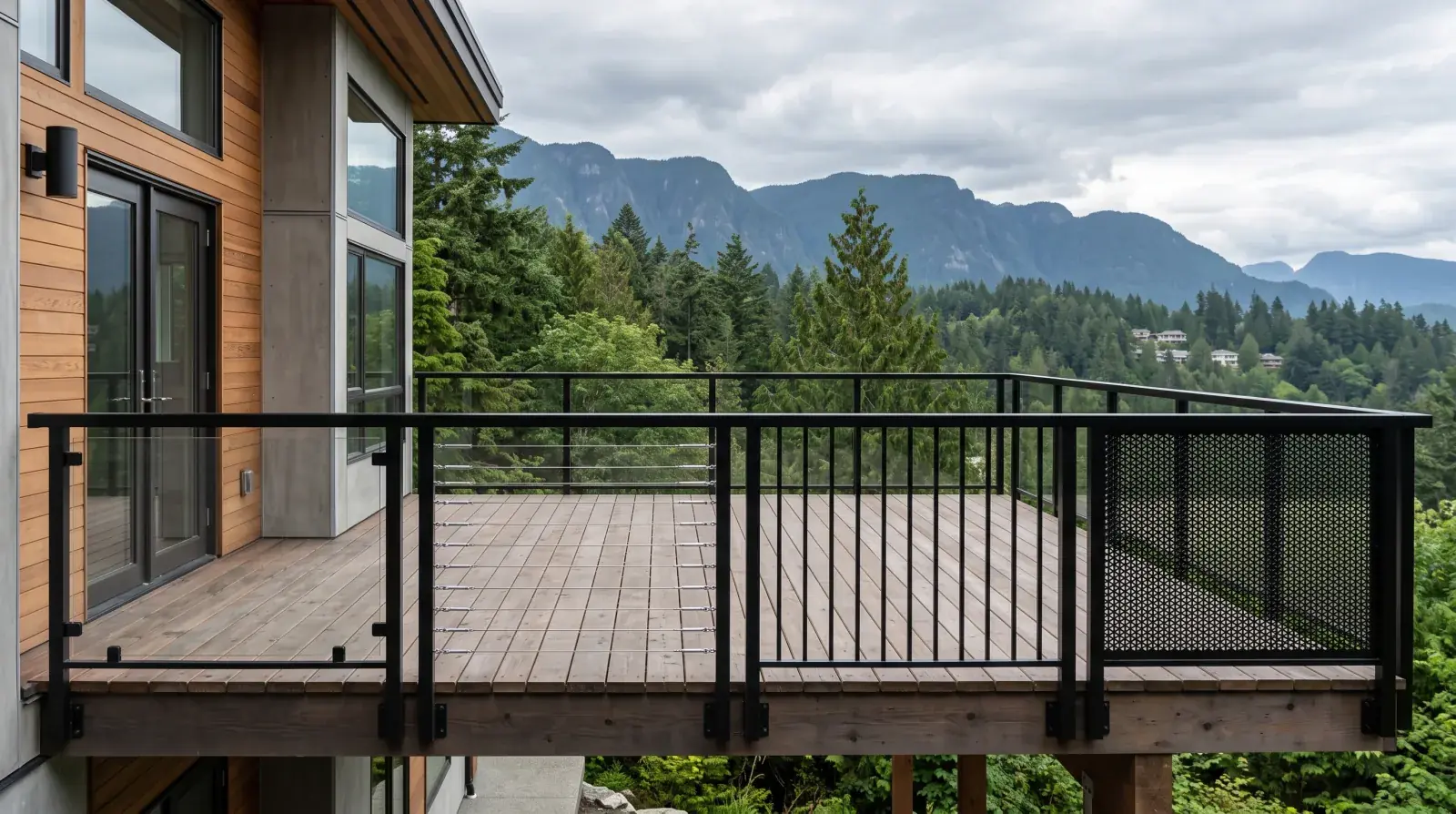
Mesh and perforated panels are strong and low maintenance, and they hold up well outdoors when galvanized and powder coated. We cover the panels themselves in our post on expanded metal mesh screens. Many homes mix infill types, glass on the view side, mesh on the private side, all in one steel frame, so each run gets the right treatment.
Choosing for your deck
There is no single best infill, only the best fit for your deck and how you live. If a clear view is everything and you do not mind cleaning, choose glass. If you want the view kept open with a lighter look, choose cable and plan for the odd re-tension. If strength, low upkeep, and budget lead, choose pickets. If you want privacy and texture, choose mesh. And you can mix them to spend on the view sections and save elsewhere.
All of these work outdoors on the coast when built right, with stainless cable, tempered glass, and galvanized then powder-coated steel for pickets and mesh. If you are planning a railing for a home in Vancouver or North Vancouver, see our custom railings work and reach out for a quote. We will help you match the infill to your view, your upkeep, and your budget, then build it to code.
See our custom railings work for design ideas, then request a quote and we will scope the materials, infill, and finish for your Metro Vancouver project.