Every week someone comes to our Burnaby shop with a railing they love and a budget that is smaller than the railing. That is normal. A custom railing is a real piece of steel work, and the number can surprise you the first time. The good news is that you can bring the cost down a lot without ending up with a weak or cheap looking railing. You just have to know which choices save money and which ones you should never touch.
This is what we call value engineering. It means getting the same job done for less by making smart choices, not by cutting corners. We do it with clients in Vancouver and Burnaby all the time. Below we walk through where the real cost sits, where you can safely save, and the one part we will never let you cut.
Where the cost of a railing actually comes from
Most people think the price of a railing is about the part they see between the posts. It is not. The infill, whether that is glass, steel bars, or pickets, is only one piece of the cost. The bigger drivers are the structure and the labour.
A railing has to hold a person. If someone trips on the stairs and falls against it, the railing cannot give way. That safety comes from the posts, the top frame, and the way it all anchors into your floor or your stair. Under the BC Building Code, a guard has to pass load tests and cannot have a gap that lets a 100mm sphere pass through. Meeting that safely takes strong steel and solid welds, and we build to CSA W59 for welded steel construction. That part of the railing is not where you save.
The other big driver is labour. Every time we change the design from one stair flight to the next, we set up again, we measure again, and we cut and weld new parts. Complexity costs time, and time is most of the bill on a custom job. So the smart place to look for savings is not the steel that carries load. It is the choices around it. Our guide to custom railings in Vancouver walks through these parts in more detail if you want the full picture.
Choose an infill that fits your budget
The infill is the easiest place to save real money without losing quality. Here is the honest ranking most of the time, from higher cost to lower cost.
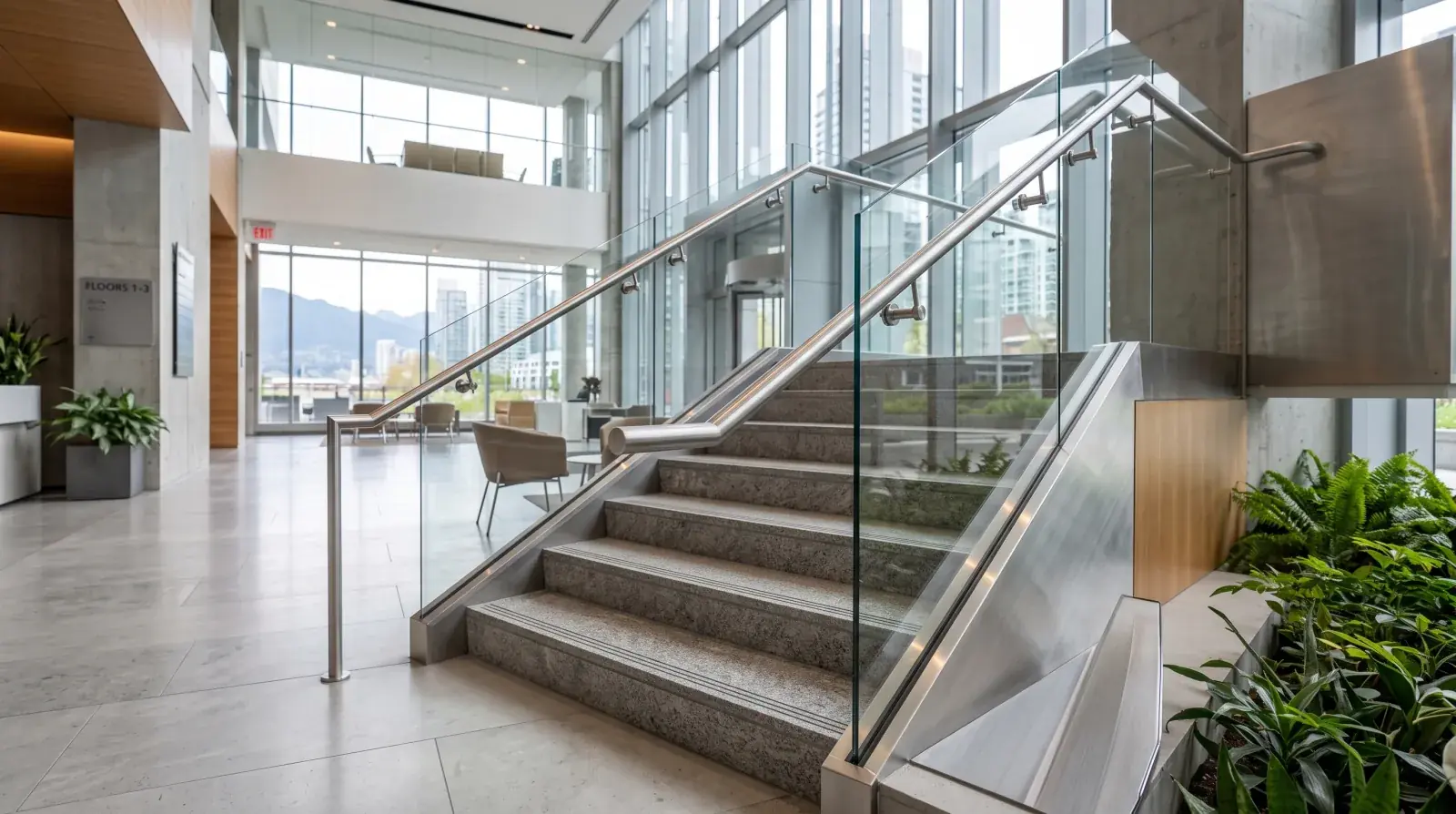
Full glass panels usually sit at the top. Glass looks clean and it keeps a view open, but the panels, the tempering, and the hardware that holds them all add up. It is a beautiful choice, and for the right spot it is worth it. But you do not need it everywhere.
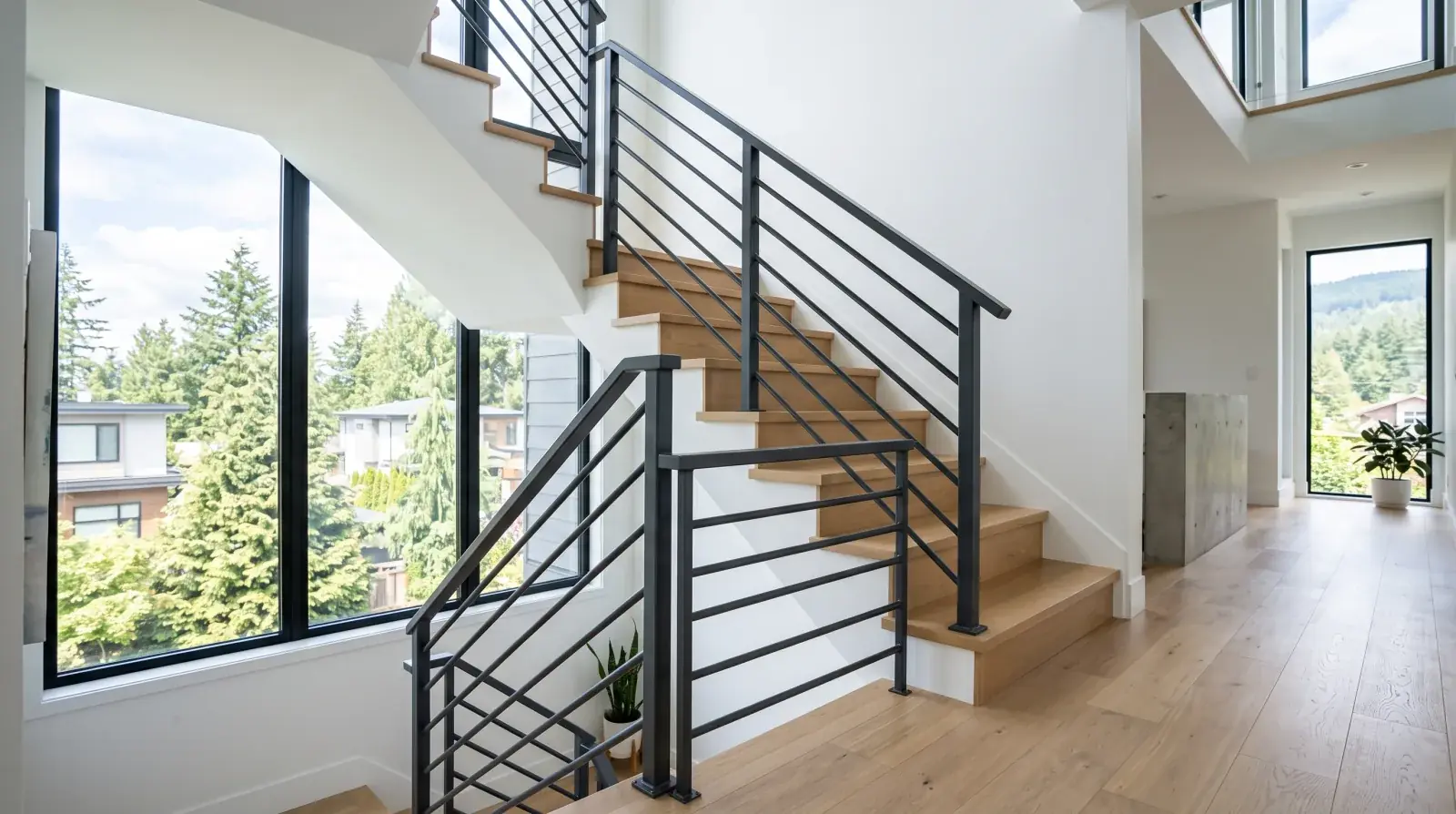
Steel bar or picket infill sits lower in cost and still looks modern and open. Thin vertical or horizontal steel bars on a strong frame give you an airy feel and a crisp look. Many of the modern homes we finish in Vancouver and Coquitlam use exactly this. It is our most common way to give a client the look they want for less.
The smart move is to mix. Put glass at the one place that earns it, maybe a landing with a mountain view, and run steel bar infill everywhere else. You get the wow moment where it matters and you save across the rest of the house. That single decision often makes the biggest dent in the price.
If you are weighing steel against aluminum, our post on steel versus aluminum railings in Vancouver lays out when each material is the better value. Aluminum can save on outdoor upkeep because it does not rust, while steel gives you more strength for the same size.
Standardize runs and plan the whole job at once
This is the quiet money saver that most homeowners miss. When your railing repeats the same detail across every flight and every run, we build it faster and waste less material.
Think of it this way. If your stair rail, your landing guard, and your upstairs hall guard all use the same post spacing, the same height, and the same infill, we cut and weld in a rhythm. If each one is a special design, we start over each time. That extra setup shows up on your bill. A clean, repeated detail is not just cheaper, it also looks more considered in the finished home.
Ordering everything in one go helps too. When we fabricate all the railings for a home in a single run, we set up once and buy material together. Splitting the same work into three small separate jobs over two years almost always costs more. So even if you are phasing a renovation, tell us the full scope early so we can plan and quote it as one piece of work.
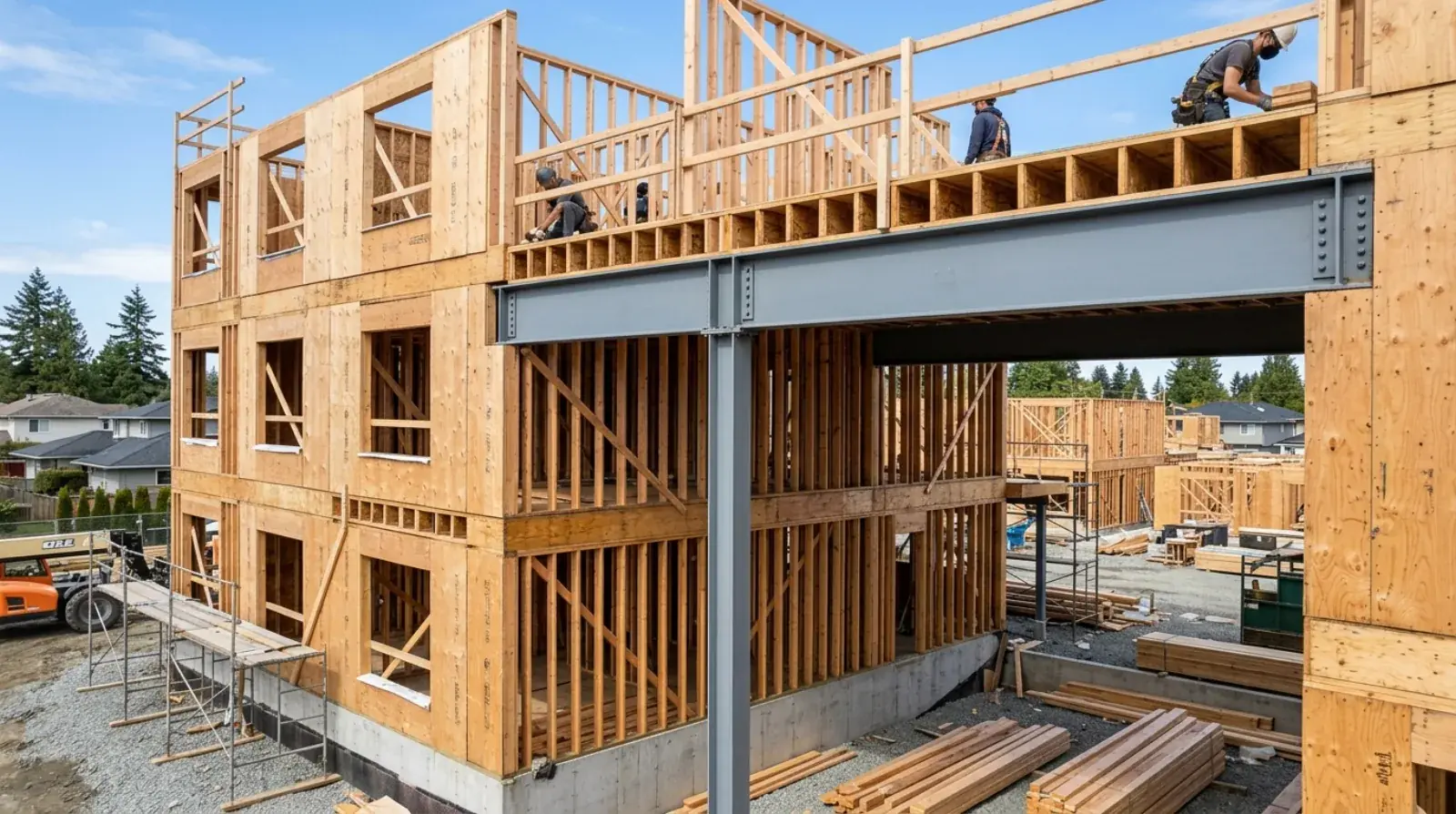
Timing matters as much as design. The cheapest railing is the one we plan during framing, before the drywall goes up. When your builder knows the railing is coming, they can add blocking and set the stair so our posts anchor cleanly. Deciding on the railing late, after the walls are finished, is one of the main reasons a simple Burnaby job turns expensive. Late changes mean opening finished work back up, and that rework is not cheap.
Where to save on finish, and where not to
Finish is the coating that goes on the steel. It sets the colour and, outdoors, it is what stops rust. Here the answer depends on where the railing lives.
Indoors you have room to save. An interior railing is not fighting rain, so a good powder coat over clean steel is plenty. You do not need the heaviest protection for a stair rail that lives in a dry hallway.
Outdoors in Vancouver is a different story. Our climate is wet for much of the year, and salt air reaches many neighbourhoods near the water. For an outdoor railing, the finish is doing a real job, and this is not the place to cut. We recommend hot-dip galvanizing under a powder coat for exterior work, which follows ASTM A123. That combination stops rust from starting under the coating. If you skip it to save a little now, you often pay more later when the railing starts to rust and needs to be stripped and redone.
So the rule is simple. Save on finish indoors where the railing is protected. Keep the full finish outdoors where the weather is trying to eat the steel. We match the spec to the exposure of each railing so you are not overpaying indoors or underprotecting outdoors.
What you should never cut to save money
We have covered a lot of ways to save. Now the hard line. There are parts of a railing we will not let you cut, because cutting them makes the railing unsafe, and an unsafe railing is not a saving. It is a hazard waiting to hurt someone.
Never cut the anchoring. The way a railing connects to your floor or stair is what holds a person who leans or falls against it. Weak anchoring is invisible until the day it fails, and by then it is too late.
Never cut the structural frame. The posts and the top rail carry the load. Undersized posts or thin material might look fine on day one and still fail a code load test or give way under real weight. We size these parts for the job, not for the budget.
Never cut welds or certification. Our shop is CWB certified to CSA W47.1 for structural welding, and that certification is a promise that the joints are done right. A railing held together with poor welds is dangerous no matter how good the powder coat looks.
If a budget is tight, we would rather simplify the look, drop the glass, or repeat one clean detail than weaken the bones of the railing. You can always live with a simpler design. You cannot live with a guard that does not hold. If you want to understand the cost drivers in more depth before you plan, read our breakdown of custom metal railing cost in Vancouver.
When you are ready, send us your drawings or a few photos of your stair, tell us your target look and your budget, and we will show you exactly where to save and where to spend. We serve Vancouver, Burnaby, and the rest of Metro Vancouver, and we would rather build you one strong railing than sell you three weak ones.
See our custom railings work for design ideas, then request a quote and we will scope the materials, infill, and finish for your Metro Vancouver project.