Ask a builder how high a handrail goes and you will usually get one number back. The real rule has three parts, and the number is only the first. On stairs in British Columbia, a handrail is typically mounted between about 865 mm and 965 mm above the nosing of the treads. That is the height most people mean. But a rail set at exactly the right height can still fail inspection if it is the wrong shape or if it stops at a landing. We build steel handrails from our Burnaby shop for homes and buildings across Metro Vancouver, and we have watched enough jobs get red-tagged to know that height is where the conversation starts, not where it ends.
This post covers the whole rule in plain terms. Where you mount the rail, how you shape it, and why it has to run without a break. It also explains the moment when a single rail is asked to be both a handrail and the top of a guard, which is where most of the confusion lives.
Where the height is measured from
The most common mistake is measuring from the wrong point. Handrail height on a stair is measured vertically from the nosing, which is the front edge of each tread, straight up to the top of the rail. You do not measure from the back of the step, and you do not measure from the finished floor at the bottom of the stairs. The nosing is the reference because that is where your hand naturally reaches as you climb.
Because every tread has a nosing, the rail has to keep the same height above each one as it climbs. That means the bracket line runs parallel to the slope of the stair. If you set the brackets by measuring up from the floor at a few points, the rail will drift out of the correct range partway up the flight. On a Vancouver stair we snap the bracket line off the nosings so the height above the steps stays constant from bottom to top.
The typical target for a normal residential stair is the lower part of the 865 to 965 mm range, because that keeps the rail comfortable to grab while walking up. The higher end of the allowed range exists mostly for the case where the same rail also caps a guard, which we cover further down.
Graspability: the shape has to work
A handrail at the perfect height still fails if you cannot get a proper grip on it. The BC Building Code requires the rail to be graspable, which means your hand can close fully around it. This is the single most common reason a steel handrail fails inspection in Burnaby and Vancouver.
A round steel tube roughly 30 to 43 mm in outside diameter passes cleanly. Your fingers wrap around it and meet your thumb, which is exactly what the rule is testing for. A wide flat bar laid on its face, the profile designers love next to a modern mono stringer stair, does not pass, because there is nothing for your fingers to close around. A square section that is too large has the same problem.
There is a way to keep the flat-bar look and still pass. We often weld a round or oval graspable cap onto the top of a flat steel profile, or switch to a round tube where the client wants the thin modern line. Our handrail graspability guide walks through the exact profiles that pass the hand test and the ones that get written up.
The rail also needs room behind it. The graspable part must have clear space so your fingers can wrap all the way around, commonly detailed at a minimum of about 50 mm between the rail and the wall. We set our standoff brackets to hold that gap consistently. A rail mounted flush against the wall gets red-tagged even if the height is perfect, because you cannot get a full grip on it.
Continuity: the rail cannot stop at a landing
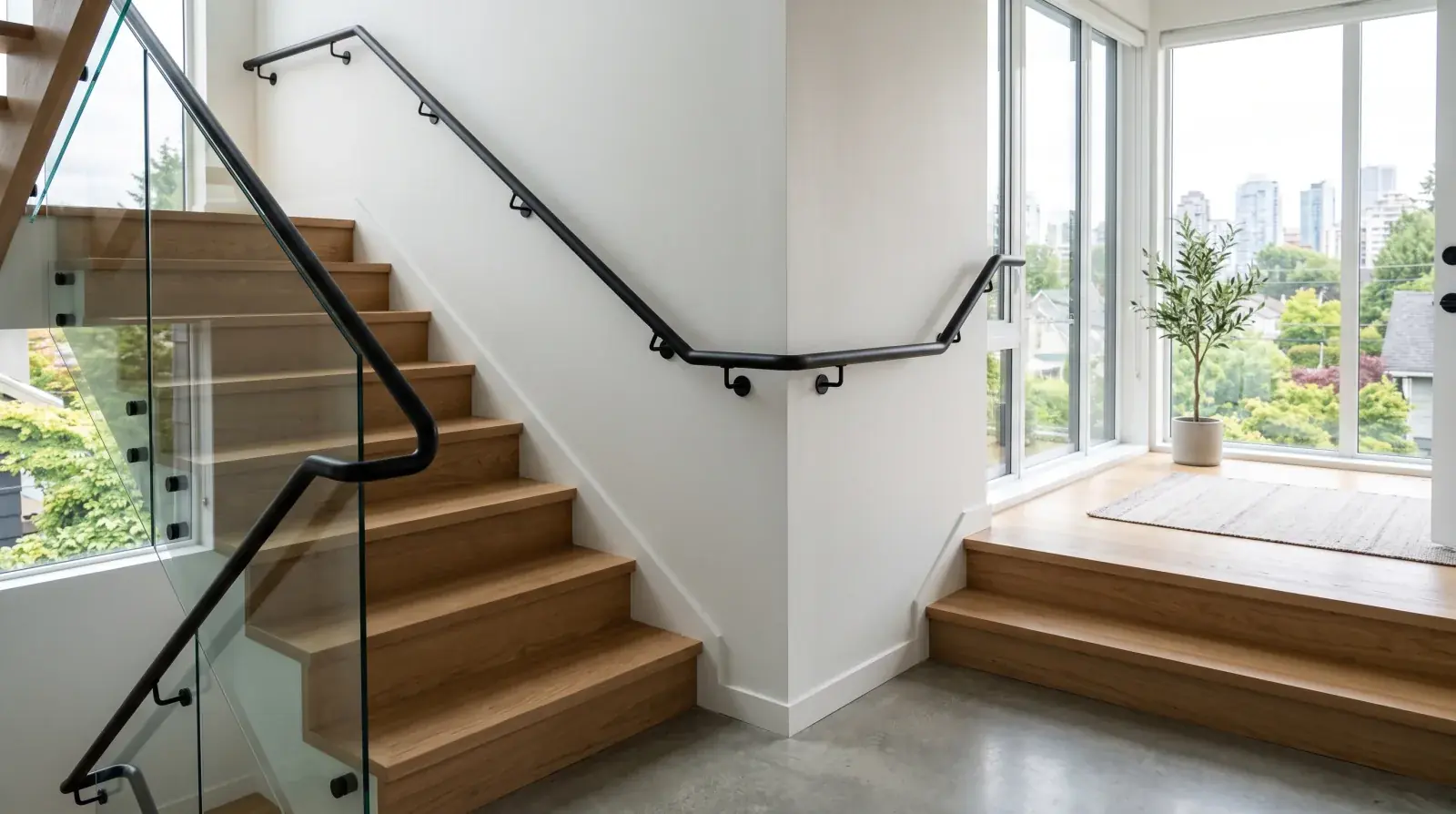
Height and graspability get most of the attention. Continuity is the third part of the rule and the one that quietly holds up occupancy. The rail should run without interruption along the flight, and where required it should continue around intermediate landings and turns so a person never has to let go while using the stair.
Picture a switchback stair that turns 180 degrees on a mid-height landing. If the handrail stops at the top of the first flight, forces you to let go, then starts again at the bottom of the second, that break is exactly what the continuity rule is meant to prevent. Someone losing their balance at the turn is the moment they most need the rail. We detail curved or mitred steel transitions so the rail flows around a Burnaby or Vancouver landing without a gap. It costs a little more in fabrication and it is the difference between passing and failing.
When one rail is both a guard and a handrail
This is where the height numbers get confusing. A guard and a handrail are two different things with two different jobs. A guard is the barrier that stops a fall from an open edge, and it has its own height and its own gap rules. A handrail is the graspable rail you hold while climbing, and it lives in the roughly 865 to 965 mm range above the nosing.
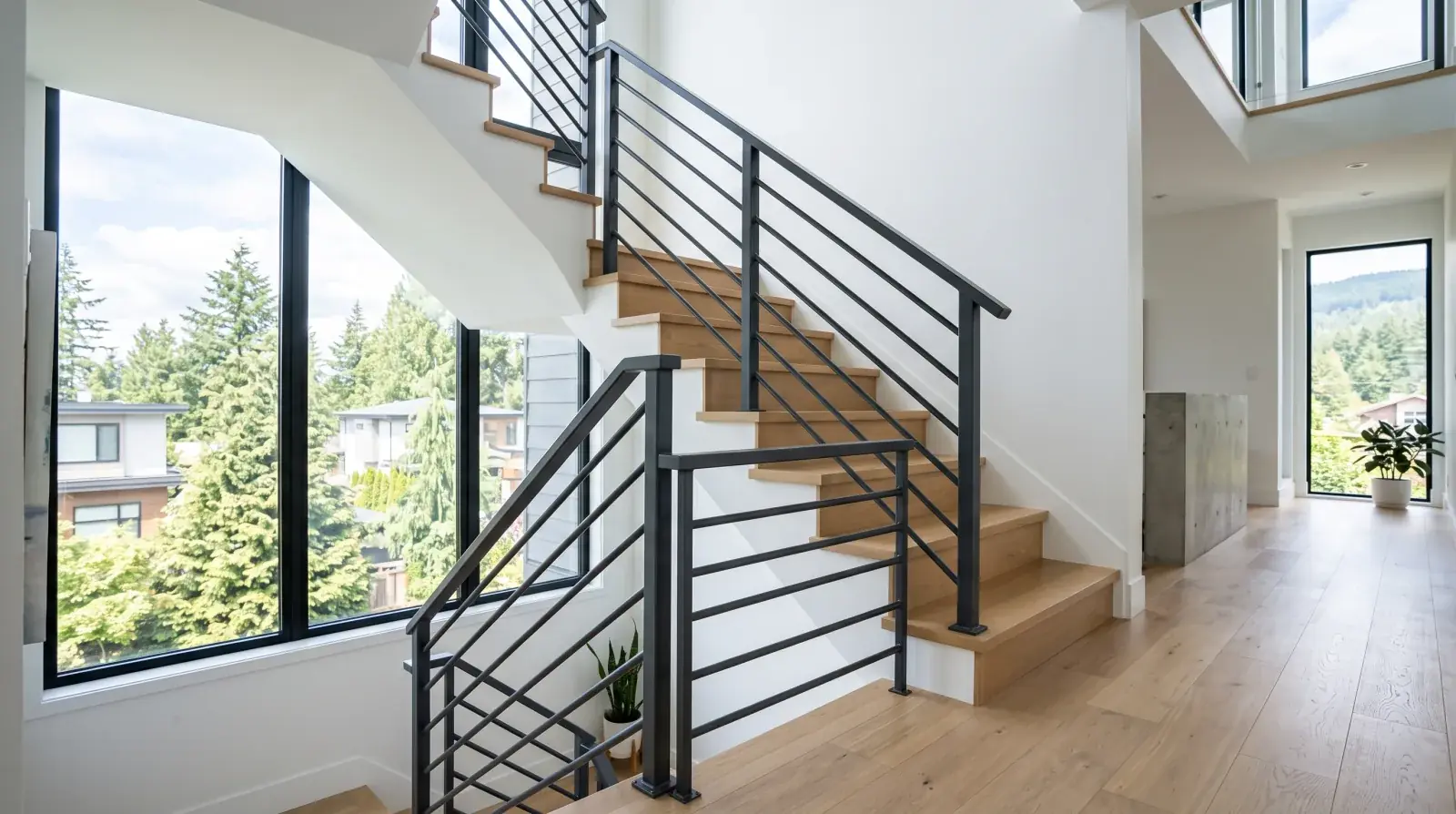
On an open stair, both are needed. The open side has to have a guard tall enough to stop a fall, and the stair also needs a graspable handrail at the right height. Sometimes a single steel assembly is designed so the guard and the handrail work together. The trap is that a guard cap set at the taller guard height can be too high to grip comfortably, so it does not satisfy the handrail rule on its own. In that case we add a separate graspable rail at the correct height inside or below the guard. Our post on the difference between a guard and a handrail explains exactly when one element can legally do both jobs, and when you need two.
The gap rules matter here too. A guard on a stair still has to stop a 100 mm sphere from passing through its openings, which sets the maximum spacing between pickets or cables. Our 100 mm sphere and picket spacing guide covers how that spacing is checked on a guard that also carries a handrail.
Getting it right the first time
Handrail height is simple once you know where to measure from and remember that height is only part of the rule. Set the rail in the roughly 865 to 965 mm range above the nosings, keep it graspable so a hand can close around it, and run it continuously around landings so nobody has to let go. Do all three and the rail passes on the first inspection in Vancouver, Burnaby, or anywhere else in the region.
If you are adding a rail to an existing stair, retrofitting a compliant steel handrail is regular work for us. We measure the run, set the height off the nosings, fabricate a continuous rail with the right profile and bracket clearance, and mount it into studs or solid blocking. Request a quote and we will give you the height detail before we build, not after the inspector arrives.
See our custom railings work for design ideas, then request a quote and we will scope the materials, infill, and finish for your Metro Vancouver project.