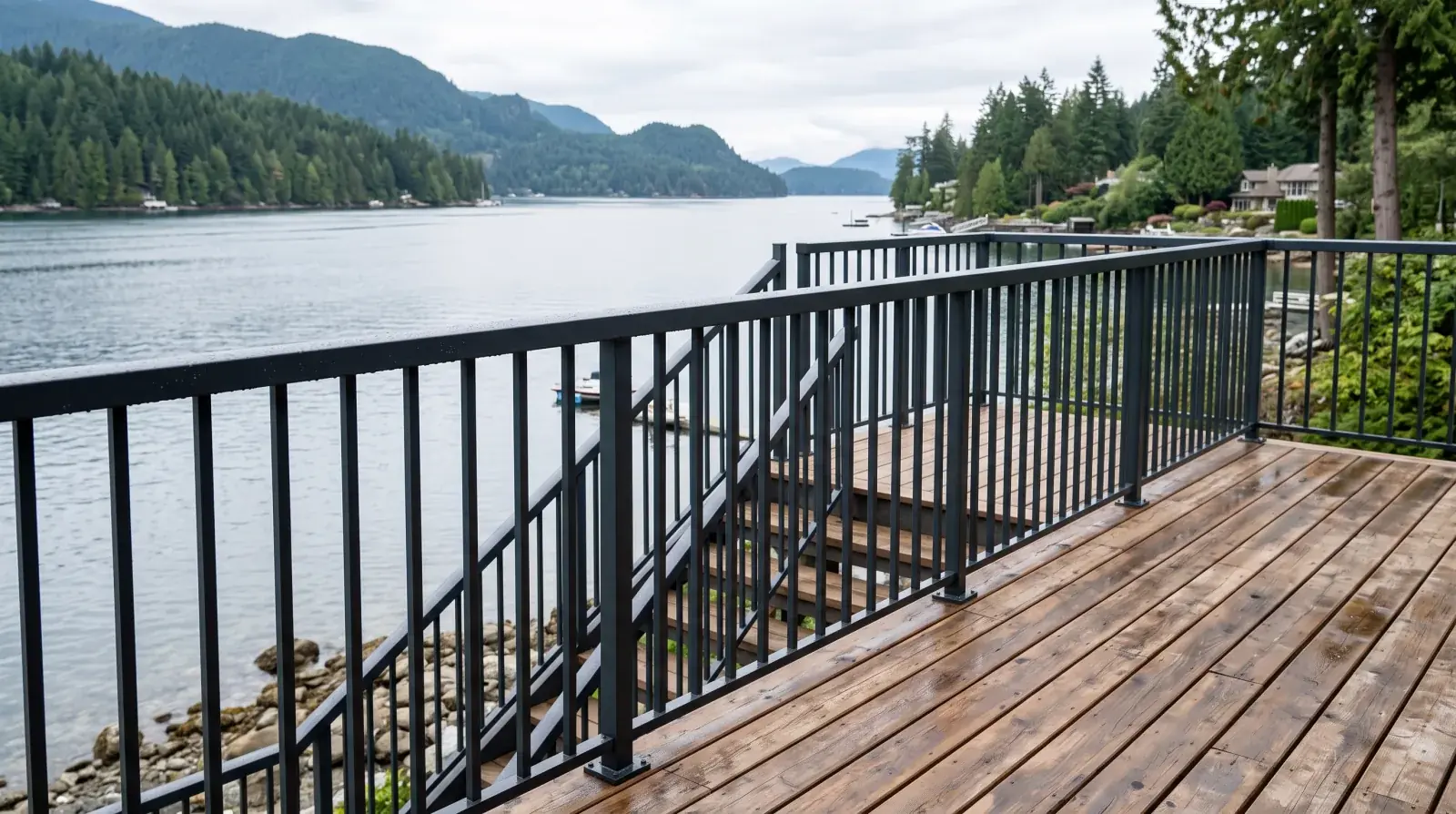
Port Moody sits at the head of Burrard Inlet, and the homes closest to the water get one of the best views in the region. They also get real salt exposure. Salt air is hard on metal, and for a deck or stair railing that lives outside all year, the material you choose decides how much time you spend maintaining it. On an Inlet-side Port Moody deck, aluminum is usually the answer, because it handles the salt with almost no upkeep.
This post covers why aluminum suits Port Moody’s coastal decks and stairs, what the low-maintenance promise really means, the colour options, and how a code-compliant aluminum guard is built. For the wider material picture across the region, our aluminum railings guide goes deeper on alloys and finishes.
Inlet-side salt exposure and what it does to metal
The head of the Inlet is a beautiful place to build, and a demanding one for metal. Homes along the Port Moody shoreline sit in damp, salty air for much of the year. That environment attacks steel steadily.
Steel rusts when moisture and oxygen reach the bare metal. A good coating holds that off, but near salt water the coating is under constant attack, and every chip or scratch becomes a rust spot. On an Inlet-side deck, a steel railing shows this first at the welds and the corners, and within a few years it can look tired even when it was built well. That is not a fabrication failure. It is what salt air does to steel over time.
Aluminum behaves differently. It forms a thin natural oxide layer on its surface, and that layer protects the metal underneath. Even a scratch does not lead to the runaway rust you get on steel. For a railing that spends its whole life in Port Moody’s salt air, that difference is the main reason to choose aluminum. It is also lighter than steel, which helps on a raised deck or an upper balcony where added weight is a concern.
What low-maintenance actually means
“Low-maintenance” gets used loosely, so it is worth being specific about what aluminum needs on a Port Moody deck. The honest answer is: not much, but not nothing.
A few times a year, wash the railing with mild soap and water to clear salt and grime. If your deck sits right on the Inlet, rinse it more often, because the closer you are to the water the more salt settles on the metal. Keep an eye out for chips in the powder-coated finish and touch them up when you find one, so bare aluminum does not sit exposed for years. That is the whole routine.
Compare that to steel near the water, which needs the same rust checked, sanded, and repainted on a cycle to stay ahead of corrosion. Over the life of the deck, the difference in effort is large. This low upkeep is the real value of aluminum on the coast, and it is why homeowners along the Port Moody and Coquitlam waterfront keep choosing it. You spend your time on the deck looking at the water, not maintaining the railing.
Colours and finishes for Port Moody homes
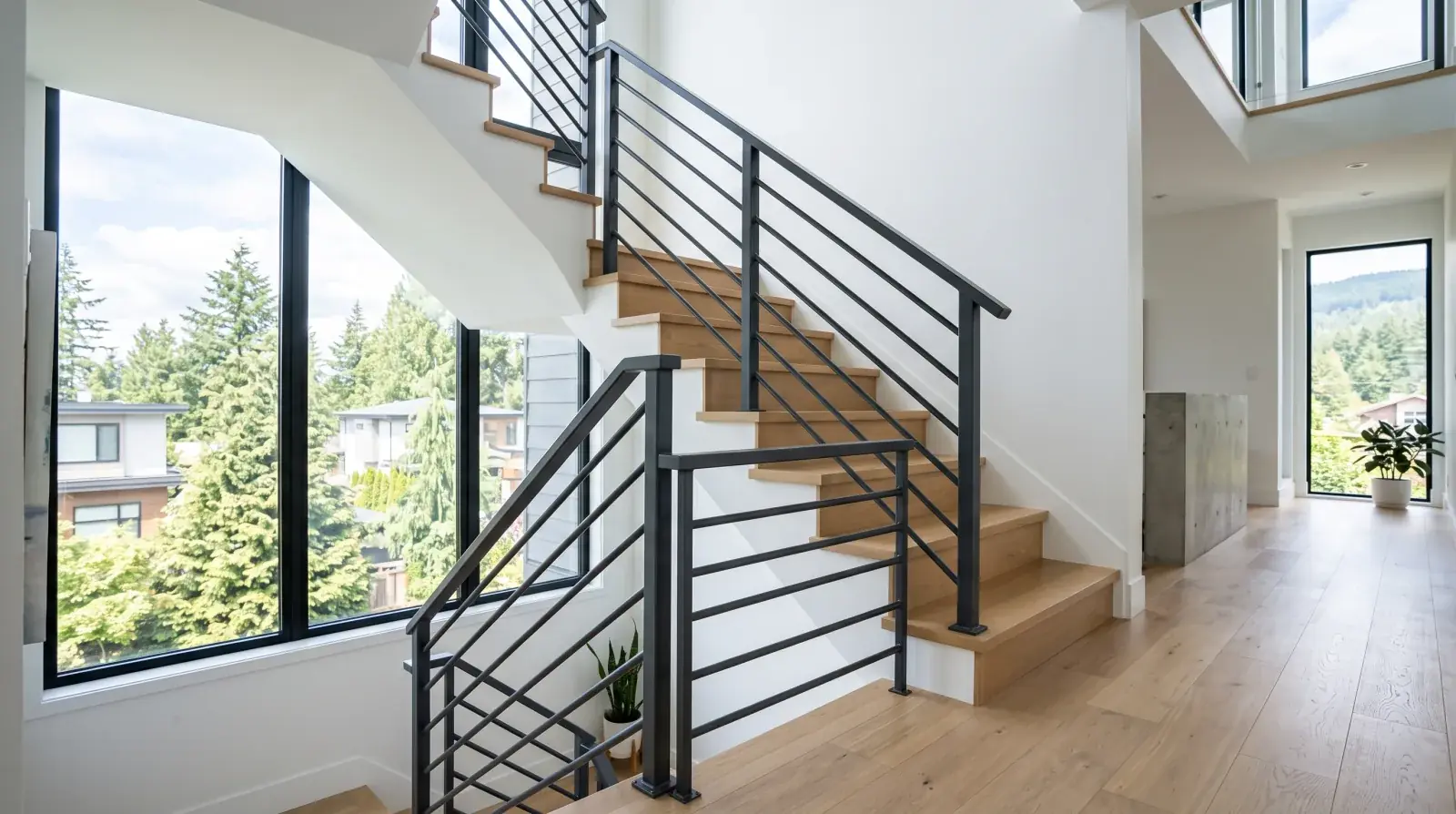
Most aluminum railings in Port Moody are powder coated. Powder coating is a dry finish that is sprayed on and baked, which gives a tough, even surface and a wide range of colours and sheens. On modern homes, black and dark bronze are the popular choices, and they suit the dark window frames and trim common on newer builds in Port Moody and Coquitlam.
A quality powder-coated finish holds its colour well outdoors. Any colour can shift a little over many years of sun, and a darker colour on a very exposed south-facing deck can show it sooner, but Port Moody’s climate is more overcast than sunny for much of the year, so fade is slow. We confirm the colour with you before fabrication so the finished railing matches your home and its trim. You can see the range of railing work we do on our custom railings page.
Building a code-compliant aluminum guard
A railing is a safety guard, so it has to meet the BC Building Code whatever the material. The code sets the guard height, the maximum spacing between pickets, the graspable handrail profile on stairs, and the loads the railing must carry. Those rules apply to aluminum exactly as they apply to steel.
The one thing that changes with aluminum is stiffness. Aluminum is less stiff than steel, so to carry the same load the posts are sometimes larger or spaced closer together. That is normal, and a shop that works in aluminum designs for it from the start. Many standard residential railings follow prescriptive code rules and do not need a separate engineered design. Raised decks, unusual spans, or a request from the inspector can require an engineer’s seal, and we tell you up front whether your project needs it so there are no surprises at inspection.
The same thinking applies to a new railing that has to blend with an existing deck. If you are replacing part of an old railing, we match the colour, pick a picket style and post layout that suits what stays, and look at the deck structure first so the new section fits. Cost on any railing depends on the design, the length, the finish, and the site, so the way to get a real number is a site visit. To book one, request a quote and we will look at your Port Moody deck, its exposure to the Inlet, and the design, and tell you plainly what the right railing is. If you are also weighing whether to replace the whole deck railing at once, our guide on deck railing replacement cost walks through what drives that decision.
See our custom railings work for design ideas, then request a quote and we will scope the materials, infill, and finish for your Metro Vancouver project.