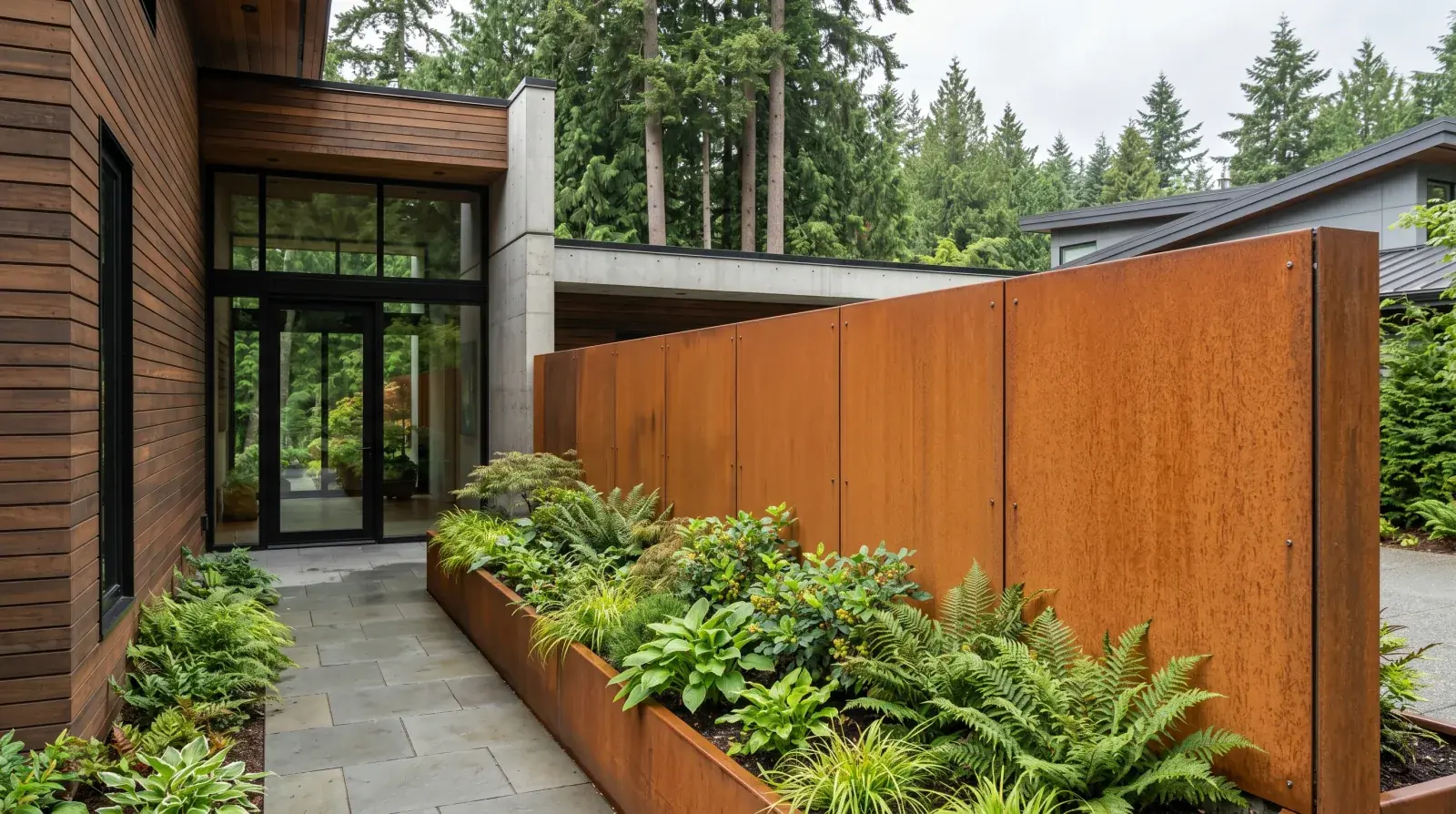
Weathering steel is having a moment. Walk through a new West Coast modern build in North Vancouver or browse a Squamish architect’s portfolio and you’ll see it, warm orange-brown panels paired with cedar soffits and board-formed concrete. It photographs beautifully, and the patina-as-finish story is genuinely appealing: no paint, no repainting, just a surface that’s supposed to take care of itself.
The honest version of that story has fine print, and on the coast the fine print matters more than the magazines admit.
What weathering steel actually is
“Corten” is a brand name that’s become a generic term for weathering steel, a high-strength, low-alloy steel produced under standards like ASTM A588 (plate) and A606 (sheet). The alloy includes small additions of copper, chromium, and nickel. Those elements let the steel form a tight, adherent rust patina that slows further corrosion instead of flaking away the way plain carbon steel does.
The key word is slows, not stops. Weathering steel is not stainless. In the right conditions the patina becomes a protective barrier. In the wrong conditions, it keeps corroding like any other steel.
The coastal problem nobody mentions in the rendering
Weathering steel needs alternating wet and dry cycles to form a stable patina. The surface gets wet, then dries, and over repeated cycles the rust layer tightens and stabilizes. That’s the mechanism.
Vancouver’s climate works against this in two ways. First, Metro Vancouver gets a lot of rain, and faces that stay damp, never fully drying between rains, don’t cycle properly. The patina stays soft and keeps shedding rust. Second, the closer you get to the ocean, the more airborne salt there is, and salt is the enemy of a stable patina.
This isn’t us being cautious for the sake of it. The manufacturer’s own guidance on A606 Type 4 weathering steel is blunt: you should not use it in coastal applications or in areas with high salt content in the air. A West Vancouver waterfront lot or an exposed bluff in Squamish is exactly the environment that warning is about.
So the design that looks perfect in a Palm Springs or interior-BC setting can underperform on the North Shore. The steel doesn’t stabilize, the rust keeps running, and the warm patina the client paid for never quite settles.
The staining reality
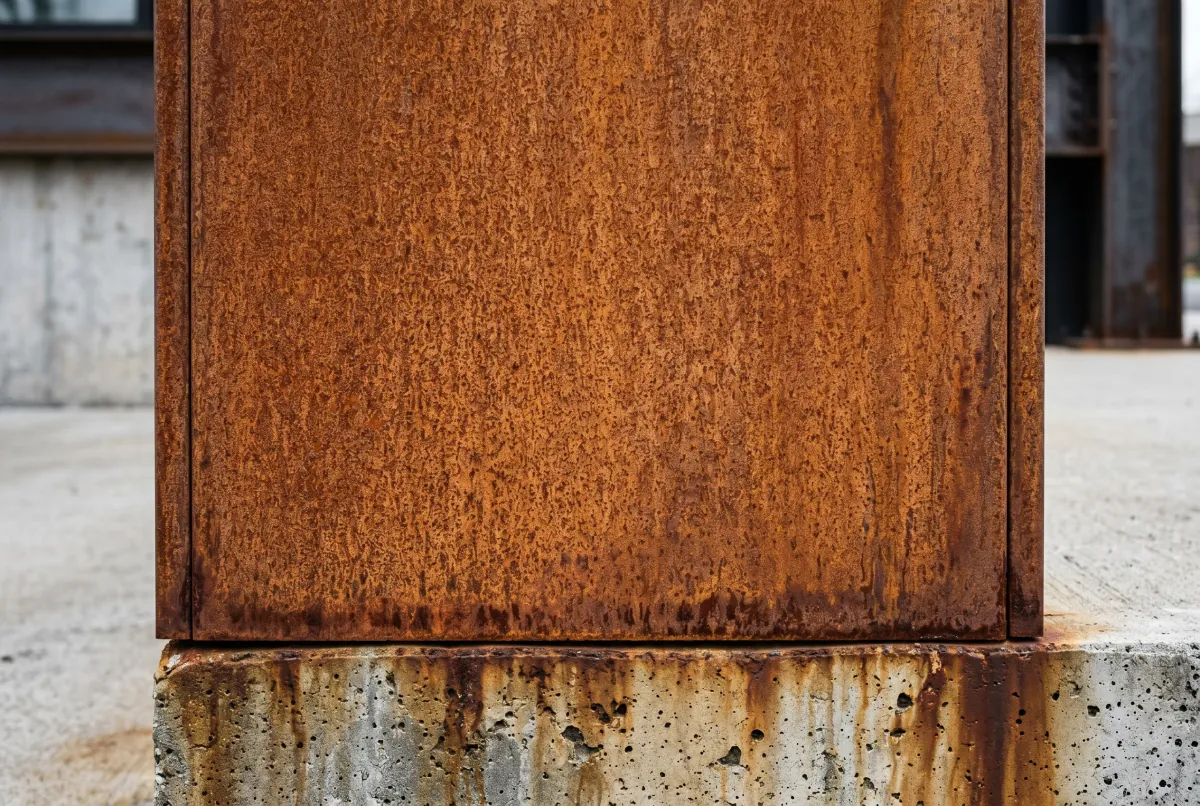
Even where weathering steel works, it stains everything below it while the patina forms, the first one to two years are the messiest. Rust-laden water sheets off the panel and bleeds onto whatever sits underneath: concrete walkways, pavers, stucco, lighter cladding. We’ve seen beautiful Corten planters leave permanent orange tracks down a brand-new concrete retaining wall because nobody detailed the runoff.
The fix is detailing, not hope. We design drip edges, set the steel off the surface below with a gap, run gravel strips to catch and hide runoff, and keep raw weathering steel away from any surface a client can’t accept staining. None of that is visible in a hero render, which is why it gets skipped, and then it becomes a callback.
Where we’ll use it, and where we won’t
For a sheltered, well-drained feature that gets sun and air, a privacy screen, a gate, a freestanding planter wall in a Burnaby or Coquitlam backyard that isn’t taking direct salt spray, weathering steel can be a great choice. The look is right, the maintenance is genuinely lower than paint, and the patina stabilizes.
For exposed coastal elements, anything taking driving rain and salt on the waterfront, or a face that stays perpetually damp in a shaded North Shore microclimate, we’ll usually steer a client toward a coated alternative. A powder-coated steel in a warm bronze or a hot-dip galvanized panel can deliver a similar tone with none of the patina-stabilization risk. We make the same call when we spec marine-grade metalwork for coastal sites: the environment dictates the material, not the mood board.
Fabricating it properly
Weathering steel welds and cuts with standard shop processes, but it needs colour-matched filler metals so the welds patina to the same shade as the base steel. Skip that and you get welds that stay a different colour as the panel ages, a giveaway that whoever fabricated it didn’t know the material. As a C.W.B.-certified shop we use the matching consumables and grind the joints so a finished panel weathers as one continuous surface.
We can also pre-weather panels in the shop so a client’s project reads consistently from the day it’s installed, rather than going through the patchy, splotchy phase in public view. It’s an extra step, but for a feature wall facing the street, it’s usually worth it.
What “low maintenance” actually means here
Weathering steel is sold as maintenance-free, and compared to painted steel it’s close, there’s no repainting cycle. But “low” isn’t “none,” especially on the coast. The patina protects the steel only when the steel gets to dry out between rains. So the maintenance is really about water management: keeping the steel from sitting in standing water, clearing trapped leaves and debris where a panel meets a horizontal surface, and making sure nothing holds moisture against the metal for weeks at a time.
On a Burnaby or Coquitlam backyard installation, that usually means we detail the steel to drain and dry, gaps at the base, no flat ledges that pool water, no spots where soil or mulch banks up against the panel. A planter wall is the classic trap: the soil side stays wet, the patina never stabilizes there, and the steel corrodes from the back while the front looks fine. We line the soil side or detail a drainage gap so the steel isn’t sitting in damp earth.
Get the water management right and a weathering steel feature genuinely does ask very little of the owner for decades. Get it wrong and the “maintenance-free” material becomes a slow corrosion problem hidden from view.
Thickness matters more than people expect
One more practical point. Because weathering steel sacrifices a thin surface layer to form its patina, material thickness is part of the durability calculation. A thin sheet that’s fine in a dry climate has less material to give up before the patina-forming layer starts eating into structural section. In our wetter conditions, where the patina can keep working at the steel longer, we tend to spec a bit more thickness than a Sun Belt fabricator would for the same panel, it’s cheap insurance against a panel that thins out faster than expected over a coastal decade.
The takeaway isn’t “avoid Corten.” It’s that weathering steel is a material with real coastal limits, and the difference between a feature that ages gracefully and one that bleeds rust onto your patio is entirely in the assessment and the detailing. Bring us the face and the exposure, and we’ll tell you honestly whether weathering steel belongs there. Request a quote to start that conversation.