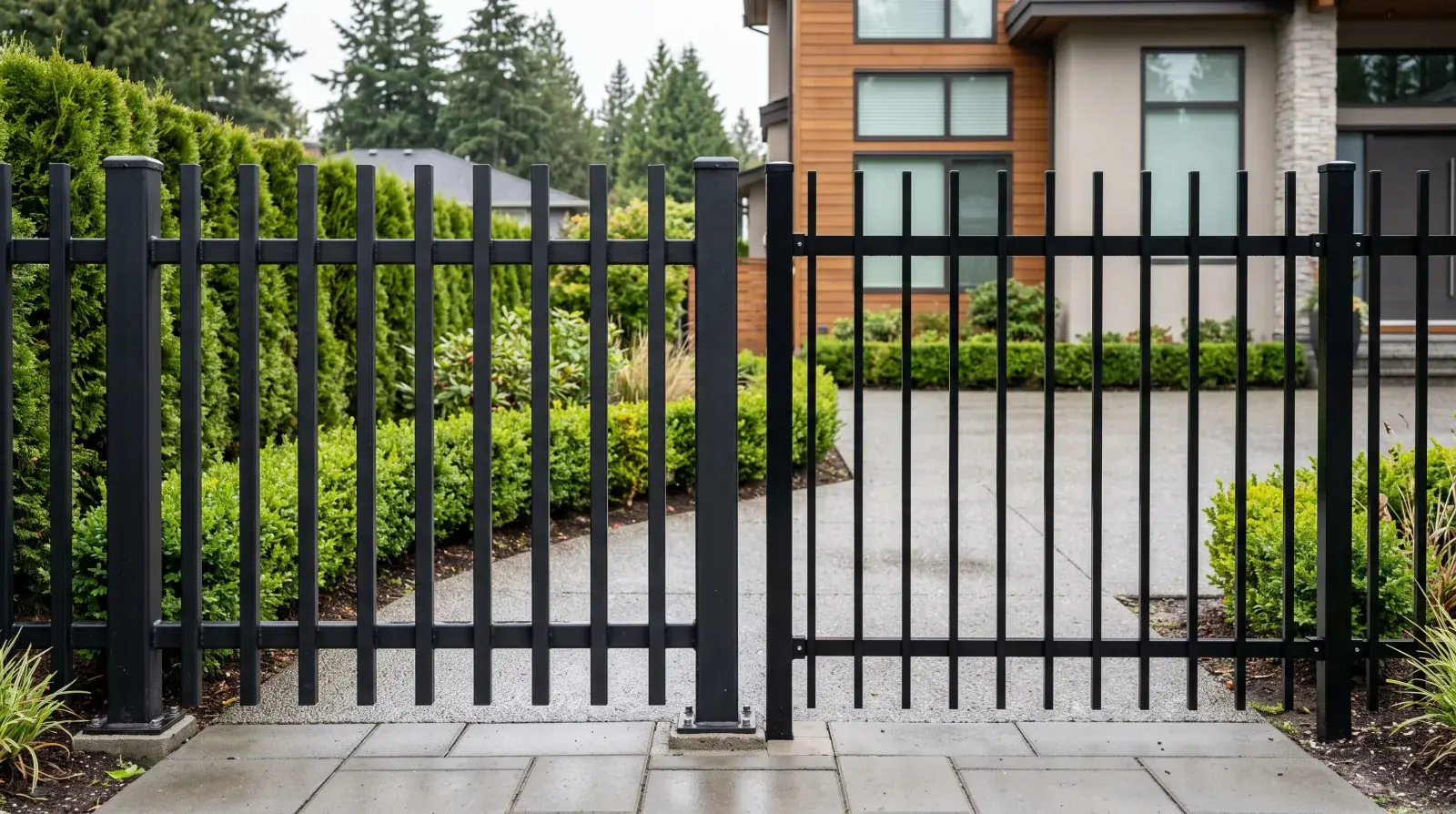
Steel and aluminum both make clean, modern fences that suit contemporary homes across Metro Vancouver. In a photo they can look almost identical. The difference is in how they behave over years of use and rain, and in what they cost to build. Pick the wrong one and you either overpay for strength you do not need, or you install a fence too light for the job it has to do. We fabricate and install both from our Burnaby shop for homes in Vancouver, Coquitlam, and the wider region, and the choice almost always comes down to one question. Is this fence here to look good, or to stop something?
This post compares the two metals on the things that actually matter: strength, rust, finish, cost drivers, and the gate. By the end you should know which material fits your fence, or when to mix the two on the same property.
Strength and security
This is the biggest difference between the two, and it is not close. Steel is a much stronger and heavier metal than aluminum. A steel fence resists impact, prying, and cutting far better than an aluminum one of the same design. If someone leans a ladder against it, tries to bend a picket, or attacks it with a tool, steel holds up where aluminum gives.
Aluminum is light. That is an advantage for handling and installation, but it is a weakness for security. Aluminum pickets bend more easily, and the metal cuts faster. For a decorative boundary that just marks a property line, that is fine. For a fence whose whole purpose is to keep people out, aluminum is the wrong tool.
So the rule is simple. If security is the goal, choose steel. On a Coquitlam property where a client wanted a barrier that could actually resist intrusion, we built a welded steel fence because it gives real strength. If the fence is decorative or a boundary marker, aluminum is often plenty and lets you save the strength budget for where it matters.
Rust and the Vancouver climate
Here aluminum has the clear advantage, and it is the reason many homeowners choose it. Aluminum does not rust the way steel does. It forms a natural protective layer on its surface that stops corrosion, so even if the finish gets scratched, the metal underneath will not rust. In a climate as wet as Vancouver and Coquitlam, that is a genuine benefit. An aluminum fence can sit through winter after winter with very little maintenance and never show a rust streak.
Steel is the opposite. Bare steel rusts, and in our climate it rusts quickly. This does not rule steel out, but it means the finish is not optional. A steel fence has to be galvanized and coated properly, and if that coating is damaged, rust can start at the scratch. The good news is that a well-finished steel fence resists corrosion for decades. The point is that with steel, the finish quality matters as much as the metal itself. Cheap finishing on a steel fence is where our rain finds the weak spot.
Finish options
Both metals end up with a clean modern surface, but they get there by different routes.
Steel is usually hot-dip galvanized first. The steel is dipped in molten zinc that coats it inside and out and protects it from rust. Many homeowners then want a colour, most often black for a modern look, so we powder-coat over the galvanizing. The galvanizing does the corrosion protection and the powder coat gives the appearance. It is a two-step process because steel needs both the rust barrier and the colour.
Aluminum skips the galvanizing entirely, because it does not rust, so there is nothing to protect against with zinc. Instead it is powder-coated directly for colour and a durable, weather-resistant surface. That is one fewer step, which is part of why aluminum can be simpler to finish. Both materials can be powder-coated in the same range of colours, so the finished look is a matter of design rather than metal. Our page on metal fencing materials and finishes covers the finish options for both.
Cost drivers, and why we do not quote fixed prices
Everyone wants to know which is cheaper, and the honest answer is that it depends on the fence. Two fences that look the same on a plan can cost very differently to build. What we can do is explain what moves the number.
The design drives a lot of it. A simple picket line costs less than a tall privacy fence with solid panels. Height matters, because a taller fence uses more material. The finish matters, because the two-step galvanize-and-powder-coat process on steel adds steps that a directly coated aluminum fence does not have. The metal itself matters too. In general, aluminum is lighter to fabricate and install, while steel gives you more strength for the money when strength is the point.
Because every fence is different, we do not publish set prices online. Our metal fence cost guide breaks down the factors that shape the price so you can plan your budget, and when you are ready you can request a quote for your actual layout and get a real number.
The gate, and mixing the two metals
One detail decides a lot of fence projects. The gate. A gate is the hardest-working part of any fence. It swings, it gets used every day, and it carries its own weight on its hinges. That constant stress is where aluminum’s lower strength shows most. A wide or heavily used aluminum gate can sag or wear its hinges faster than a steel one. For a demanding gate, steel holds its shape and its hardware far better over time.
This leads to a practical answer that a lot of our Vancouver and Coquitlam clients land on. Mix the two. Run aluminum along the low-stress boundary sections for the rust-free, low-maintenance benefit, and use steel for the gate and any security section that has to take real force. On a recent Coquitlam property the front garden boundary went aluminum for low upkeep, and the side security gate went steel because it had to hold up to daily use and resist forcing. You get aluminum’s easy maintenance where strength does not matter and steel’s toughness where it does.
Which one is right for you
Choose aluminum when the fence is mainly decorative or a boundary marker, when you want the lowest maintenance in the rain, and when strength is not the priority. Pool surrounds, front garden lines, and light property boundaries are strong aluminum candidates.
Choose steel when the fence has to resist intrusion or impact, when the gate is wide or heavily used, and when you want the toughest barrier. Just plan for the galvanizing and finish, because that is what keeps steel standing in our climate.
We build both as part of our metal fencing service, and we are happy to recommend the right metal, or a mix of both, for your situation. Whether you are fencing a home in Vancouver or Coquitlam, request a quote and we will match the material to the job.
See our metal fencing options, then request a quote and we will plan the fence line and gates for your yard.