Blackened steel has quietly become one of the most requested finishes in modern Vancouver interiors. You see it on stair stringers, railings, feature walls, and hardware in newer homes across Vancouver and Burnaby. It reads warm and hand-made in a way that flat black paint never manages. But it is also misunderstood. This post explains what blackened and patina finishes actually are, how they are made, why they need a clear coat, and where they belong indoors versus outdoors.
What blackened steel really is
The most common myth is that blackened steel is just steel painted black. It is not, and the difference matters.
Paint is a colored film that sits on top of the metal. It hides the steel. Blackening is a treatment on the steel surface itself, using heat or a chemical reaction to darken the metal. The color has depth. You can still read the natural texture and slight variation of the steel underneath. That is exactly why designers reach for it.
Patina finishes work the same way. A patina is a controlled surface reaction that brings out tones in the steel, from deep blue-grey to warm brown. Heat bluing, for example, uses controlled heat to produce blue and grey tones across the surface. Every patina is a little different, which is part of the appeal for a feature piece.
The key thing to understand is that these are surface finishes. They change how the steel looks, but they do not protect it on their own. That is where the clear coat comes in.
Why the clear coat is not optional
This is the point clients most often want to skip, and the one we never let them.
A blackened or patina finish changes the color of the steel surface but leaves the metal underneath exposed to the world. On its own, the finish can rub off where hands touch it, and the bare steel that shows through can rust. In Vancouver’s damp climate, that happens faster than people expect.
So we seal every blackened or patina piece with a clear protective coat. Depending on the piece, that is a wax, an oil, or a lacquer. The clear coat locks the look in and keeps the surface stable. On a railing that people touch every day, this step is what makes the finish last instead of wearing through at the contact points.
Blackened or patina steel finishes use heat or chemical treatment for their color, and they need a clear coat to hold up. That is the whole rule in one sentence. If you want to understand how this compares to tougher coatings, our guide to galvanizing versus powder coating for coastal Vancouver covers the finishes built for harder conditions.
Where blackened steel belongs: indoors
Blackened steel is an interior finish. That is the honest answer.
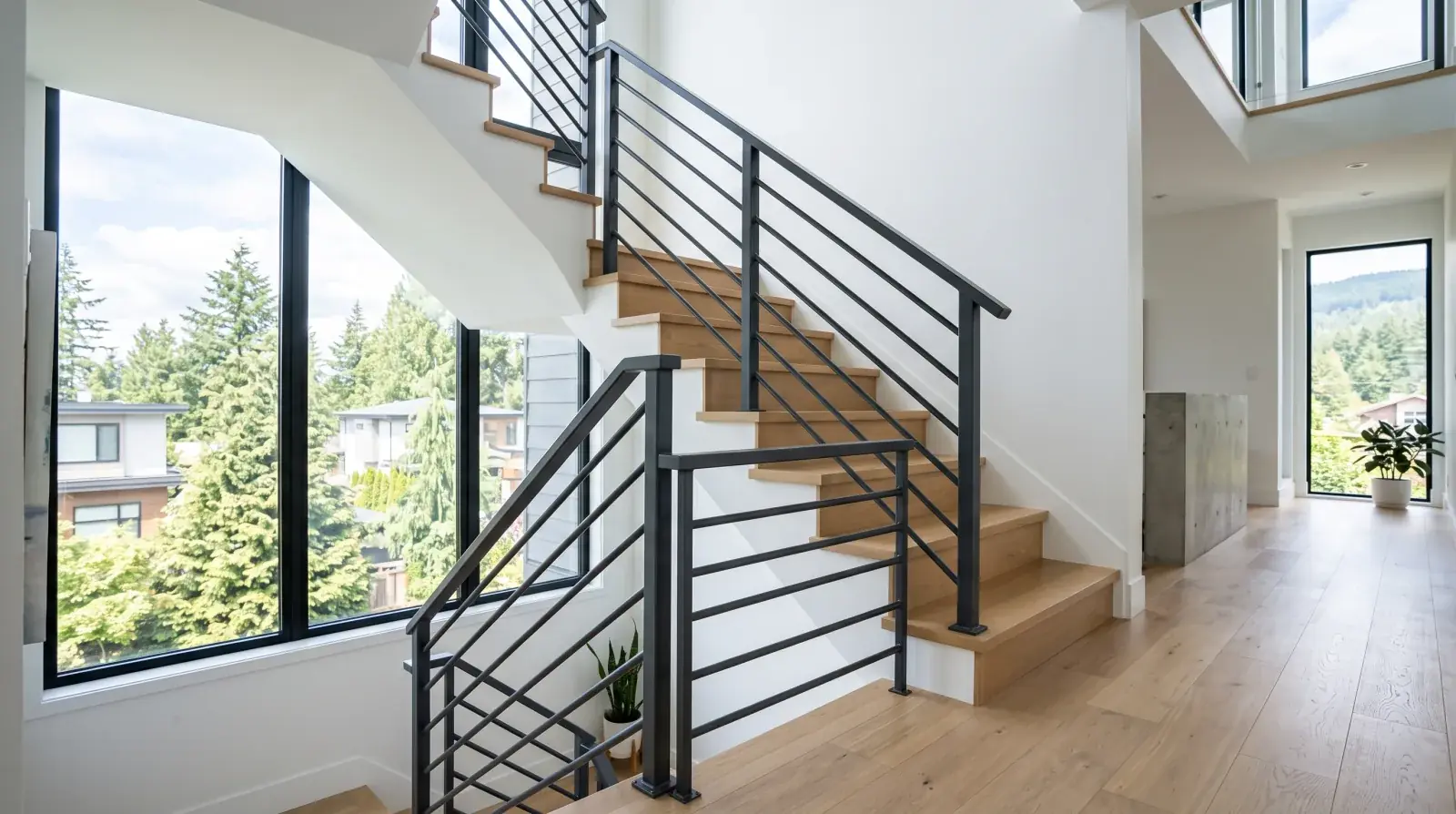
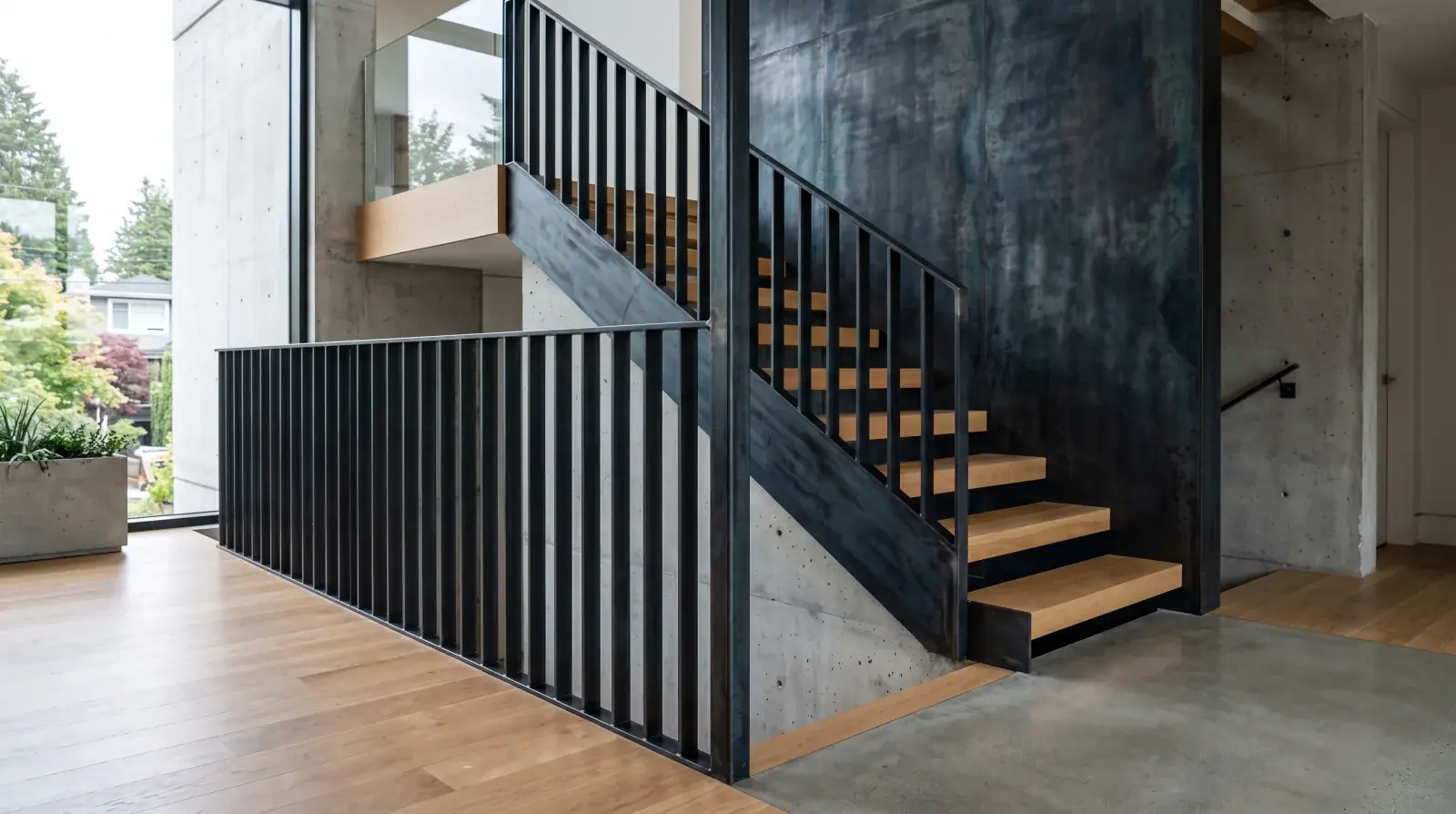
Indoors, protected from rain and salt, a sealed blackened finish holds up beautifully for years. It shines on stair stringers, railings, feature walls, shelf brackets, fireplace surrounds, and door and cabinet hardware. It pairs naturally with oak, walnut, and concrete, which is the exact palette of most modern Vancouver and Burnaby interiors.
The finish adds something paint cannot: a warm, slightly variable, hand-made character. On a feature stair or a statement wall, that character is the whole point. Our work on custom ironwork in Vancouver shows how clean modern steel and rich finishes come together on interior pieces. Note that our work is always modern and clean. We do not do wrought iron, volutes, or twisted balusters. Blackened steel here means flat bar, plate, and straight lines.
Where blackened steel struggles: outdoors
Outdoors in Vancouver, blackened steel is a risk, and we are upfront about that.
Our climate is wet for much of the year. Moisture works its way under a clear coat over time, and once it reaches the treated surface, the steel can start to rust. A blackened finish that looks perfect on install can look tired after a few coastal winters. Near the water, salt makes it worse.
For exterior steel in Vancouver and Burnaby, we usually recommend hot-dip galvanizing, which follows the ASTM A123 standard, often with a powder coat over top for color and durability. That system is built for weather. If a client really wants the blackened look outside, we make sure they understand it will need more maintenance and will not stay flawless.
The short version: blackened steel indoors, sealed, is excellent. Blackened steel outdoors is a maintenance project.
How the finish is actually applied
It helps to understand what happens in the shop, because it explains why the results vary and why the clear coat is so important.
We start with clean, bare steel. Any mill scale, oil, or rust has to come off first, because the treatment reacts with the metal surface and it needs to be clean to react evenly. This prep step is where a lot of the final quality is decided. Skip it, and the finish comes out blotchy in the wrong way.
Then we apply the treatment. For a chemical blackening, that means a solution that darkens the surface. For heat bluing or a heat patina, it means controlled heat that draws blue, grey, and brown tones out of the steel. The longer and hotter the process, the deeper the color shifts. This is hands-on work, and the person doing it watches the surface change and stops at the right point.
Once we have the look we want, the piece is neutralized and dried, then sealed with the clear coat. For a Vancouver interior we usually reach for a satin lacquer or a wax, depending on how much the piece gets touched. A railing that hands grip all day gets a tougher seal than a feature wall nobody touches.
The whole sequence is why no two blackened pieces are identical, and why a shop that rushes the prep or skips the seal produces work that does not last. It is a real finish with real steps, not a spray can.
Blackened steel versus other dark finishes
Clients often ask how blackened steel compares to the other ways to get dark steel, so here is the plain version.
Powder coating in black gives you a tough, perfectly even, matte or satin surface. It is the right pick when you need maximum durability and a uniform color, indoors or out. But it hides the metal completely, so you lose the depth and variation that make blackened steel special.
Flat black paint is the cheapest option and the flattest looking. It sits on the surface, chips at edges, and reads as a coating rather than as metal. For a feature piece in a nice Vancouver home, it usually looks like what it is.
Blackened steel sits between them in a category of its own. It is less bulletproof than powder coat, but it shows the real character of the metal in a way neither paint nor powder can. That is the trade you are making: a little more care and maintenance in exchange for a finish with genuine depth. Our post comparing powder coating, paint, and galvanizing lays out where each finish earns its place.
Matching finishes across a project
One more practical point. Blackening naturally varies, so matching several pieces takes care.
When a Vancouver client wants the stair, the railing, the hardware, and a feature wall to look like one family, we treat those pieces together, with the same process and the same hands doing the work. That keeps the tone consistent across the project. Some slight variation always remains, and most clients see that as a feature of a real, hand-finished surface rather than a flaw.
Blackened and patina finishes reward a little understanding. Know that they are surface treatments, seal them properly, keep them indoors, and they give a modern Vancouver interior a depth and warmth that few other finishes can. If you are planning a feature stair, railing, or wall and want that look, send us your design and we will walk through the right finish for the piece and the space.
See our custom metal fabrication work, then request a quote and we will review your drawings and scope the job across Metro Vancouver.