Aluminum gets recommended hard for railings on the North Shore, usually with one line: it does not rust. That line is true, and near the water it matters more than almost anything else. But “it does not rust” is where the sales pitch stops and the real decision begins. On some North Vancouver projects aluminum is clearly the right material. On others, steel still wins, and choosing aluminum by default leaves value on the table.
This post explains where aluminum earns its place on North Vancouver and West Vancouver homes, how it handles coastal salt air, what finishes to expect, and where steel is still the better answer. For the wider Metro Vancouver picture, our aluminum railings guide covers alloys and code in more depth, and our steel versus aluminum railings comparison puts the two side by side.
Why aluminum suits the North Shore
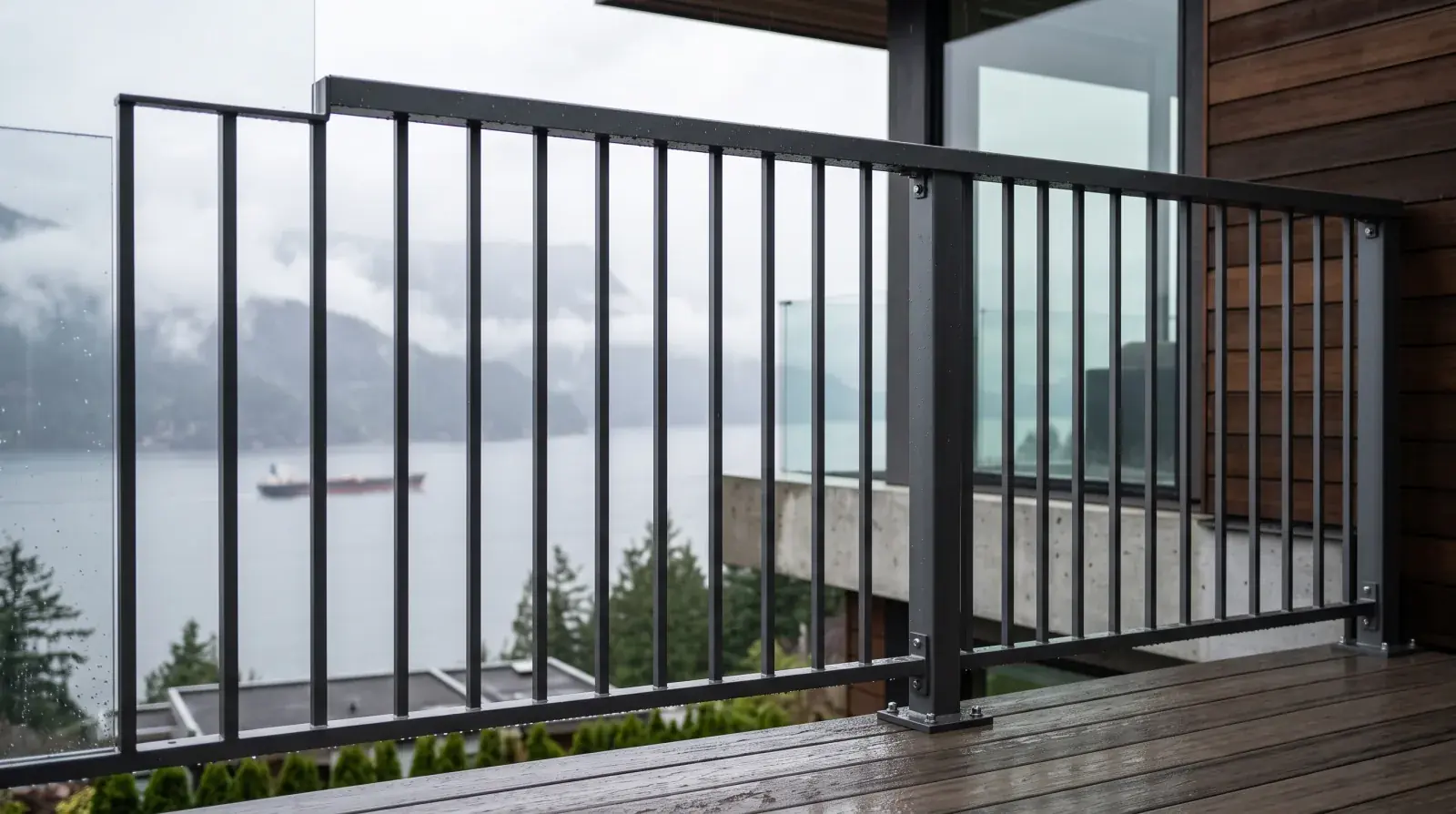
The North Shore’s climate is the main reason aluminum shows up on so many decks here. Homes in North Vancouver and West Vancouver sit close to Burrard Inlet, in constant damp, and often within reach of salt spray. That environment is hard on metal.
Steel rusts when moisture and oxygen reach the bare metal. A good coating holds that off, but near the water the coating is under constant attack, and every chip becomes a rust spot. Aluminum works differently. It forms a thin natural oxide layer on its surface, and that layer protects the metal underneath. Even if the finish is scratched, the aluminum does not rust away the way steel does. For a railing that lives in salt air its whole life, that difference decides the material.
The weight helps too. Aluminum is roughly a third the weight of steel for the same size section. On a rooftop deck or an upper balcony where added load is a concern, the lighter railing is easier to support and easier to install. On a North Shore home with a deck cantilevered toward a view, that weight saving can matter.
Coastal salt-air performance, honestly
Aluminum is strong against salt air, but it is not immune to every kind of corrosion. Two things can still cause trouble, and both are avoidable.
The first is contact between aluminum and a different metal. When aluminum touches steel or certain other metals in a wet, salty environment, a reaction can corrode the aluminum at the contact point. Good fabrication isolates the metals with the right fasteners and barriers so that never starts. This is a detail that matters far more on a West Vancouver waterfront railing than it does on an inland deck, and it is the kind of thing a shop that works the coast watches for.
The second is a damaged finish left neglected. Aluminum’s oxide layer protects the metal, but if a chip exposes bare aluminum and salt collects there for years, you can get pitting. The fix is simple: rinse the salt off a few times a year, and touch up chips when you see them. Do that and a coastal aluminum railing lasts a very long time with almost no other attention. Compared to the sand-and-repaint cycle a steel railing needs near the water, that is a real saving in effort over the life of the deck.
Finishes and colours for North Shore homes
Most aluminum railings on the North Shore are powder coated. Powder coating is a dry finish sprayed on and then baked, which gives a tough, even surface and the widest range of colours and sheens. That colour range is a big reason it is popular on modern North Vancouver homes, because we can match the railing to black window frames, bronze trim, or a custom grey to suit the house.
Anodizing is the other option. It builds a hard oxide layer into the metal itself in a narrower set of tones, and it is very scratch-resistant. Both finishes perform well in coastal conditions when they are applied properly on well-prepared metal. We confirm the colour with you before fabrication, so the finish is right the first time and matches the rest of the home’s exterior. You can see the full range of what we build on our custom railings page.
When steel is still the better call
Aluminum does not win every railing on the North Shore, and it would be dishonest to pretend it does. Steel has real advantages, and there are projects where it is clearly the right material.
Steel is stiffer than aluminum. That means it spans farther between posts, resists impact better, and carries structural loads that aluminum cannot match without much larger sections. When a railing has to do structural work, not just guard an edge, steel is usually the answer. Steel also has a look and a mass that some designs are built around, and a powder-coated aluminum railing, while it can be black, does not read as steel up close.
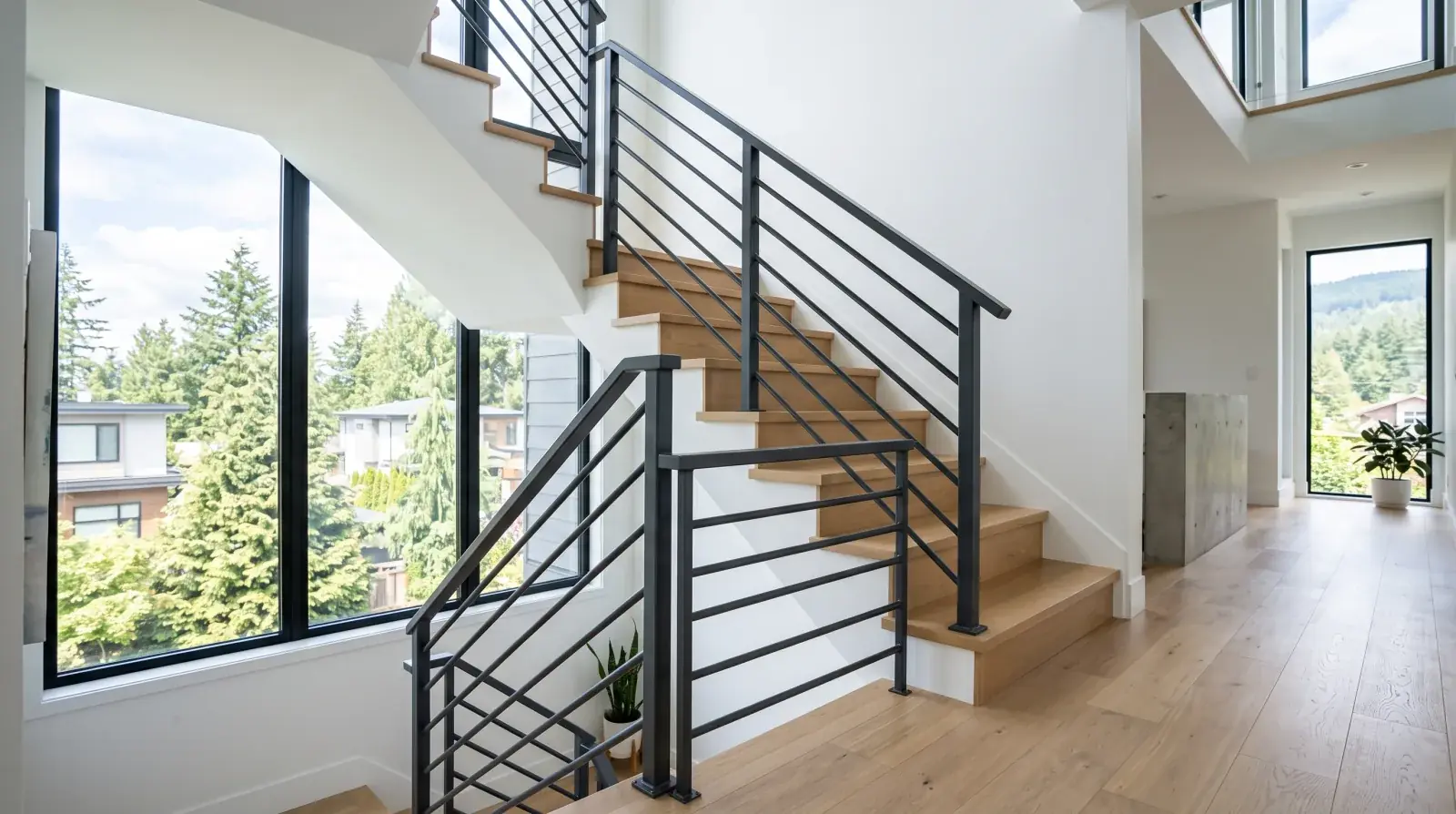
Indoors, the whole rust argument disappears. On an interior stair in a North Vancouver home, there is no salt air and no weather, so the main reason to choose aluminum is gone and steel’s stiffness and appearance often make it the better pick. On many homes we build both: steel on the interior stair, aluminum on the exposed exterior deck that faces the Inlet. Matching them in colour keeps the look consistent while each material does the job it is best at.
Whichever way a project leans, the railing still has to meet the BC Building Code. Aluminum is less stiff than steel, so the posts and spacing are designed to carry the required loads, and a registered engineer seals the design where the inspector calls for it. If you want help deciding between the two for your deck or stair, request a quote and we will look at the site, the exposure, and the design and tell you plainly which material fits.
See our custom railings work for design ideas, then request a quote and we will scope the materials, infill, and finish for your Metro Vancouver project.