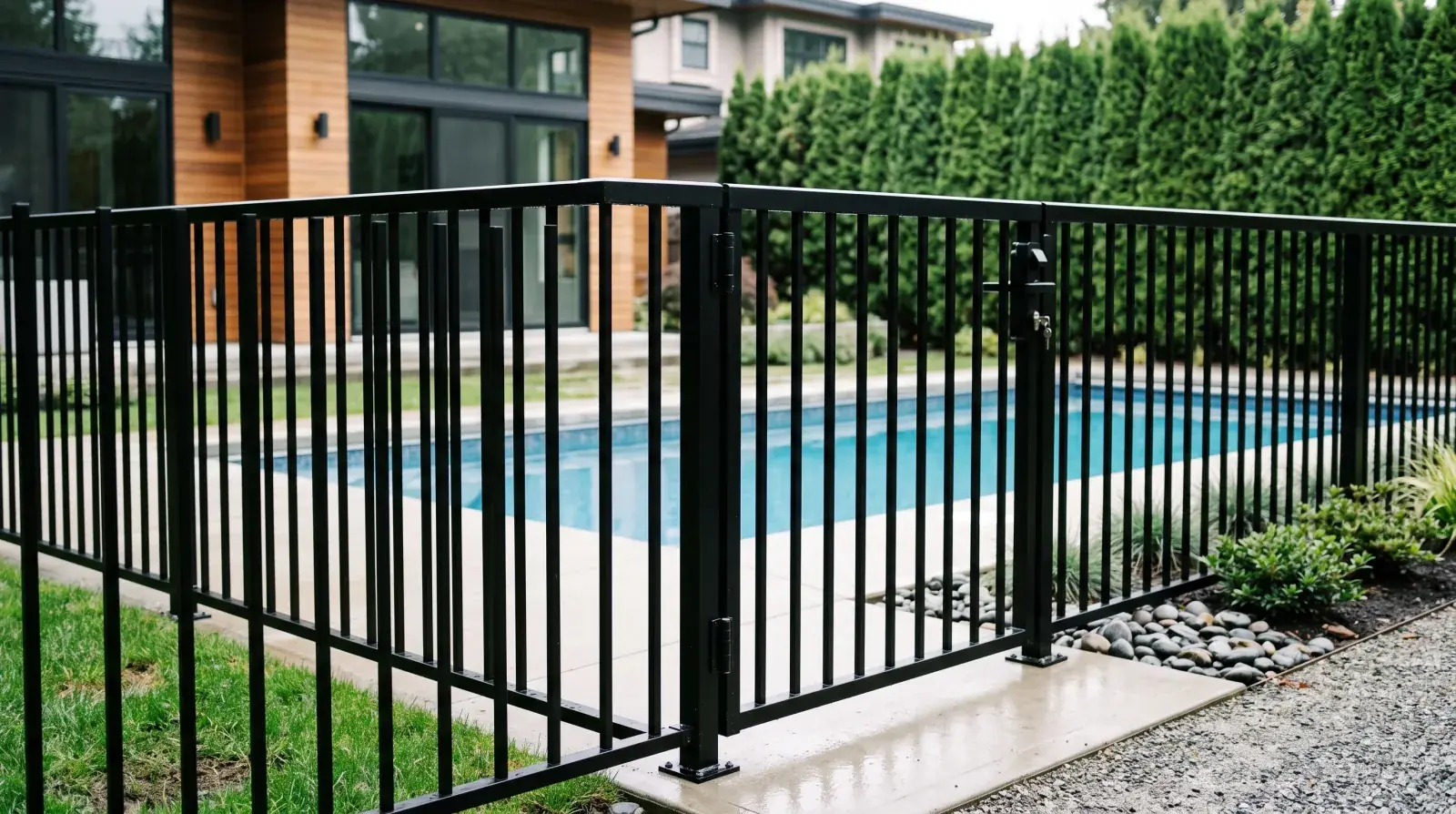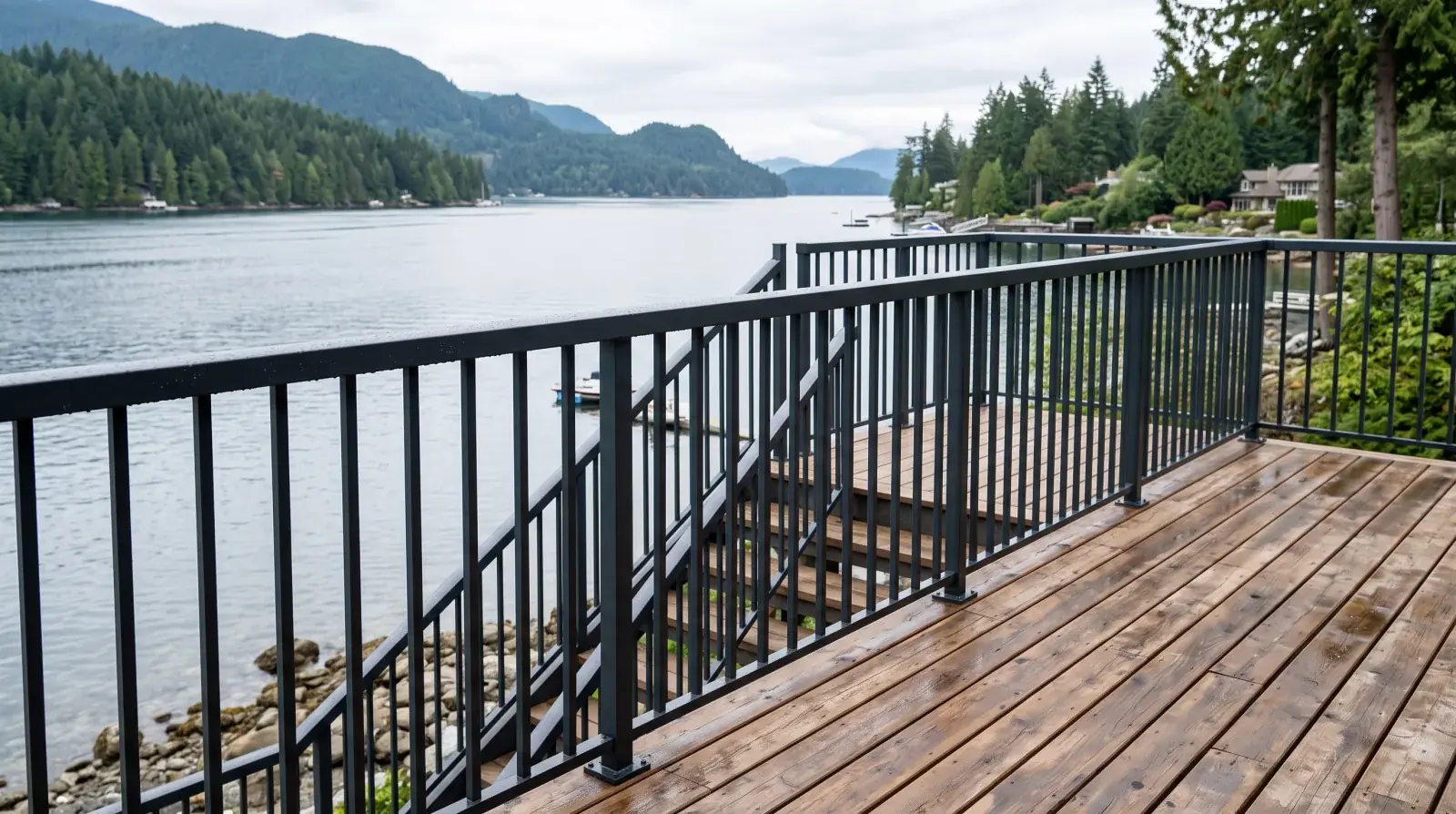
A custom steel staircase, a structural beam, a run of guardrail for a North Shore deck, none of it is sitting on a shelf waiting for you. That’s the first thing to understand about lead times in Vancouver. When you order custom metalwork, you’re not buying a product. You’re buying a sequence of steps that each take time, run in a fixed order, and depend on the step before them being finished. Skip that mental model and every timeline feels arbitrary. Understand it and you can see exactly where the days go, which ones you control, and which ones you don’t.
This post walks through that sequence. We’re not going to quote you a number of weeks, because an honest lead time depends on your scope, your finish, the season, and how fast everyone signs off. What we can do is show you the order of operations, so when a fabricator gives you a timeline you understand what’s behind it.
It starts with design and the quote
Before anyone cuts steel, the design has to exist in enough detail to price. Sometimes you arrive with full architectural drawings and an engineer already involved. Sometimes you have a sketch and a photo of the opening. Those are very different starting points. A clear, dimensioned design gets quoted faster because there’s less back-and-forth about what you actually want.
This stage is mostly conversation and measurement. We’re confirming materials, finish, connection details, and how the piece ties into the rest of the build. The more decisions you’ve already made, the shorter this is. If you’re still deciding between a glass infill and a steel-picket guard, that’s a decision that has to land before the clock on fabrication can start. Our custom metal fabrication process post breaks down what happens at each handoff in more detail.
Shop drawings and the approval you control
Once the scope is locked, we produce shop drawings. These are the detailed fabrication drawings, every dimension, every connection, every weld, that the shop builds from. They’re not the same as the architect’s drawings. Shop drawings translate the design intent into something a fabricator can actually cut and weld.
Here’s the part people miss. After we draw them, the drawings go back to you, your architect, or your general contractor for approval. Nothing gets cut until that approval comes back. This is the single biggest stage a client controls, and it’s where projects quietly lose time. A set of drawings reviewed and signed the same week keeps the job moving. A set that sits for two or three weeks because nobody got to it pushes everything downstream by exactly that long. If you want to compress a timeline, this is the lever. Turn drawings around fast.
When an engineer has to stamp it
Anything load-bearing, a structural beam carrying a removed wall, a cantilevered steel balcony, a stair that holds occupant loads, generally needs review and a stamp from a professional engineer. The engineer checks the design and the connections against the BC Building Code and signs off before we fabricate load-bearing elements.
That review is a real step with its own turnaround, and it sits early in the chain. A delay here doesn’t just delay one piece; it delays everything that depends on the stamped design. For a straightforward residential railing, you may not need an engineer at all. For a steel beam replacing a load-bearing wall in an East Vancouver character home, you absolutely do, and that step needs to be built into the schedule from the start rather than discovered halfway through.
Getting the material in the door
Common steel, standard sizes of HSS tube, plate, angle, flat bar, is usually on hand or a quick call to the supplier. That’s most jobs. But specific grades or unusual sections can carry a wait. If your project calls for 316 stainless for a marine-exposed railing, or a particular plate thickness that isn’t a stock item, procurement becomes its own line on the schedule.
Material availability also moves with the wider market. Supply and pricing for structural steel shift year to year, and what was a same-week order one season can carry a lead time the next. We confirm material availability when we quote, not as a surprise later.
The fabrication queue itself
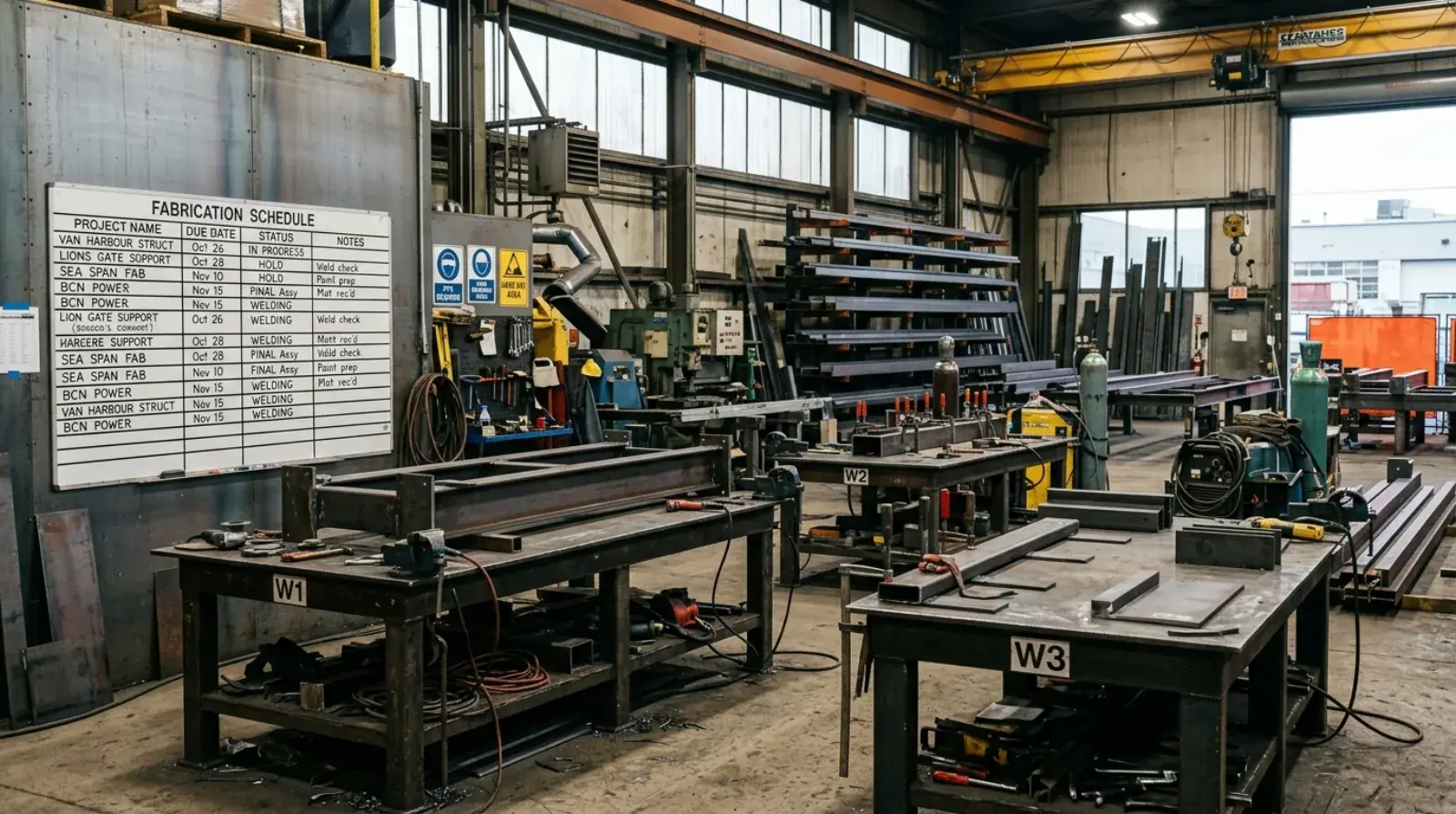
This is the part everyone pictures when they think about lead time, cutting, fitting, welding, grinding. And it’s real work that takes real time. But it’s rarely the bottleneck people assume it is.
Two things shape this stage. First, the complexity of your piece: a simple guardrail is faster than a mono stringer stair with hidden fasteners and a blackened finish. Second, the queue. A fabrication shop is running multiple jobs, and yours slots into a schedule alongside them. In Metro Vancouver, that queue is busiest from spring through fall, when residential builds and commercial fit-outs are all moving at once. The same job can carry a shorter fab time booked into a quiet January than a packed June.
Finishing happens at someone else’s shop
This is the stage that surprises clients most, because it’s the one we don’t control. Hot-dip galvanizing and powder coating happen at separate facilities. Your fabricated steel leaves our shop, sits in that facility’s queue, gets coated, and comes back to us.
Anything going outdoors on the coast, exterior stairs, deck guards, gates exposed to Vancouver rain and salt air, typically needs hot-dip galvanizing for corrosion protection, sometimes followed by powder coating for colour. That’s a two-trip finishing sequence at an outside vendor, and their turnaround stretches in busy season just like ours does. If you’re weighing finishes, our post on galvanizing versus powder coating on the coast covers the trade-offs. The scheduling point is simple: finishing is not something you tack on at the end. It’s a stage with its own clock, and a third party holds it.
Install, and the inspection that follows
When the finished steel comes back, we schedule the install. This has to coordinate with the rest of your build. A stair can’t go in before the floor it lands on is poured and cured. A railing needs its mounting points ready. If the site isn’t at the right stage, install waits, no matter how ready the steel is.
After install, load-bearing and life-safety work often gets inspected. Guards and handrails have to meet BC Building Code requirements for height and infill spacing, and structural work gets checked against the stamped drawings. Site safety during install also falls under WorkSafeBC rules. Inspection is usually quick when the work is right, but it’s a step, and it sits at the very end where a deadline is least forgiving.
Where clients add delay, and where they cut it
The fabrication itself is the predictable part. The surprises almost always come from the handoffs. Four things stall projects more than anything in our shop:
- Slow shop drawing approval. Covered above, and it’s the big one. Drawings sitting unapproved stop everything.
- Changing scope mid-stream. Deciding to switch a finish or change a dimension after we’ve started cutting means rework, and rework means time.
- A site that isn’t ready. Steel that’s finished and waiting on a truck while the slab cures isn’t saving anyone time.
- Missed or wrong field measurements. If the opening doesn’t match the drawing, the piece doesn’t fit, and a refit is slower than getting the measurement right the first time.
What compresses a timeline is the inverse of all that. Engage a fabricator early. Make your design decisions before drawings start. Approve fast. Have the site ready. Book outside the busiest months if your schedule allows it. None of these speed up welding, they remove the waiting between steps, which is where most lead time actually lives.
Planning backward from your date
If you have a hard finish date, a move-in, a strata deadline, a commercial opening, don’t plan forward from the day you call a shop. Plan backward from the date the steel has to be installed and inspected.
Start at install. Subtract the finishing turnaround, because galvanizing and coating happen offsite. Before that, fabrication. Before that, the engineering stamp if your project needs one. Before that, shop drawing approval, which depends on how fast your team reviews. And before all of it, the quote and design stage. Lay those out in reverse and you’ll see how early you actually need to start the conversation. It’s almost always earlier than people expect, and the projects that miss dates in Vancouver are usually the ones that started the conversation too late, not the ones where fabrication ran slow.
Before you commit to any shop, it’s worth knowing what to ask so you can judge whether a timeline is realistic. Our guides on reading a structural steel quote and questions to ask a metal fabricator will help you have that conversation. And when you’re ready to put a real timeline against your project, request a quote and we’ll walk you through the sequence for your specific scope.