You’ve got a structural steel quote in hand, maybe your first one, and the line items don’t look anything like a lumber quote or a concrete quote. There’s terminology you haven’t seen before, scope items that might or might not be included, and maybe a few acronyms nobody explained. Is this a good quote? Is something missing? How do you compare it against the other two quotes sitting on your desk?
We produce structural steel quotes from our Burnaby fabrication shop for residential and commercial projects across Metro Vancouver. Here’s how to read one, whether it’s ours or a competitor’s, and what to look for before you commit.
The anatomy of a steel quote
A well-structured structural steel quote has a consistent format. Not every fabricator uses exactly the same layout, but the information should be there regardless of how it’s organized. Here’s what you should see.
Scope description. Before any numbers, the quote should describe what’s being quoted: the project name, the structural drawings it’s based on (drawing number, revision, date), and a general description of the steel scope. This matters because structural drawings get revised, if the quote is based on Rev A and you’re now on Rev C, the pricing may not apply.
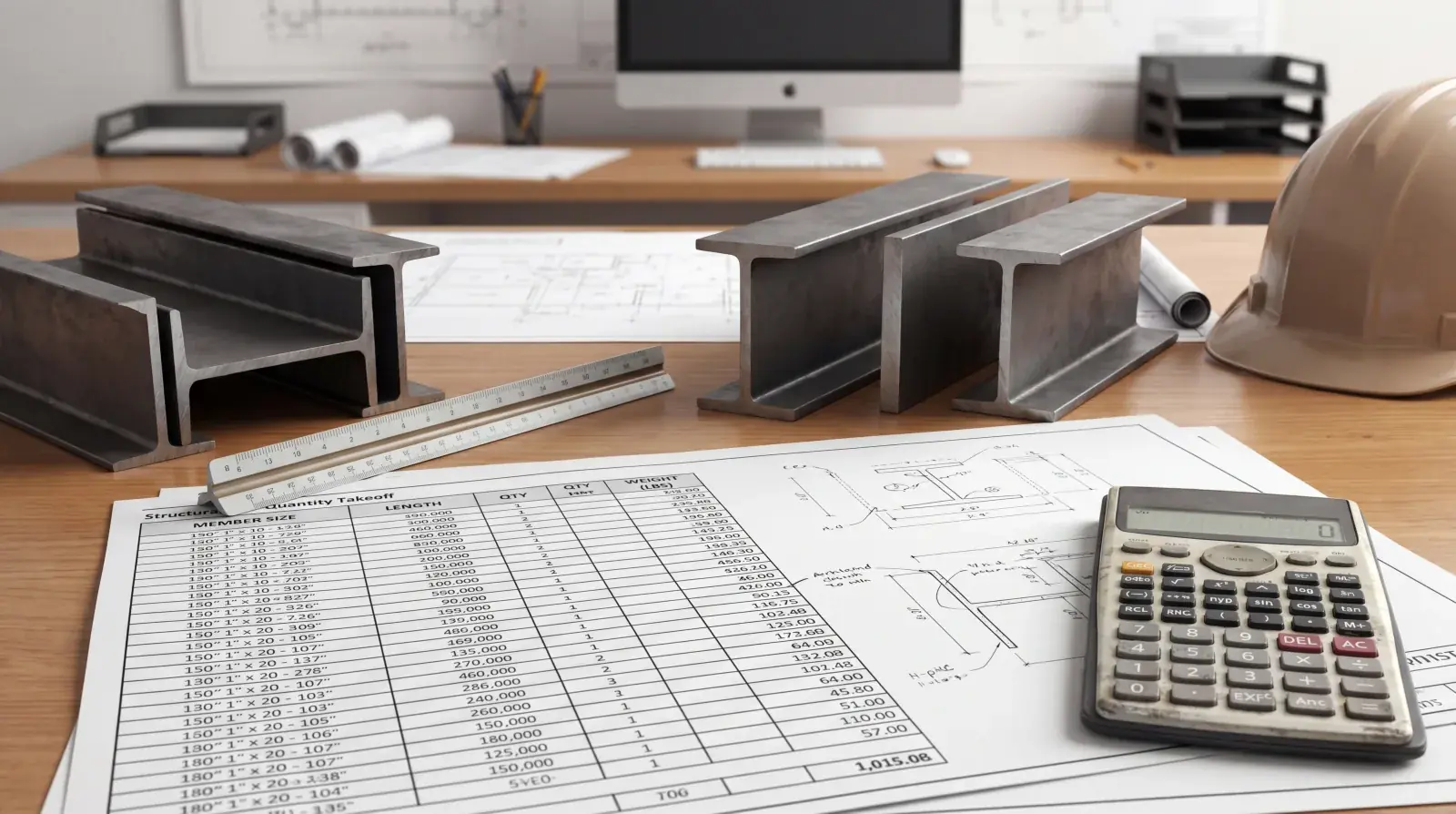
Member list or tonnage. The quote either lists the individual members (three W310x33 beams, four HSS 102x102 columns, etc.) or states the total tonnage. For residential beam packages, an itemized list is more common. For commercial projects, tonnage plus a member summary is typical. Either way, you should be able to trace the quote back to the engineer’s drawings and confirm that everything on the drawings is covered.
Shop drawings. This line item covers the cost of producing fabrication-level drawings from the engineer’s design. Shop drawings are not optional, they’re the translation layer between what the engineer designed and what the shop actually builds. The structural engineer reviews and approves shop drawings before fabrication starts. If you don’t see shop drawings as a line item, ask: it’s either included in the fabrication price or it’s excluded (and you’ll need to hire a separate steel detailer).
Material, what you’re buying
The material line item covers the raw steel that gets turned into your structural members. It includes the wide-flange beams, HSS sections, plates, and any connection hardware (bolts, nuts, washers, anchor bolts) specified in the scope.
Steel is a commodity. Material prices fluctuate with the global steel market, mill production schedules, and local supply chain conditions. In 2026, material typically represents 30 to 45% of a residential steel fabrication quote and 25 to 40% of a commercial quote (where fabrication labour is proportionally higher due to more complex connections).
What to check: does the quote specify the steel grade? For structural work in BC, it should be CSA G40.21 350W for wide-flange sections and plates, which is equivalent to ASTM A992. If the grade isn’t stated, ask, because the grade must match what the structural engineer specified. Mill certificates (material test reports) should be delivered with the steel, confirming the grade and mechanical properties.
Bolt grade matters too. Structural bolts should be ASTM A325 or A490, depending on the connection demands. If the quote just says “bolts included” without specifying grade, that’s a detail worth clarifying, especially on seismic connections where the bolt specification is part of the engineering.
Fabrication labour, where the skill lives
Fabrication is the line item that transforms raw steel into a buildable assembly. It covers cutting, drilling, coping, fitting, welding, grinding, and piece-marking every member in the package.
This is where quotes diverge the most between fabricators. A shop with CNC equipment, automated saws, CNC drill lines, robotic fit-up, can process simple members faster and more accurately than a shop running manual equipment. But when connections get complex, moment connections with stiffener plates, CJP welds, tight tolerances, the labour is predominantly manual welding and fitting regardless of shop equipment.
For a residential beam package with shear connections, fabrication labour might represent 25 to 30% of the total quote. For a commercial steel frame with moment connections and bracing, fabrication labour can be 40 to 50% of the total. The difference is connection complexity, a moment connection takes 5 to 10 times longer to fabricate than a shear tab.
What to check: is the quote based on the actual connection details shown on the structural drawings? A quote that prices “standard connections” when the drawings show moment connections with CJP welds is going to need a change order once shop drawings start. Make sure the fabricator has reviewed the connection details, not just the member list.
And verify CWB certification. Under the BC Building Code, structural steel welding on buildings must be performed by a CWB-certified shop under CSA W47.1. A quote from an uncertified shop for structural work isn’t just a cheaper option, it’s not a legal option for a permitted project. Ask to see the certificate if you haven’t already.
Finishing, more than just paint
The finish line item covers surface treatment applied after fabrication. There are three main options, and the cost difference between them is significant.
Shop primer is the baseline. The steel gets wire-brushed or blast-cleaned, then sprayed with a single coat of rust-inhibitive primer. This protects the steel during transit and construction exposure. Steel that’s going inside walls, ceilings, or concrete fireproofing typically stays at shop primer. It’s the least expensive finish.
Powder coating is the standard for exposed structural steel where aesthetics matter, visible beams in open-concept renovations, exposed columns, canopy structures. The steel gets sandblasted to bare metal, then coated with an electrostatically applied dry powder that’s heat-cured in an oven. Powder coating is available in virtually any colour and provides a durable, consistent finish. It costs more than primer, typically adding 10 to 15% to the fabrication cost for exposed members.
Hot-dip galvanizing is the go-to for exterior steel and steel in corrosive environments. The fabricated members get immersed in a bath of molten zinc at approximately 450°C. The zinc bonds metallurgically with the steel surface, providing decades of corrosion protection. Galvanizing is strongly recommended for any steel exposed to Metro Vancouver’s wet climate, canopies, exterior columns, carport structures. The cost is higher than primer or powder coating, and there are size constraints based on the galvanizing tank dimensions. Galvanizing also adds 1 to 2 weeks to the schedule because the steel goes to an off-site galvanizing plant.
What to check: which finish is included in the quote? If the steel is getting exposed and the quote only includes shop primer, you’ll need to add powder coating or clear coat as a separate cost. If the steel is going outdoors and the quote shows primer only, the finish is inadequate for Vancouver’s conditions, galvanizing should be specified.
Delivery and erection, getting the steel from shop to site
These two items are often the most inconsistent between quotes. Some fabricators include delivery in the fabrication price. Some include erection. Some exclude both. Knowing what’s in and what’s out is how you avoid surprises.
Delivery covers transporting the fabricated steel from the shop to the job site. For local Metro Vancouver deliveries from our Burnaby shop, this is typically a single flatbed truck trip for residential packages and multiple truck loads for commercial work. The cost depends on the tonnage, the number of loads, and the distance.
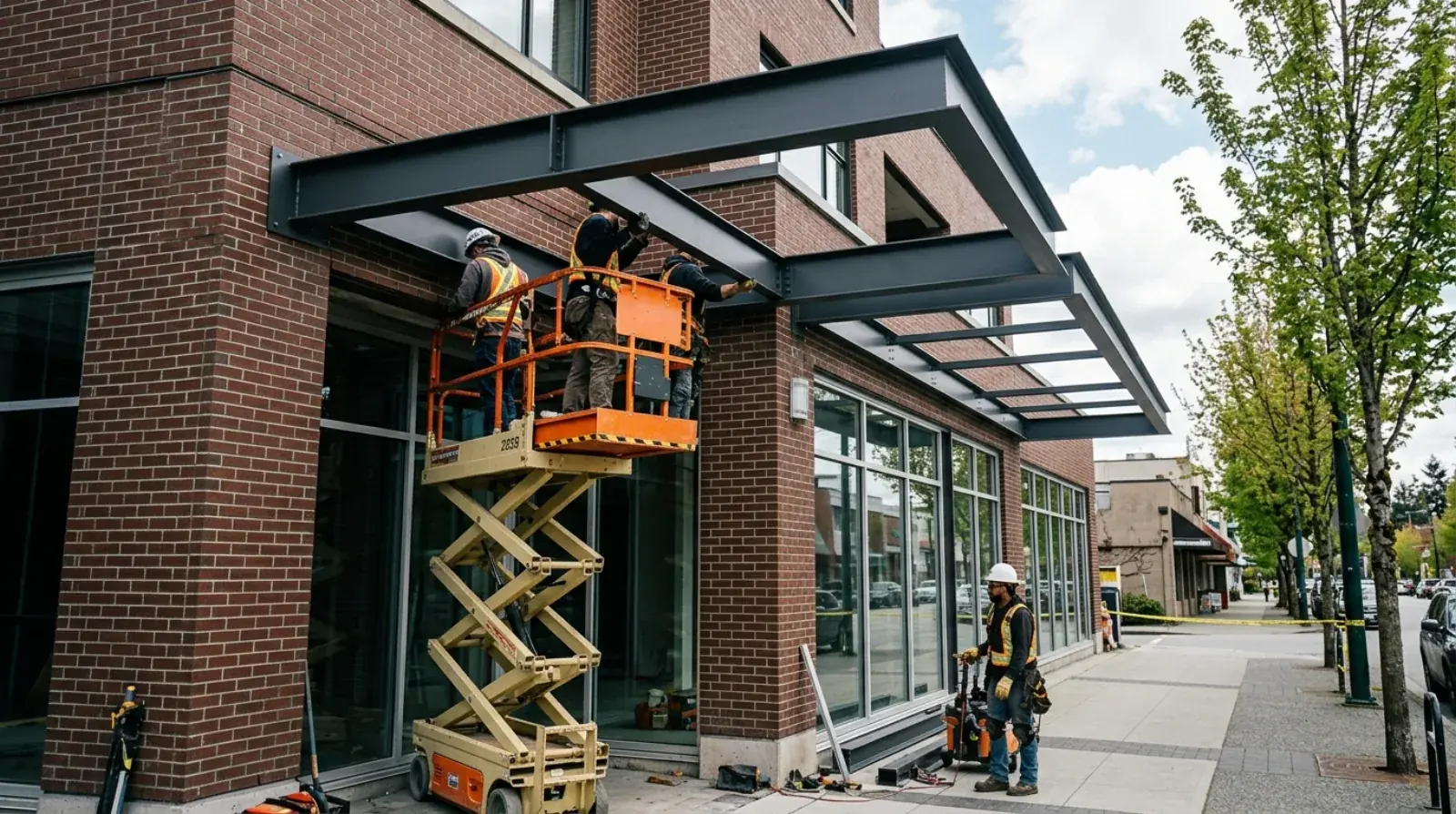
Erection is the on-site installation of the steel: crane or boom truck rental, rigging crew, ironworker crew for bolt-up and alignment, field welding if specified, and final plumbing and levelling. Erection is a substantial cost item, on a commercial project, erection can be 20 to 30% of the total steel scope. On a residential beam package, erection is a smaller portion because the installation is typically a single-day operation with a boom truck.
Crane rental is sometimes listed as a separate line item within erection. For residential projects in Vancouver and Burnaby, a boom truck usually handles the lifts. For commercial projects, a mobile crane is required, and crane costs in Metro Vancouver vary based on capacity, reach, site access, and any road permits needed for setup in tight urban locations.
What to check: is erection included? If so, does it include crane rental, or is the crane a separate charge? Does the erection scope include final bolt torquing and inspection? Are there allowances for site access limitations, because a tight East Van lot with overhead power lines costs more to crane than a suburban site with open access.
What’s typically NOT in a steel fabrication quote
The exclusions section is where people get caught. A steel fabrication quote covers the steel scope only, and there are several adjacent costs that the fabricator does not include.
Structural engineering. The engineer’s design, sealed drawings, and shop drawing review are the client’s responsibility, not the fabricator’s. The fabricator works from the engineer’s design.
Building permits. The general contractor or owner handles permit applications and inspection fees with the local municipality.
Concrete foundations. The concrete piers, footings, or grade beams that the steel columns sit on are a separate scope, usually done by the concrete subcontractor. The steel fabricator supplies anchor bolts and anchor bolt setting templates, but the concrete contractor installs them.
Fireproofing. If the building code requires fire-rated steel assemblies, spray-applied fireproofing or intumescent coating is typically a separate specialty trade. Some fabricators apply intumescent paint in the shop, but it’s not standard unless specified.
Miscellaneous metals. Structural steel (beams, columns, bracing) and miscellaneous metals (stairs, railings, equipment supports, bollards) are distinct scopes. A structural steel quote doesn’t include misc. metals unless the fabricator handles both and has included them deliberately. If your project has both structural and misc. scopes, confirm where one ends and the other begins.
Metal deck and shear studs. On commercial projects, the metal floor deck and welded shear studs that create composite beam action are often a separate scope from the structural steel frame. Some fabricators include deck supply; most don’t include deck installation.
Comparing quotes, scope first, price second
When you have two or three structural steel quotes on your desk, the temptation is to flip to the bottom line and compare numbers. That works when the scope is identical. It rarely is.
Here’s a comparison checklist. Work through it before you look at the totals.
Does each quote reference the same revision of the structural drawings? Are the same members and connections included? Is shop drawing development in each quote? What finish is included, primer, powder coat, or galvanizing? Is erection included, and if so, does it include crane rental? Are anchor bolts and connection hardware included? What is the stated delivery timeline from approval to delivery? Is there a price escalation clause for material cost changes? Does the fabricator hold current CWB certification under CSA W47.1?
A lower quote that excludes shop drawings, erection, and finishing isn’t cheaper, it’s incomplete. And a quote from a shop without CWB certification isn’t a valid option for structural work in BC, regardless of price.
Timeline, what the quote says about schedule
A steel quote should include a stated timeline. The typical format breaks it into phases.
Shop drawing development: 1 to 3 weeks, depending on scope complexity and engineer review turnaround. The fabricator produces the drawings, but the engineer’s review speed affects this phase as much as the fabricator’s detailing speed.
Material procurement: 1 to 2 weeks for common shapes from local suppliers. Specialty sections or heavy shapes may take longer. The quote should note any materials with extended lead times.
Fabrication: 2 to 5 weeks for residential, 6 to 10 weeks for commercial. This is the fabricator’s shop capacity and the scope complexity working together. Ask about current workload, a shop that’s backlogged adds weeks to the fabrication phase regardless of what the quote says.
Delivery and erection: the quote should state a delivery window and, if erection is included, the estimated installation duration.
The total timeline from signed quote to steel-in-place is typically 6 to 10 weeks for residential and 10 to 16 weeks for commercial. If your GC is building a master schedule, these numbers need to go in early, structural steel is a long-lead item that can’t be compressed easily.
Red flags in a structural steel quote
A few things worth watching for. Extremely low pricing with no detail on connections or finish, the fabricator may be bidding light and planning to recover through change orders. No reference to the structural drawings, the quote might be based on a rough takeoff rather than the actual design. No mention of CWB certification, verify independently that the shop is certified. No exclusions section, a quote without stated exclusions is ambiguous about what’s included. A validity period longer than 30 days without a material escalation clause, either the fabricator is padding the material cost, or they’ll claim the price has changed when you try to award the contract.
What a quote from our shop looks like
When you request a quote from Jeff and Simon Ironworks, you’ll get a scope-specific document that covers every item described above: member list or tonnage summary, shop drawings, material with grade specification, fabrication against the actual connection details, finishing to the spec you need, delivery, and erection with crane if we’re handling the installation. We quote against the engineer’s current drawings, note the revision, and hold pricing for 30 days.
If you need a structural steel quote for a residential or commercial project in Metro Vancouver, send us the engineer’s drawings and we’ll produce a detailed scope and price within a few business days.