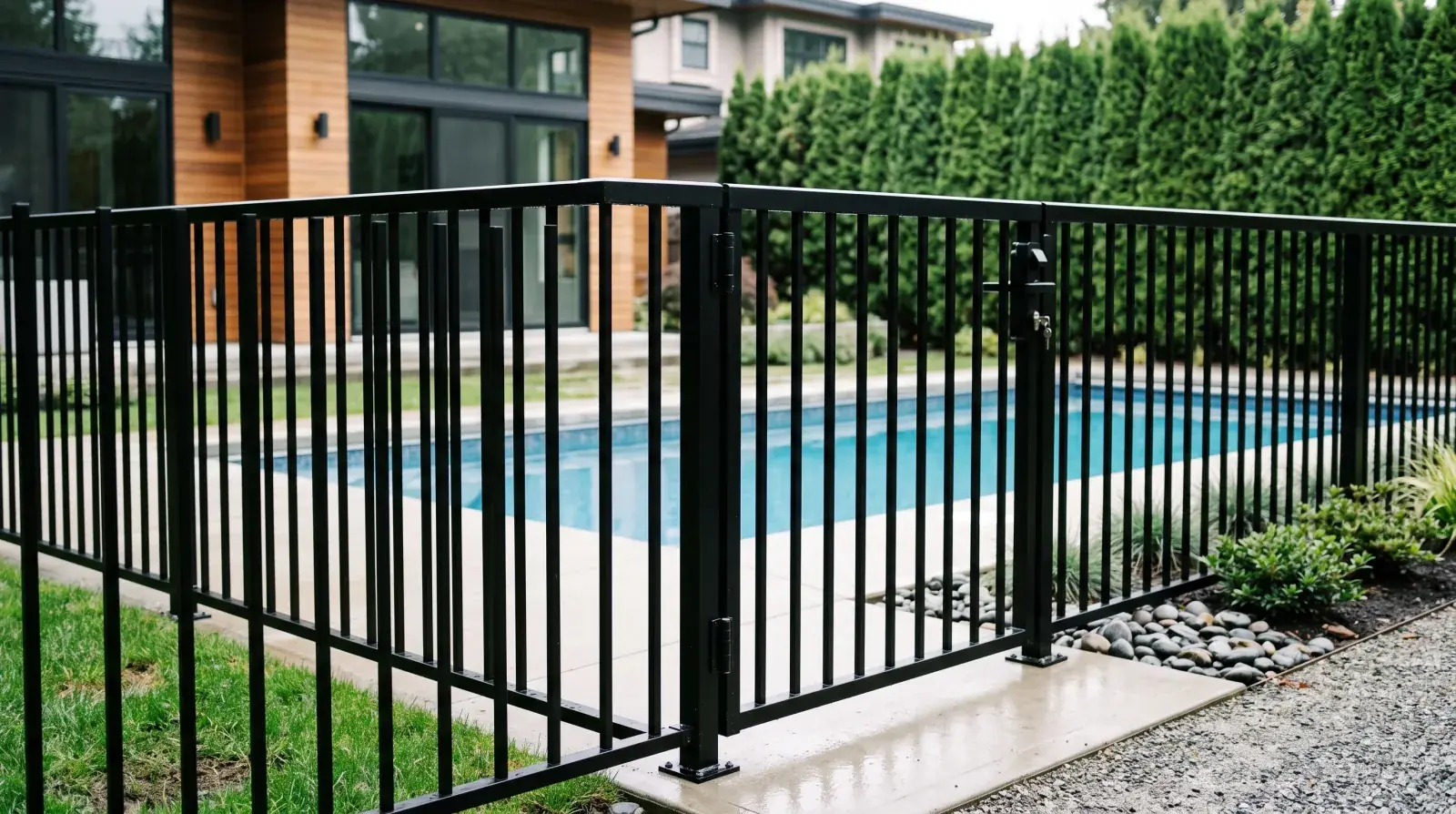
Steel does not burn. Hand a building inspector that sentence and they will finish it for you: steel does not burn, but it does not stay strong either. As temperature climbs in a building fire, steel softens. Heat it far enough and a beam that comfortably carried its floor all its life will sag under the same load. That is the entire reason fire protection on structural steel exists, and it is why the protection system deserves as much planning as the steel itself.
We fabricate structural steel in Burnaby for commercial projects across Metro Vancouver, and fire protection is one of the scopes that most often falls into the gap between trades. This post explains what the code is asking for, how the three common protection systems compare, and where coordination between the fabricator, the coating applicator, and the GC actually matters.
Why bare steel needs fire protection
The BC Building Code handles fire safety in larger buildings partly through fire-resistance ratings. For most commercial, institutional, and larger residential buildings, the ones designed under the code’s Part 3 requirements for their size and occupancy, structural assemblies must keep doing their job for a rated period in a standard fire test. The rating is expressed in hours, and it buys time: time for occupants to leave, time for fire crews to work, time before anything structural gives way.
Bare steel does not deliver those rated times on its own. It heats too quickly. So the design team, usually the architect with a code consultant, determines which assemblies need which ratings, and a protection system is chosen to get each steel member through its rated period. The fabricator does not set the ratings. Our job is to supply steel that the chosen system can be applied to, which turns out to involve more coordination than people expect. More on that below.
One point worth being precise about: the required ratings depend on the specific building, so treat everything here as background and let the design team confirm what applies to your project.
The three common protection systems
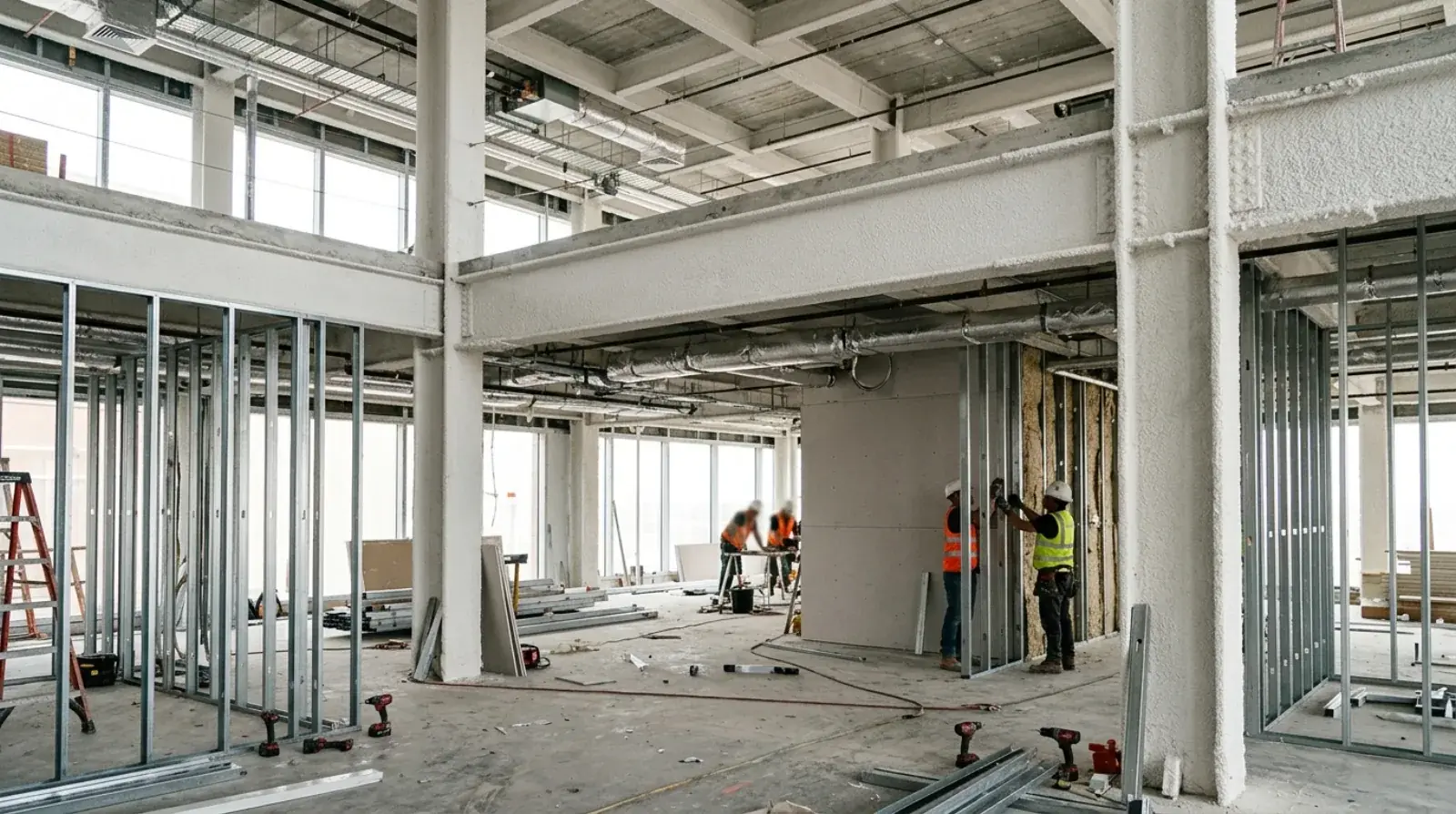
Spray-applied fireproofing is the workhorse. A cementitious or fibre-based material gets sprayed onto the steel after erection, building up a soft, insulating layer. It is the most economical option per square metre of protected steel and it goes on fast. It is also rough, grey, and fragile to impact, which is fine above a ceiling and unacceptable in a lobby.
Intumescent coatings are the thin option. Applied like paint in one or more coats, an intumescent film sits quietly at a few millimetres or less until a fire heats it. Then it expands to many times its thickness, forming a char foam that insulates the steel underneath. Because the applied film is thin, the shape of the steel stays visible, which is why intumescents and exposed architectural steel go together.
Encasement is the oldest method: wrap the member in a material that resists fire on its own. In modern practice that usually means gypsum board assemblies boxed around columns inside partitions, or concrete around steel in specific locations. Where a wall or shaft is being built around the steel anyway, encasement can protect the member almost for free.
Most buildings use all three. The question is never which system wins outright, it is which system fits each part of the building.
Where intumescent coatings fit
Exposed steel is the short answer. When the architecture wants the frame in view and the code wants a rating, intumescent coating is usually the only path that satisfies both. A coated beam still reads as a beam. Flange edges stay crisp, bolted connections stay legible, and the finish can be topcoated in the architect’s colour. On Vancouver and Burnaby projects we see intumescents specified for lobby columns, exposed braces in retail spaces, feature stairs, and canopy steel where the underside stays visible.
Application can happen in our shop or on site. Shop application gives controlled temperature and humidity, which matters because intumescent films are sensitive to conditions during cure, and Metro Vancouver’s damp shoulder seasons are not kind to site painting. The cost of shop application is logistics: coated pieces need padded handling, and every connection completed in the field needs the coating made good afterward at verified thickness.
Thickness is the quiet technical point. The required film build depends on the rating and on the size of the steel section, because a heavy column heats more slowly than a light one. The applicator works from the manufacturer’s listed designs, measures film thickness as they go, and records it. Those records end up with the building inspector, so they are part of the package, not paperwork to improvise later.
Where spray fireproofing and encasement still win
If nobody will ever see the steel, paying the intumescent premium buys nothing. Roof structure above a ceiling grid, floor framing hidden in a plenum, beams buried in service corridors: spray fireproofing protects all of it at the lowest applied cost, and its rough texture is irrelevant behind drywall.
Spray has one weakness worth planning around, which is durability. It is soft. Trades pulling cable and hanging ductwork knock it off, and every gouge is a hole in the fire protection until someone patches it. On busy sites the patching scope is real and it belongs to somebody, ideally somebody named in a contract. In parkades and service areas where impact is routine, the design team sometimes selects tougher formulations for exactly this reason.
Encasement earns its place where construction is happening around the steel anyway. A column that lands inside a demising wall can be rated with gypsum board layers as part of the wall assembly. Steel in shafts gets similar treatment. No spray rig, no coating applicator, just the drywall crew doing a defined assembly.
Coordination between fabricator, coater, and GC
Here is where projects lose time, because fire protection touches three or four contracts at once.
Surface preparation and primer come first. Some spray fireproofing products bond best to bare steel and lose adhesion over certain primers, while intumescent systems typically require a specific compatible primer under them. The fabricator needs to know the protection system before the steel is finished, not after, because blasting and priming happen in the shop. A one-line note in the steel scope, stating which members get which surface, prevents an expensive re-blast later.
Connections need masking. Slip-critical bolted connections rely on friction between the mating surfaces, and coatings on those surfaces are restricted, so they get masked before coating and completed before touch-up. Field welds burn back any coating near them, so the touch-up scope after erection is predictable and should be priced by someone from day one. We walk through how these interfaces get written into a clean steel scope in our guide for general contractors, and the documentation side follows the same pattern as the rest of the package described in what a structural steel package includes.
Sequence is the GC’s lever. Shop-applied intumescent means slower handling but almost no site painting. Field application means bare-steel erection speed but a coating crew in the building later, with the temperature and humidity windows that implies. Neither answer is always right. The wrong answer is deciding after the steel is fabricated.
If you are pricing a rated steel building anywhere in Metro Vancouver and want the fire protection interfaces sorted before they become disputes, send us the drawings and we will flag exactly which members need which surface, in writing, at quote stage.