A driveway or entry gate is one of the few pieces of metalwork on a home that has to look good, hold up to the weather, move on its own, and keep people out. That is a lot to ask of one piece of steel or aluminum. So before we talk about the look, we talk about the material, because the material decides how strong the gate is, how well it automates, and how it survives Vancouver rain.
At our Burnaby shop we build gates in steel, in aluminum, and in what many clients call a modern iron look, which we make out of steel. Below we walk through each one honestly. There is no single best material. There is the right one for your entrance, and the goal of this post is to help you find it. If you want the full picture on gate types first, our guide to custom metal gates in Vancouver is a good place to start.
Steel: strength and a solid modern presence
Steel is the strongest of the three for a given size. That matters at a gate in two ways. First, security. A steel gate resists a hard push, a shove, or an impact better than a lighter metal, so if keeping people out is a top goal, steel gives you more. Second, presence. Steel reads heavy and solid at the entrance of a home, which is the look many modern Vancouver and Coquitlam owners are after.
The common worry about steel is rust, and it is a fair worry in our wet climate. Bare steel left outdoors in Vancouver would rust. That is why we never leave it bare. We hot-dip galvanize the steel, which follows ASTM A123, and then powder coat it. The galvanizing puts a zinc layer over the steel and the powder coat seals and colours it. Done this way, rust does not get a chance to start, and the gate holds its finish for many years even with heavy rain. Our shop welds this steel to CSA W59, so the joints are as sound as the coating.
The trade-off with steel is weight. A steel gate is heavier, which means it needs a stronger operator to automate and puts more wear on the hinges over time. That is fine as long as the gate is planned for automation from the start, which we always do. We never bolt a motor onto a gate that was not sized for it.
Aluminum: light weight and no rust
Aluminum solves the two things steel makes you work for. It weighs much less, and it does not rust.
The light weight is a real advantage for automation. A lighter gate is gentler on the motor and the hinges, so an automated aluminum gate tends to cycle for years with less strain on the parts. If your main goal is an easy, low-maintenance automated entry, aluminum has an edge.
The no-rust part matters most on exposed lots. Near the water in West Vancouver, or on any property that catches salt air, aluminum handles the corrosion better than steel can because there is simply no iron in it to rust. It still gets a powder coat for colour and looks, but the base metal is not fighting rust the way steel is.
The trade-off is strength. Aluminum is strong enough for many residential gates, but for the same size it is not as strong as steel. For a heavy security gate, or a very wide gate that has to stay rigid across a long span, steel usually wins. So aluminum is the pick when upkeep and light weight matter more than raw strength.
The modern iron look, built in steel
Many clients come to us asking for an iron gate. Almost none of them actually want old iron. What they want is the look: dark, solid, and substantial, with clean vertical bars.
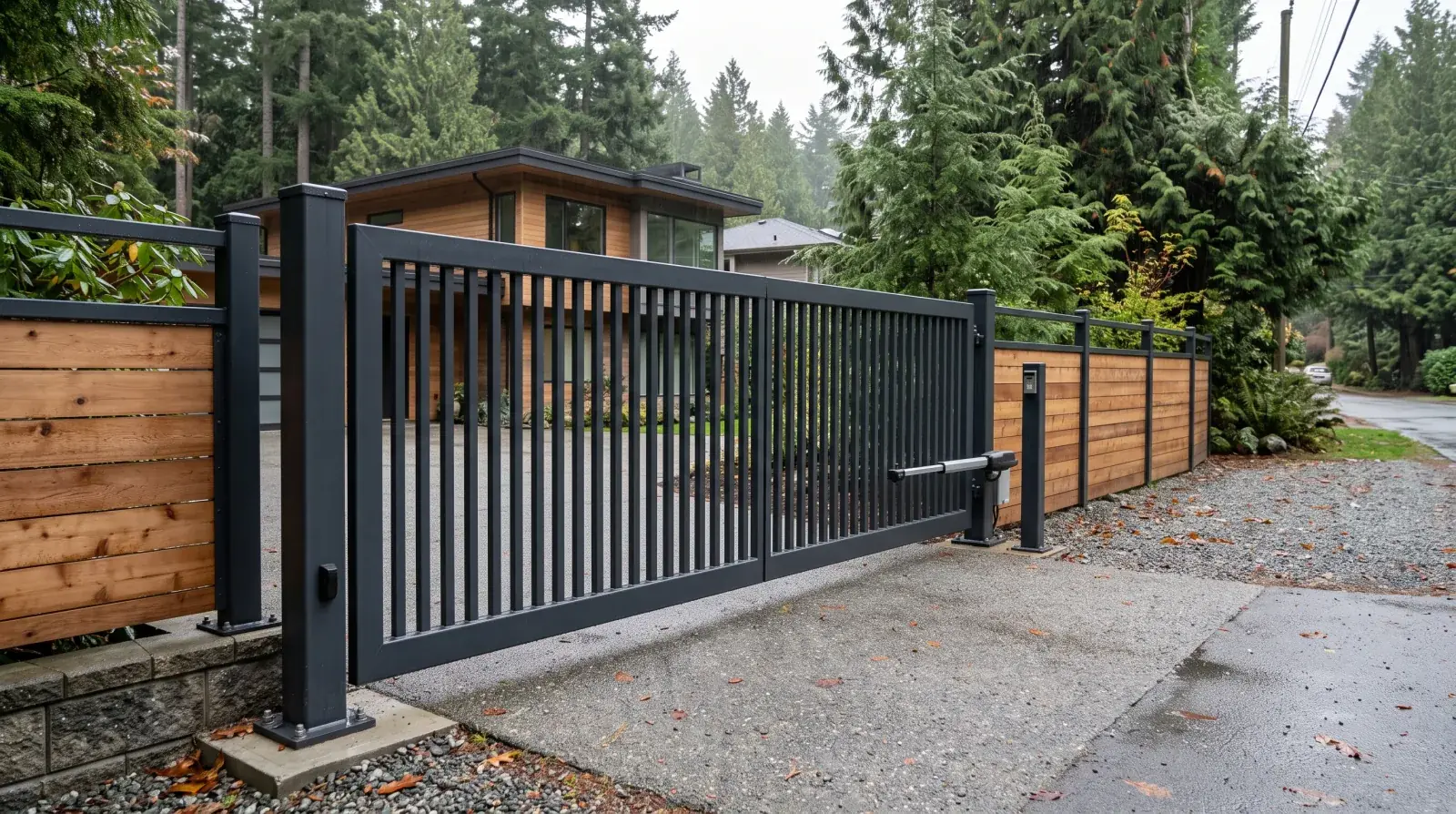
We build that look out of steel, not wrought iron. Here is the difference. Old wrought iron work is full of scrolls, twists, and curled details. We do not make that. Our version uses modern flat bars and straight lines to give you the same solid dark presence with a contemporary feel. It suits modern Vancouver homes far better than the ornamental style, and because it is steel, it carries all the strength and finish benefits we covered above.
So when you picture an iron gate, know that you can have that heavy, timeless look without the fussy scrollwork, and without the rust problems people associate with old iron. It is modern steel doing the job, finished to last in our climate.
You can also mix materials. A steel frame with wood or composite infill is a popular West Coast look. The steel frame carries the load and gives you the clean lines and strength, while the wood face adds warmth. We build these for many homes in Vancouver and North Vancouver where owners want the modern-warm blend rather than all metal.
Weight, automation, and security: choosing for your gate
Once you understand the three materials, the choice comes down to how you will use the gate. Three questions decide it.
How much do you care about security? If a strong, impact-resistant gate is the priority, lean toward steel. If the gate is mostly for privacy and looks, aluminum or a steel-and-wood mix is plenty.
Are you automating it, and how wide is the opening? Weight drives the operator choice. A heavier steel gate needs a stronger motor and can wear parts faster, while a lighter aluminum gate is easier on the automation. We plan the gate and the operator together so the motor matches the real weight, which is what keeps an automated gate running reliably. Whether you go with a swing or a slide gate also changes the math, and our guide to swing versus slide driveway gates in Vancouver covers how the opening and the slope of your driveway affect that.
How exposed is the gate to weather? A gate set back under cover has an easier life than one out in the open near the water. For very exposed or coastal Coquitlam and West Vancouver sites, we either choose aluminum or spec heavier protection on the steel.
Finish and upkeep over the years
Whatever material you pick, the finish is what you live with day to day, and it decides how much upkeep the gate needs. This is worth thinking about before you choose, because a gate is a daily-use item that swings or slides thousands of times a year.
On steel, the finish is doing real protection work. The galvanizing and powder coat we described above is not only about colour, it is the barrier that keeps rust away in our climate. That finish is durable, but it is not indestructible. A deep scratch that reaches bare steel can let rust start at that spot, so we recommend touching up any damage rather than leaving it. Kept up, a galvanized and powder coated steel gate in Coquitlam or Vancouver holds its look for decades. On aluminum, the powder coat is mostly about colour and looks, since there is no rust to fight underneath, so a scratch is a cosmetic issue rather than a structural one.
The other upkeep item on any gate is the moving hardware. Hinges, rollers, and the operator all wear over time, and they wear faster on a heavier gate. This is one more reason we plan the gate weight and the operator together from the start. A gate that was sized for its motor runs smoothly for years, while a heavy gate with an undersized motor strains and fails early. Whichever material you choose, we build the gate and its automation as one matched system so the upkeep stays low.
There is no universal best answer, and anyone who tells you one material always wins is selling, not advising. Tell us about your entrance, your need for security and privacy, whether you are automating, and how exposed the gate is. We will recommend steel, aluminum, or a modern iron look in steel, and explain the reasoning. You can see more of our gate work on our driveway gates page. We serve Vancouver, Coquitlam, and the rest of Metro Vancouver from our Burnaby shop, and we build every gate to last in our climate.
See our driveway gates work, then request a quote and we will plan the gate, operator, and permit path for your Metro Vancouver home.