Custom metal fabrication covers everything from a single handrail on a Burnaby townhouse to a 40-ton structural steel package for a six-storey mixed-use building in Mount Pleasant. If your project involves steel, aluminum, or stainless steel built to specific dimensions — not pulled off a shelf — it falls under custom fabrication. Metro Vancouver has a concentrated market of fabrication shops, and the range in quality, capability, and pricing is wider than most people expect.
We’ve operated our C.W.B. certified fabrication shop on Douglas Road in Burnaby since 2009. This guide covers what we’ve learned across thousands of residential, commercial, and structural projects — the material trade-offs, real cost ranges, code requirements, and the things that separate a fabrication shop that delivers from one that doesn’t.
Who needs custom metal fabrication
Three groups account for roughly 90% of the custom fabrication work in Metro Vancouver.
Homeowners building or renovating. You’re putting in a new staircase, replacing deck railings, adding a driveway gate, or building a canopy over a front entry. Stock products don’t fit the space, don’t match the design, or don’t meet code for your specific application. A custom fabricator builds exactly what the project needs. Residential metalwork projects make up about half of our annual output.
Architects and designers. You’ve drawn something that doesn’t exist as a catalog product — a floating staircase with concealed steel, a cable railing system that wraps a curved balcony, a cantilevered canopy over a commercial entry. You need a shop that can read your drawings, produce accurate shop drawings, and build it to spec without compromising the design intent.
General contractors on commercial builds. The structural steel and misc metals packages on a commercial project involve coordination with the engineer of record, the architect, and half a dozen other trades. You need a fabricator that can manage RFIs, hit schedule milestones, and deliver certified work that passes inspection without callbacks.
Types of custom metalwork
Residential metalwork
Residential projects in Metro Vancouver break into a few common categories:
Staircases. Mono stringer stairs (single central beam with cantilevered treads) are the dominant style in new custom homes across the North Shore and Burnaby. Double stringer systems are more traditional and still common in renovation work. Floating staircases — where the steel structure is hidden inside a wall — run $25,000–$60,000+ depending on span, material, and finish.
Railings. The most common residential fabrication scope. Steel picket railings start at $120 per linear foot installed; cable systems run $150–$275; glass-and-metal hybrids push $250–$400+. Our full breakdown is in the railing cost guide. Material choice matters here — read our comparison of steel vs. aluminum railings for Vancouver’s climate.
Gates. Driveway gates and pedestrian gates range from $3,000 for a simple swing gate to $15,000+ for a motorized double-swing or sliding system with ornamental details. Gate automation adds $1,500–$4,000 to the fabrication cost depending on the operator and access control system.
Canopies and awning structures. Steel-framed canopies over entries, decks, and carports. A typical residential canopy in the 8-by-12-foot range runs $5,000–$12,000 depending on whether it’s open-frame or includes glass or polycarbonate panels.
Decorative ironwork. Window grilles, fireplace screens, furniture frames, custom brackets. These are smaller scopes — usually $500–$5,000 — but they require the same shop drawing and finishing process as larger projects.
Commercial and industrial metalwork
Commercial metalwork involves higher volumes, stricter documentation, and tighter coordination with the project schedule.
Stair systems. Commercial stairs — fire egress stairs, feature stairs in lobbies, mezzanine access — are engineered to higher load ratings than residential. A standard commercial egress stair with concrete-filled pan treads runs $8,000–$20,000 per flight. Feature stairs with glass guards and custom finishes can exceed $50,000 per flight.
Glass railing and guard systems. Glass guards in commercial lobbies, atriums, and mezzanines are spec’d by the architect and engineered for crowd loading. These systems use 12mm or 15mm tempered or laminated glass in aluminum or steel channels, with installed costs of $300–$600 per linear foot depending on the system type.
Miscellaneous metals. The catch-all category on commercial drawings. Bollards, access ladders, roof hatches, equipment platforms, handrails, guardrails, decorative screens, signage structures. On a mid-rise building, the misc metals package can run $50,000–$200,000. It’s typically broken out as a separate trade scope from structural steel.
Tenant improvement metalwork. Restaurant fit-outs, retail storefronts, office partitions. These are often fast-track scopes with 3–4 week timelines. A bar top with steel frame and custom brackets, a steel-and-glass partition wall, a decorative feature wall — scope varies wildly, but budgets typically range $5,000–$30,000.
Structural steel
Structural steel is the backbone — literally. It’s the beams, columns, bracing, and connections that hold up the building.
Residential structural steel packages in Metro Vancouver typically cost $12–$18 per square foot of building area for a standard wood-frame house with steel moment frames. That works out to $36,000–$54,000 on a 3,000 sq ft custom home. The cost goes up on houses with large cantilevers, open-concept floor plans with long spans, or seismically demanding sites.
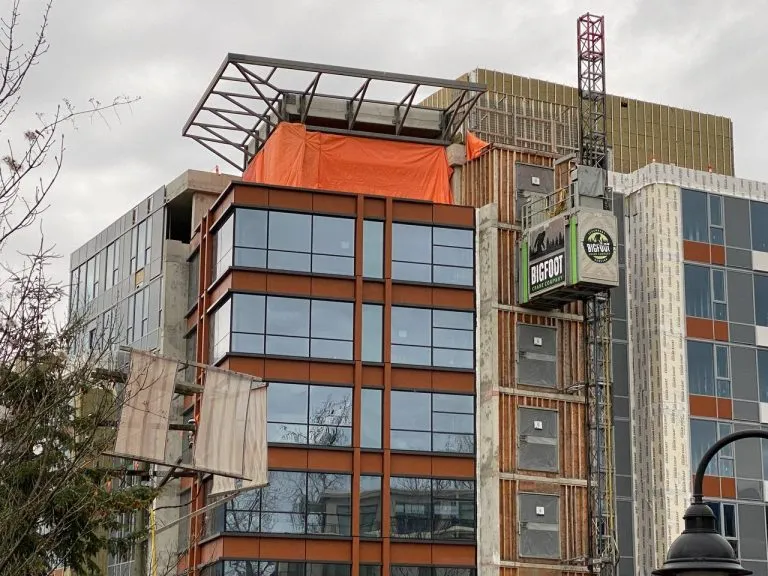
Commercial structural steel — multi-storey buildings, warehouses, industrial facilities — is priced by tonnage. Fabricated and erected structural steel in the Metro Vancouver market runs $4,500–$7,000 per ton in 2026, depending on connection complexity, coating requirements, and site access. A 200-ton package for a six-storey mixed-use building is a $900,000–$1,400,000 scope.
BC’s seismic requirements add cost that you won’t see in non-seismic regions. Earthquake-resistant steel connections — moment connections, braced frames, base plates designed for lateral loads — require heavier members, more welding, and independent inspection. On a typical residential steel package, seismic detailing adds 10–15% to the fabrication cost.

Materials: what to use and when
Choosing the right metal is one of the first decisions on any fabrication project. Here’s how the four main options compare.
Mild steel (carbon steel)
The workhorse of custom fabrication. About 70% of the metalwork we produce is mild steel. It’s strong, weldable, cost-effective, and takes powder coating and paint well. Raw material cost for structural-grade mild steel runs about $1.20–$1.80 per pound in 2026.
The downside: it rusts. In Vancouver’s 1,200mm of annual rainfall, unprotected mild steel shows surface rust within weeks. Every exterior mild steel project needs proper surface preparation and coating — at minimum, powder coat; ideally, hot-dip galvanizing plus powder coat for a 20–30 year service life. More on this in our finish comparison guide.
Best for: Staircases, railings, structural steel, gates, canopies, general fabrication where the steel will be coated.
Stainless steel (304 and 316)
Stainless is corrosion-resistant, strong, and looks good without any coating. The two grades you’ll encounter on Vancouver projects:
304 stainless is the standard grade for interior applications — kitchen equipment, interior railings, decorative panels. It handles normal interior moisture fine but can pit in prolonged salt or chemical exposure.
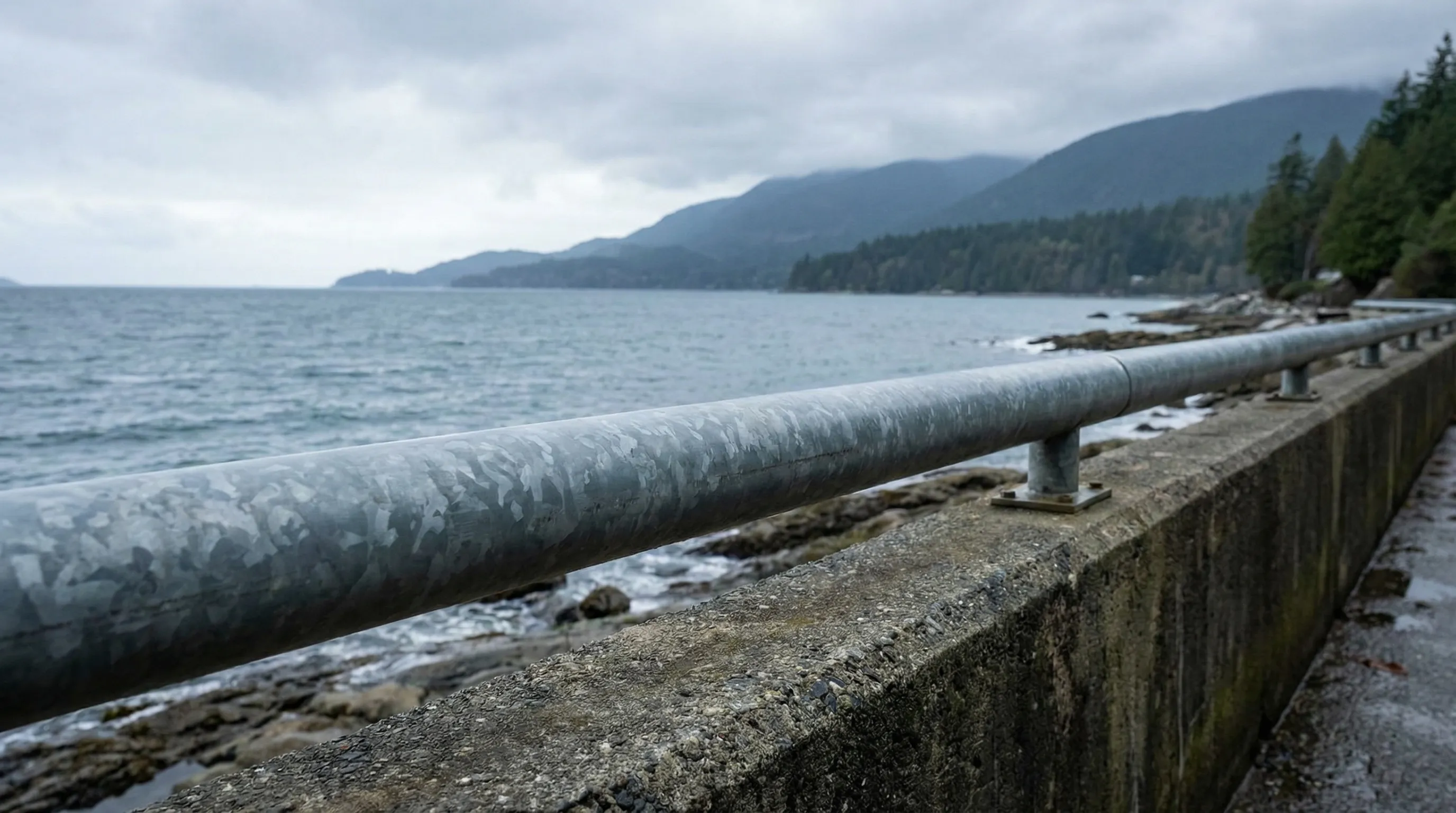
316 stainless contains molybdenum, which gives it better resistance to salt air and chlorides. It’s the right choice for waterfront properties in West Vancouver and North Vancouver, pool enclosures, and marine environments.
The cost gap is real. Stainless steel raw material runs 2.5–3.5x the price of mild steel. Welding stainless takes more skill and time — the heat management is trickier, and cleanup to a brushed or polished finish is labour-intensive. A stainless steel railing costs roughly double the equivalent mild steel railing before finish costs.
Best for: Waterfront and coastal projects, food service environments, applications where the metal will be exposed (no coating), high-end residential where the client wants a polished or brushed metal look.
Aluminum
Lightweight, naturally corrosion-resistant, and easy to work with. Aluminum weighs about one-third as much as steel, which matters on projects where weight is a constraint — rooftop railings, cantilevered balcony guards, or retrofits on older structures where the existing framing can’t handle heavy steel.
Aluminum is softer than steel. It dents more easily, and the welds on aluminum are more visible and harder to grind to a clean finish. It’s also weaker per cross-section — an aluminum railing post needs to be thicker than a steel post to hit the same load rating.
Raw aluminum costs more than mild steel but less than stainless — roughly $2.50–$4.00 per pound for extruded profiles. Prefabricated aluminum railing systems are the budget option at $60–$150 per linear foot installed. Custom welded aluminum pushes into the $120–$200 range.
Best for: Prefab railing systems, lightweight applications, corrosion-sensitive locations where the budget doesn’t stretch to stainless, anodized architectural finishes.
Wrought iron
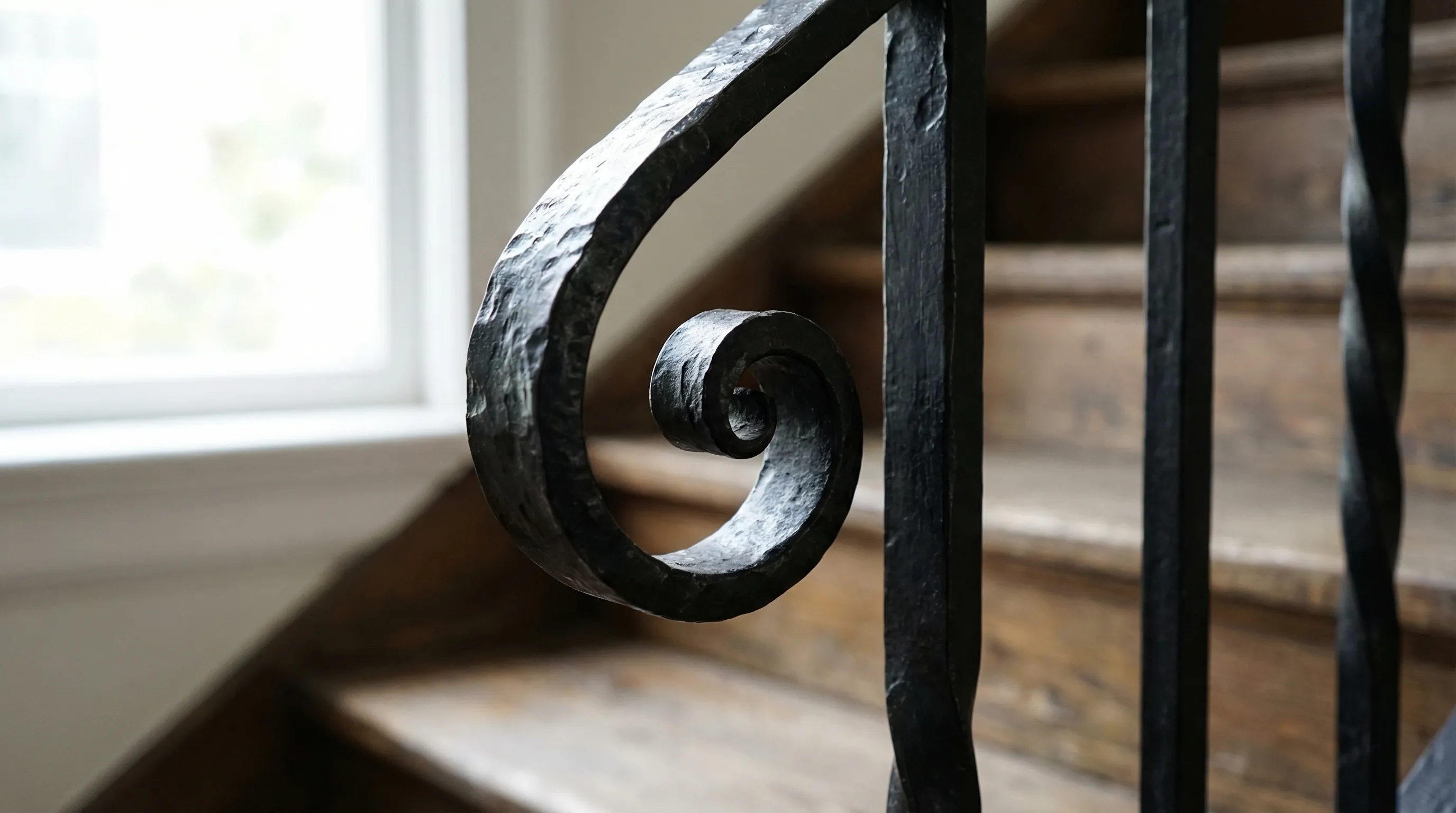
True wrought iron — hand-forged, with the grain structure that gives it its characteristic look — is a specialty material. Most “wrought iron” work today is actually mild steel shaped to look ornamental. The distinction matters mainly to heritage restoration projects and high-end custom gates.
Ornamental steel fabrication with forged details (scrolls, rosettes, hammered textures, twisted bars) costs 30–50% more than equivalent clean-line fabrication because of the hand labour involved. A pair of ornamental driveway gates with forged details runs $8,000–$15,000 versus $3,000–$6,000 for a clean modern design in mild steel.
Best for: Heritage restoration, ornamental gates and railings, decorative residential ironwork where the client wants a traditional forged aesthetic.
The fabrication process — from first call to installed steel
Every project follows the same basic arc, whether it’s a 20-foot deck railing or a 200-ton commercial steel package. Our detailed process walkthrough covers each step in depth. Here’s the summary.
Step 1: Consultation and site measure
The project starts with a conversation about what you need and a site visit to take field measurements. On residential work, this takes an hour or two. On commercial projects, it can involve multiple site visits, drawing reviews, and coordination meetings with the architect and GC.
We measure everything in the field — even when architect drawings exist — because as-built conditions almost never match the drawings exactly. A concrete slab that’s 15mm out of level or a wall that’s 20mm off plumb changes the fabrication dimensions.
Step 2: Shop drawings
Shop drawings are the fabrication blueprint. They show every dimension, material callout, connection detail, and finish specification. On residential work, shop drawings take 3–7 days. On commercial scopes with engineer-stamped connections, the drawing and review cycle can run 2–4 weeks.
This is where problems get caught cheap. Moving a post 50mm on a shop drawing costs nothing. Moving it after the steel is cut and welded costs a lot. We don’t cut steel until drawings are approved.
Step 3: Fabrication
Steel is cut, drilled, bent, welded, and ground in the shop. Our Burnaby facility handles everything from light gauge sheet metal work to heavy structural assemblies. Fabrication time depends on scope: a set of stair railings takes 1–2 weeks; a commercial stair system might take 3–4 weeks; a structural steel package for a building takes 4–8 weeks.
All structural welding is done to CSA W47.1 standards under our C.W.B. certification. That means documented weld procedures, qualified welders, and regular third-party inspection. For a deeper explanation of what that certification means, read our CWB certification article.
Step 4: Finishing
The finish gets applied after fabrication is complete (or in some cases, after assembly but before final welding of field connections). Choosing the right finish depends on the application, exposure, and budget.
Step 5: Installation
The finished metalwork gets delivered and installed on site. Residential installs typically take 1–3 days. Commercial installs are scheduled in coordination with the GC and can span days to weeks depending on the scope and sequencing with other trades.
Cost ranges for major project types
These are 2026 installed prices in Metro Vancouver — materials, fabrication, finishing, and installation included. Every project is different, but these ranges reflect what we see across our active work.
| Project type | Typical cost range |
|---|---|
| Steel picket railing (per linear foot) | $120–$200 |
| Cable railing system (per linear foot) | $150–$275 |
| Glass-and-metal railing (per linear foot) | $250–$400+ |
| Aluminum railing — prefab (per linear foot) | $60–$150 |
| Mono stringer staircase | $15,000–$35,000 |
| Floating staircase (concealed steel) | $25,000–$60,000+ |
| Double stringer staircase | $12,000–$25,000 |
| Driveway gate — single swing | $3,000–$6,000 |
| Driveway gate — double swing with automation | $6,000–$15,000+ |
| Entry canopy (8’x12’) | $5,000–$12,000 |
| Residential structural steel package (per sq ft) | $12–$18 |
| Commercial structural steel (per ton, fab + erect) | $4,500–$7,000 |
| Commercial egress stair (per flight) | $8,000–$20,000 |
| Commercial glass guard system (per linear foot) | $300–$600 |
What pushes a project toward the top of these ranges: complex geometry, stainless steel or specialty materials, premium finishes, difficult site access, tight timelines, and seismic detailing requirements.
What keeps it near the bottom: straight runs, standard mild steel, single-colour powder coat, ground-level access, and a reasonable lead time.
Finish options and what they cost
The finish on your metalwork determines how it looks and how long it lasts. In Metro Vancouver, where exterior steel faces rain for eight months of the year, finish selection is not cosmetic — it’s structural maintenance.
Powder coating is the standard finish for most custom metalwork. An electrostatic powder is applied to the steel surface and heat-cured in an oven, creating a durable, even coating that resists chipping and fading. Cost: $8–$15 per linear foot on railings, or roughly 10–15% of the total fabrication cost on larger scopes. Standard colours (matte black, white, dark bronze) are stock. Custom colours, metallics, and textured finishes add 15–25% to the coating cost.
Hot-dip galvanizing is the gold standard for exterior corrosion protection. The fabricated steel is submerged in molten zinc at 450C, bonding a zinc layer to every surface — including inside hollow sections that spray coatings can’t reach. Cost: $12–$25 per linear foot on railings. Galvanizing adds a matte grey appearance; most clients top-coat with powder coating for both protection and colour. The galvanize-plus-powder-coat system gives 20–30 years of service life in Vancouver’s climate.
Brushed or polished stainless steel needs no coating. The finish is the metal itself, maintained with periodic cleaning. The look ranges from a soft satin brush to a mirror polish. Labour to achieve a consistent brush finish adds 15–20% to the fabrication cost of stainless components.
Anodizing is an electrochemical process that builds a hard oxide layer on aluminum surfaces. It’s more durable than paint on aluminum and comes in a range of colours, though the palette is more limited than powder coating. Anodizing adds $3–$8 per square foot to the component cost. It’s most commonly spec’d on commercial aluminum curtain wall components and architectural panels.
For a detailed comparison with real lifespan data for each system in Vancouver’s rain, read our finish guide.

CWB certification: what it is and why it matters
The Canadian Welding Bureau (C.W.B.) certifies fabrication shops under CSA W47.1 — the national standard for steel welding quality. Certification means a shop’s welding procedures have been qualified by destructive testing, its welders have passed performance tests, and its quality management system is audited annually.
In British Columbia, C.W.B. certification is legally required for all structural steel fabrication. A shop without C.W.B. certification cannot legally produce structural beams, columns, or connections for buildings. For non-structural work like railings and gates, certification isn’t legally mandated — but it’s a strong quality signal.
What certification means in practice: every structural weld at Jeff and Simon Ironworks is made using a qualified welding procedure by a tested welder, documented in our quality records, and subject to inspection by C.W.B. auditors. When an inspector or engineer asks for weld documentation on a project, we have it.
There are different certification divisions within C.W.B. that correspond to the types of steel and welding processes a shop is qualified to perform. Division 1 covers carbon steel. Division 2 covers stainless steel and aluminum. Not every shop holds both. We have a full breakdown of what CWB certification means in a separate article.
BC Building Code requirements for metalwork
The BC Building Code sets minimum standards that affect virtually every custom metalwork project. Here are the requirements that come up most often.
Guardrail heights. Guards are required on any surface more than 600mm above grade. Minimum guardrail height is 1,070mm (42 inches) in most situations. Within a single dwelling unit where the fall height is under 1.8m, the minimum drops to 900mm (36 inches). These heights are measured from the walking surface to the top of the guard.
The 100mm sphere test. No opening in a guardrail can allow a 100mm (4-inch) sphere to pass through. This governs picket spacing, cable spacing, glass panel gaps, and the clearance under the bottom rail. It’s the child-safety provision, and inspectors check it on every project.
Climbability. Guards can’t have climbable elements between 100mm and 900mm above the floor. Horizontal bars spaced like a ladder get flagged. Horizontal cable railings are permitted in BC for fall heights up to 4.2m, but the cables still need to meet the sphere test.
Structural loads. Guards must resist a minimum concentrated load of 0.75 kN/m applied at the top rail, and 1.0 kN/m in assembly occupancies (restaurants, theatres, arenas). The post spacing and member sizing in your railing design need to be engineered to meet these loads.
Seismic design. Structural steel in BC must be designed for the seismic hazard at the building’s location. Metro Vancouver falls in a moderate-to-high seismic zone. This affects connection design, member sizing, and inspection requirements. We cover this in detail in our article on earthquake-resistant steel structures.
Handrail requirements. Handrails on stairs must be graspable — 30mm to 43mm in diameter for circular profiles, with specific shape requirements for non-circular profiles. The top of the handrail must be 865mm to 965mm above the stair nosing. These dimensions directly affect the steel profile selection for stair rails.
How to choose a metal fabrication shop
Not all fabrication shops are the same. The range in Metro Vancouver goes from one-person welding operations in a garage to full-service shops with 10,000+ square foot facilities, in-house engineering, and a crew of certified welders. Here’s what to look for — and we’ve written a more detailed version in our 10 questions to ask a metal fabricator.
1. CWB certification. Non-negotiable for structural work. A strong quality signal for everything else. Ask for the certificate and check the division.
2. A portfolio of similar work. A shop that’s built 50 staircases will handle yours differently than one building its third. Ask to see completed projects similar in scope and material to yours.
3. In-house shop drawing capability. Shops that produce their own fabrication drawings catch problems before steel gets cut. Shops that skip drawings or outsource them to someone who’s never seen the site tend to have more field issues.
4. Finishing capability or a reliable subcontractor. Does the shop powder coat in-house, or do they have a long-standing relationship with a coater? Finishing is where a lot of projects go sideways — poor surface prep, inconsistent colour, runs in the coating. The finish is what the client sees every day.
5. Installation crew. Some shops fabricate only and subcontract installation. Others handle both. An integrated shop that builds it and installs it has accountability for the whole scope. When something doesn’t fit on site, there’s no finger-pointing between two companies.
6. Transparent pricing. A good quote breaks out material, fabrication, finishing, and installation as separate line items. It lists what’s included and what’s not. Vague lump-sum quotes make it hard to compare shops and easy to get surprised by extras.
7. Realistic timelines. Be wary of a shop that promises 3-week delivery on a scope that should take 6–8 weeks. Rushing fabrication leads to quality problems. A shop that gives you a timeline with a buffer built in is being honest, not slow.
8. Trade references. Architects, GCs, and other tradespeople talk. A fabricator with strong repeat relationships with local architects and contractors is a safer bet than one you can’t verify. Ask for two or three references on similar-scale work.
9. Communication during the project. How quickly do they respond to emails? Do they send progress photos during fabrication? Do they flag issues proactively? The shop’s communication during the quoting phase is a preview of how they’ll communicate during the build.
10. Willingness to say no. A good shop will tell you when your design won’t work, when a material choice is wrong for the application, or when the budget doesn’t match the scope. That honesty saves money and prevents problems.
Where Jeff and Simon Ironworks works across Metro Vancouver
Our shop is at 2544 Douglas Road in Burnaby — centrally located for projects anywhere in the Lower Mainland. Most of our residential work falls within a 45-minute drive of the shop.
Vancouver — from East Vancouver character home renovations to downtown condo tower misc metals packages. Vancouver’s densification means a lot of tight-site work with access constraints and coordination with multiple trades.
North Vancouver and West Vancouver — the North Shore is where we do our most architecturally ambitious residential work. Custom homes with mono stringer staircases, cable railings, and structural steel packages designed for steep, seismically active lots.
Coquitlam and Port Moody — a mix of new construction and renovation work. The Burquitlam and Burke Mountain development areas have generated a steady volume of residential staircase and railing scopes over the past several years.
New Westminster — heritage renovation work alongside newer builds. New West’s heritage stock means we sometimes work with existing steel structures that need reinforcement or modification alongside new fabrication.
Squamish and Whistler — we take on select projects in the Sea-to-Sky corridor, typically larger residential builds or commercial scopes where the project budget justifies the additional logistics. Snow loads and elevation affect steel design in ways that don’t come up on Lower Mainland projects.
Getting started with your project
The fastest way to move a fabrication project forward is to bring three things to the first conversation: a sketch, photo, or drawing showing what you want; approximate dimensions or quantities; and whether the metalwork is interior, exterior, or structural.
If you’re working with an architect or designer, connect us early. The fabricator’s input during the design phase catches constructability issues, identifies cost drivers, and locks in material choices before they become expensive changes. Our article on working with architects on metal fabrication projects covers this coordination in detail.
For a ballpark, the cost ranges in this guide will get you in the right zone. When you’re ready for a real number tied to your specific site conditions, request a quote or call our Burnaby shop at (604) 294-0409. We’ll walk through the scope and give you a price you can plan around.