Most of the calls our shop gets about permits start the same way: someone has already chosen a fence design, the contractor is ready to dig post holes, and then a neighbour mentions that the City might require a permit. By that point, half the project decisions are locked in. The rules around custom railings, gates, and fences in the City of Vancouver aren’t complicated, but they don’t always match what people assume from looking at their neighbour’s place.
This is the 2026 version of the rules as they apply to custom metalwork — wrought iron fences, steel gates, ornamental guardrails, and the kind of heavier ironwork we fabricate out of our Burnaby shop. We’ll cover when you need a permit, when you don’t, what changes when an electric motor or a retaining wall enters the picture, and the parts of the BC Building Code that govern guard heights on decks and balconies.
When the City of Vancouver requires a permit for a fence
The default rule on a single detached or duplex lot is straightforward: you can build a fence along your property line without any City permit if it stays at or below 1.2 metres (4 feet) in the front yard and 1.8 metres (6 feet) along the sides and rear. Those numbers come from the City’s residential fence guidance and have held steady through the February 2026 update of the Zoning and Development By-law.
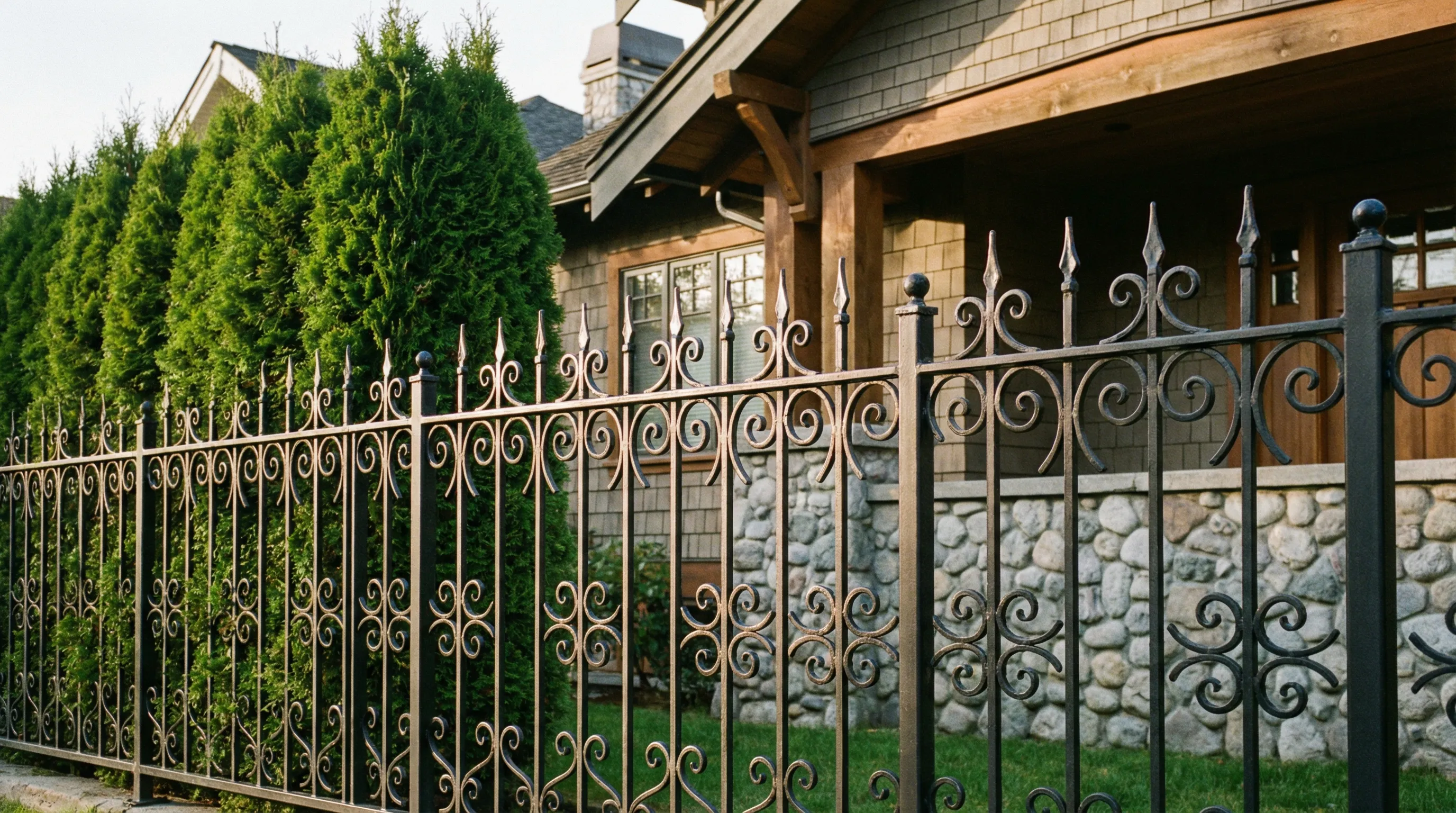
Cross either of those thresholds and you’re in over-height territory. Over-height fences need a development permit, which the City reviews against the bulletin on front-yard fences. The intent of the 1.2 m front-yard limit is to keep the public realm of the street visually open — gardens, hedges, and sightlines for pedestrians. So when you apply for an over-height front fence, expect the City to ask how transparent the upper portion is. A wrought iron picket with at least 50% open area above 1.2 m usually clears review; a solid steel panel almost never does.
A few other situations push you into permit territory regardless of height:
- Combined with a retaining wall — the combined height of the wall plus the fence has to fit under the bylaw maximum, or it needs a permit
- Pool enclosure — required pool fencing has stricter design rules under the BC Building Code
- Corner lots — sightline triangles at the intersection take precedence over the standard maximums
- Heritage or character zones — Shaughnessy and parts of the West End have additional review through the heritage process
- Strata or shared property — anything on common property goes through the strata council and usually a building permit
Where the BC Building Code takes over for railings
Fences are governed by the City’s zoning bylaw. Guardrails on decks, balconies, stairs, and rooftop patios are governed by Section 9.8.8 of the BC Building Code — and that’s a different conversation entirely.
The numbers we work with in the shop every week:
- 915 mm (36 in) minimum guard height for residential decks where the walking surface is less than 1.8 m above the adjacent grade
- 1,070 mm (42 in) minimum guard height for any deck higher than 1.8 m above grade
- 900 mm minimum for guards on flights of stairs
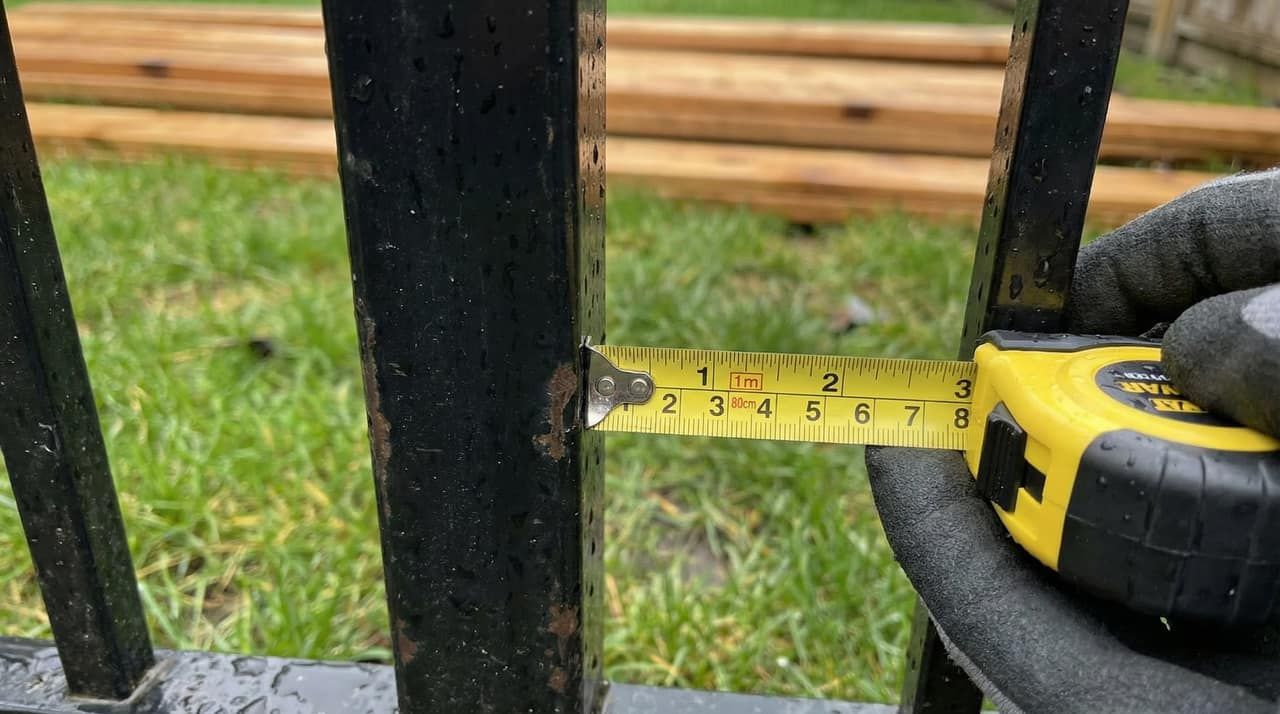
- 100 mm sphere rule — no opening in the guard infill can let a 100 mm (4 in) sphere pass through
- Climb-resistant design required when the protected level is more than 4.2 m above adjacent grade — no horizontal members between 140 mm and 900 mm above the walking surface that would create a ladder effect
The load requirements are also worth knowing if you’re specifying a custom railing: a top rail has to resist a horizontal load of 0.75 kN/m (about 51 lb/ft) and a concentrated point load of 1.0 kN (225 lb) applied at any location. We’ve replaced more than a few “custom” residential railings on East Vancouver decks where the previous installer welded thin tube to undersized posts and failed both load tests at first push.
Because guardrails are part of the building structure, they’re reviewed as part of the building permit for the deck or balcony itself. You don’t apply for a stand-alone “railing permit” on a new deck — the railing details get rolled into the deck submission.
Where electric gates change everything
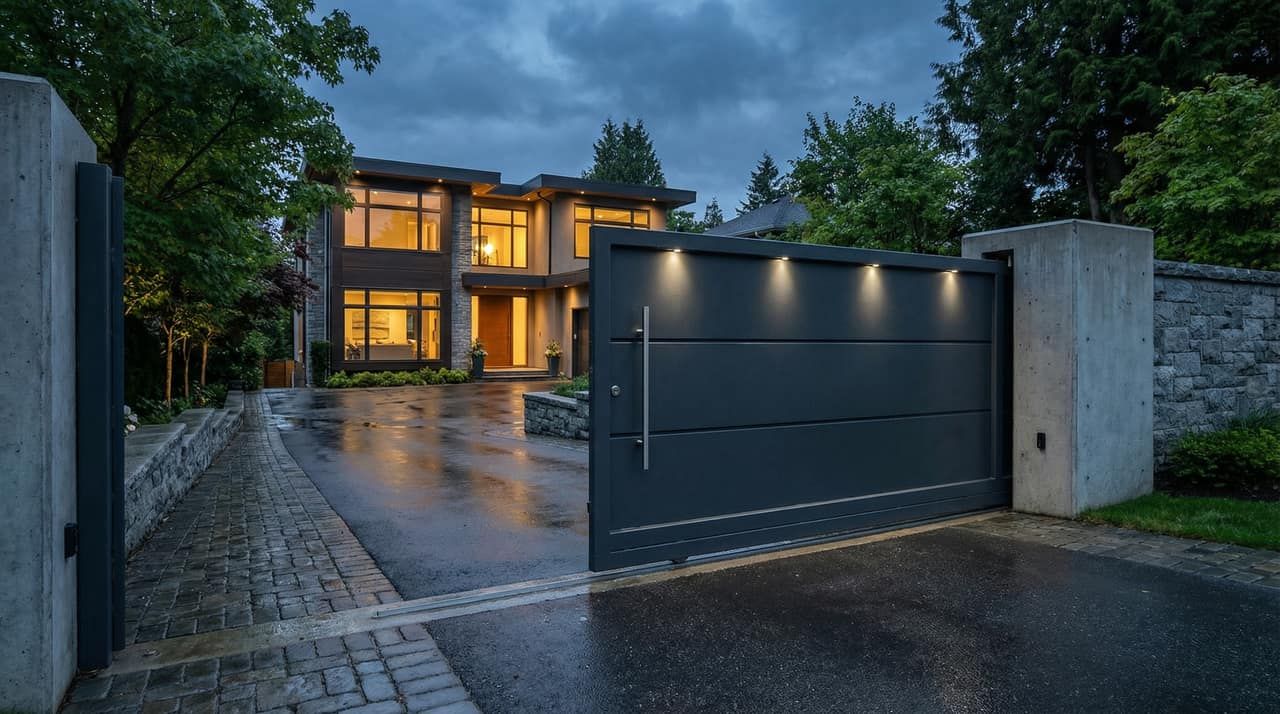
Manual swing or sliding gates without a motor are treated like fences. Add a hardwired motor and you’ve added two layers of approval:
- Electrical permit through Technical Safety BC for the wiring and operator
- Building permit for the gate posts, footings, and operator pad if the structure exceeds the standard fence allowances
Battery or solar operators sit in a more ambiguous spot. We’ve had projects in West Vancouver and Squamish where the City accepted a solar-powered gate as a “fence with hardware,” and others where the inspector still wanted an electrical sign-off. The pattern we’ve seen: if there’s any low-voltage wiring running under a driveway, expect to be asked for an electrical permit even if there’s no AC service to the operator.
The other thing that catches owners off guard is the safety photo-eye and obstruction sensor requirements for any motorized gate near a public way. UL 325 (referenced through Canadian electrical standards) requires entrapment protection on any vehicular gate operator, and the City inspector will usually check this on the post-install visit.
What an over-height fence application actually involves
For an over-height fence — say a 2.4 m (8 ft) ornamental iron fence along the rear lane of a Coquitlam laneway house — the City’s online portal asks for:
- A site plan showing property boundaries, existing structures, and the proposed fence with dimensions and setbacks
- Fence drawings showing height, materials, post spacing, and footing detail
- The completed building permit application form and fee
- Owner authorization if you’re not the registered owner
Where we see applications get bounced back is on the footing detail. The City wants to see how the fence will resist wind loads, especially on a tall ornamental fence in an exposed corner. A 2.4 m iron fence with 4×4 hollow posts at 8 ft on centre needs concrete footings sized for the wind exposure category — usually 250 mm diameter × 600–900 mm deep on a typical Vancouver lot, deeper if you’re up on the North Shore where wind loads jump.
How the same questions play out across Metro Vancouver
We fabricate for projects in Burnaby, Vancouver, Coquitlam, North Vancouver, New Westminster, Port Moody, West Vancouver, Squamish, and Whistler. The core idea — 1.2 m front, 1.8 m side and rear — is shared across most Metro Vancouver municipalities, but the details diverge:
- Burnaby uses similar default heights, with stricter sightline rules at corner lots
- North Vancouver (City and District) requires arborist sign-off if the fence runs through a tree protection zone
- West Vancouver has additional view-corridor rules in some neighbourhoods that can override the standard maximums
- Squamish and Whistler apply higher wind exposure categories, which means heavier footings and post sizing
The lesson we share with every client: don’t assume the rules from your last project carry across the municipal line. We’ve had a homeowner in West Vancouver who had to redesign a 2.0 m driveway fence because of a view corridor that the District flagged at submission — something that wouldn’t have come up two municipalities over.
What this means before you start cutting steel
If you’re commissioning a custom iron fence, automated gate, or heavy ornamental guardrail in 2026, the order of operations matters:
- Confirm the height against the local zoning maximum before drawings are finalized
- Check for combined retaining wall conditions if there’s any grade change
- Decide on the gate operator type before footings are designed — hardwired vs solar changes the post spec
- Run the design past the City at the development inquiry stage if anything is non-standard
- Get the shop drawings sealed by a registered professional if guard loads are part of the scope
Skipping step one and ordering steel first is the most expensive mistake we see. A custom hand-forged iron fence section that has to be cut down by 300 mm after fabrication is a write-off — the proportions don’t survive the change.
For more on how we approach custom fence and gate fabrication, see our custom metal gates in Vancouver guide and the broader BC Building Code railing requirements overview. If you’re starting a project and want a read on whether your design needs a permit, the Burnaby shop is the easiest place to start — bring the architect’s drawings or a sketch and we can usually call it in 15 minutes.