Vancouver gets over 1,200 mm of rain in a typical year. Most of that falls between October and March — six months of near-constant moisture sitting on every exposed metal surface in the city. Add coastal salt air on the North Shore and along the Fraser River, and you’ve got one of the more demanding climates in Canada for exterior metalwork.
We build and install railings across Metro Vancouver from our shop in Burnaby. Steel and aluminum are the two most common materials we work with, and they behave very differently once they’re bolted to a deck or balcony and left to face a West Coast winter. This is a straightforward comparison based on what we actually see in the field — not lab testing or manufacturer marketing.
How Vancouver’s climate affects steel and aluminum
Rain is the obvious concern, but it’s not just the volume. Vancouver’s rain is persistent. A steel railing on an exposed Burnaby deck might stay wet for days at a time between November and February. That constant moisture is what separates our climate from somewhere like Calgary, where it rains less and things dry out fast between storms.
Mild steel corrodes when it stays wet. The iron in the steel reacts with oxygen and water to form rust, and in Vancouver’s conditions, that process starts quickly on unprotected surfaces. We’ve pulled old railings off homes in East Vancouver where the original installer skipped galvanizing — the base plates were paper-thin after 12 years.
Aluminum doesn’t rust. It forms a thin oxide layer on its surface almost immediately after exposure to air, and that layer acts as a natural barrier against further corrosion. In a wet climate like ours, that’s a real advantage right out of the box. An unfinished aluminum railing will develop a dull grey patina over time, but it won’t lose structural integrity the way unprotected steel does.
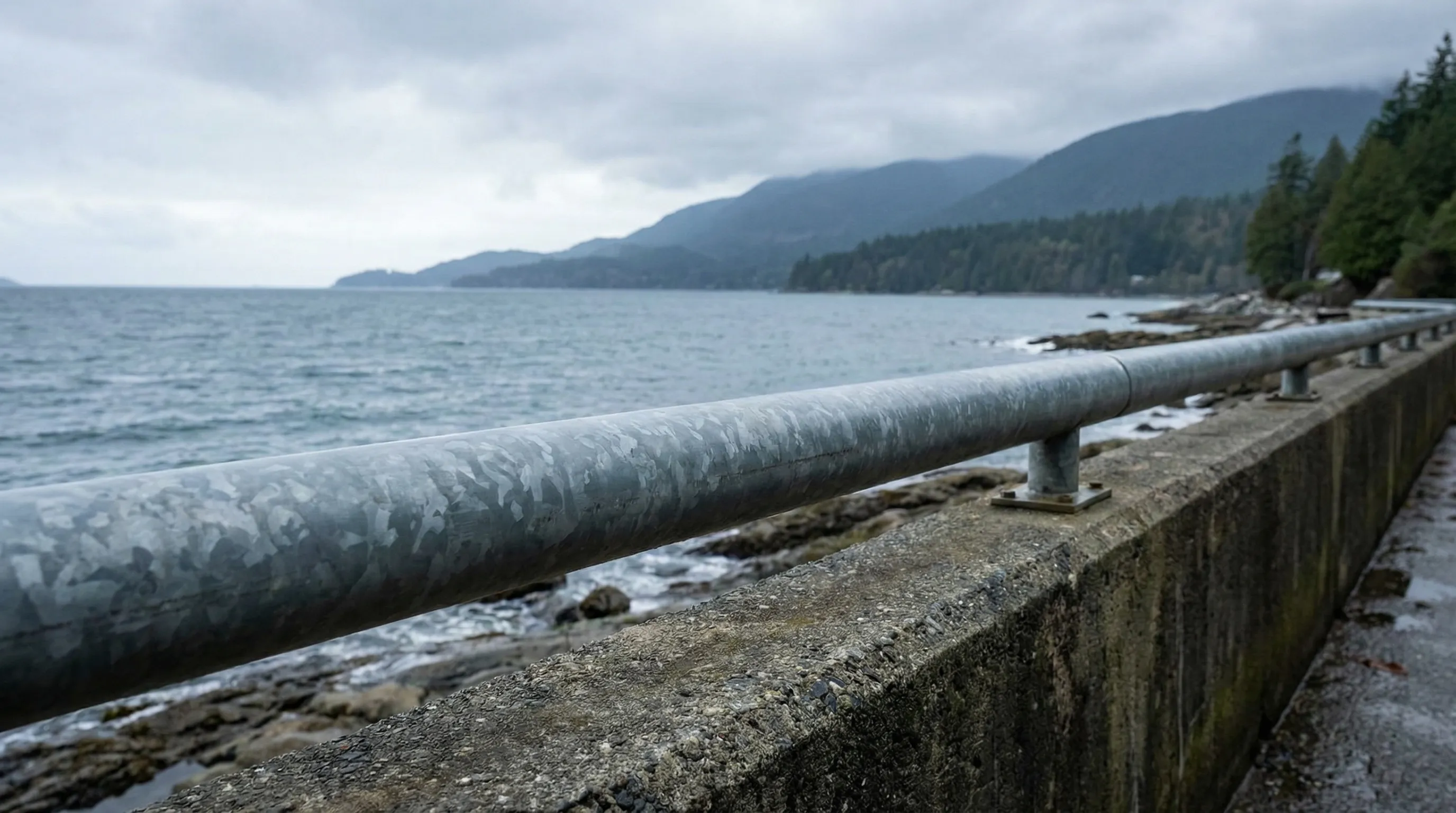
The second factor is salt. Properties along the North Shore waterfront, West Vancouver, Kitsilano, and the False Creek corridor all deal with airborne chlorides from the ocean. Salt accelerates corrosion on mild steel dramatically — we’ve seen ungalvanized steel show pitting within months on exposed balconies near the Burrard Inlet. Aluminum handles salt better than mild steel but isn’t completely immune. Over many years, salt air can cause white powdery corrosion on aluminum, especially at weld joints and mechanical connections.
Where steel wins
Steel is stronger. That’s the short version, and it matters more than people realize when you’re talking about railings that function as safety guards.
Structural capacity. Mild steel has a yield strength roughly 2.5 to 3 times higher than 6061-T6 aluminum (the most common structural aluminum alloy used in railings). That means steel posts can be thinner, span farther between supports, and handle higher loads without deflection. For guardrails on elevated decks, commercial mezzanines, or any application where the railing is the only thing between a person and a drop, that strength margin matters.
Weld quality and integrity. Steel welds are stronger and more predictable than aluminum welds. When you weld aluminum, the heat-affected zone around the weld loses a significant portion of its temper — sometimes 40% or more of its strength. Steel doesn’t have that problem. A properly executed steel weld (we hold CWB certification to CSA W47.1) is as strong or stronger than the base material. On a structural guardrail, that’s not a minor detail.
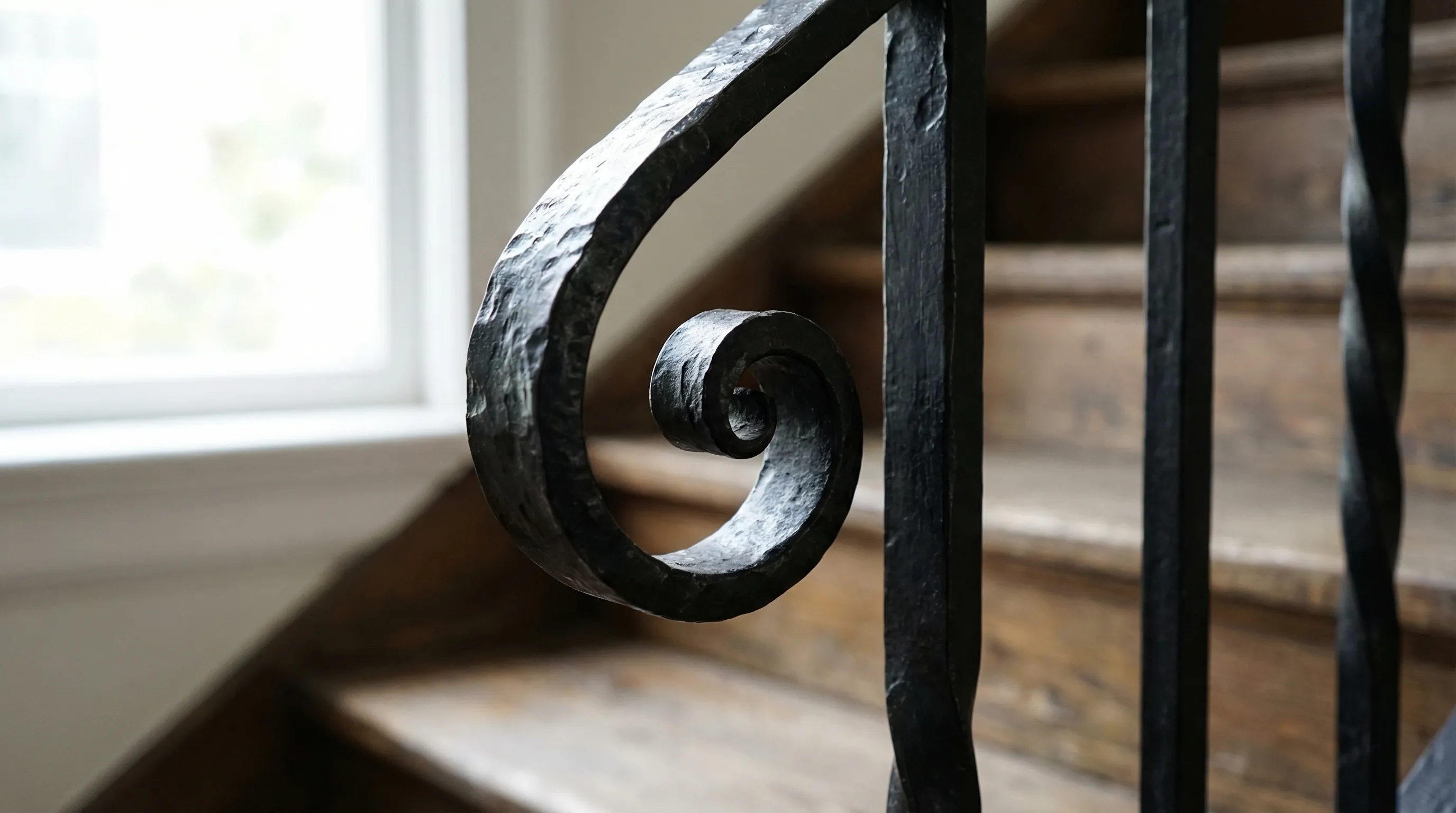
Design flexibility. Steel can be forged, bent, scrolled, tapered, and textured in ways that aluminum simply can’t match. If a homeowner wants ornamental pickets with hammered texture, a curved top rail that follows the profile of a staircase, or integrated forged details, steel is the only practical option. Aluminum is limited to straight extrusions and simple bends for most railing applications.
Longevity when properly finished. A steel railing that’s been hot-dip galvanized and powder coated will outlast most aluminum railings in the same location. We installed powder-coated steel railings on a Burnaby Heights deck in 2019 — the homeowner sent us a photo last month, and the finish still looks clean in 2026. No rust, no peeling, no fading. Seven years in Vancouver rain with zero maintenance beyond the occasional hose-down.
Where aluminum wins
Aluminum has legitimate advantages, and for certain projects it’s the right call.
Corrosion resistance without coatings. You can install raw aluminum and it won’t rust. Period. For a homeowner who wants a low-maintenance deck railing and doesn’t care about a custom look, that’s a meaningful benefit. No galvanizing cost, no mandatory powder coat — though most people still choose powder coat for colour and aesthetics.
Weight. Aluminum weighs about one-third as much as steel. On a cantilevered deck or a structure with limited load capacity, lighter railings reduce stress on the framing. We’ve done railing replacements on older Burnaby and New Westminster homes where the deck structure couldn’t handle the weight of heavy steel posts without reinforcement. Aluminum solved the problem without a structural upgrade.
Lower entry cost. Prefabricated aluminum railing systems start around $60 per linear foot installed. Custom aluminum with welded connections and powder coat runs $100–$150 per foot. Comparable steel picket railings start at $120 and go up from there. For a straightforward 40-foot deck railing, that cost gap adds up.
Maintenance. An aluminum railing needs almost nothing. Wash it once or twice a year if you want it to look sharp. A powder-coated steel railing needs the same washing, but if the coating gets scratched or chipped — a lawnmower throwing a rock, a heavy planter dragging across the surface — the exposed steel underneath will start to rust if you don’t touch it up promptly. Aluminum doesn’t punish you for a scratch the way steel does.
Where aluminum falls short
Aluminum isn’t the answer for every project, and the limitations are worth understanding before you commit.
The strength deficit is real. On a standard residential deck railing at 36 inches high with posts every 4 feet, aluminum works fine. But push those post spacings out to 5 or 6 feet, add a top-mount handrail, or put it on a commercial building where wind loads and crowd loading come into play, and aluminum starts to flex. We’ve been called to reinforce aluminum railings on apartment balconies in Burnaby where the posts were wobbling after a few years — the original specs were too aggressive for the material.
Aluminum welding is harder to do well. The heat-affected zone issue means welded aluminum joints are weaker than the surrounding material unless the entire piece is re-heat-treated after welding, which almost nobody does for railings. Mechanical fasteners (screws, rivets, brackets) avoid that problem but create their own issues — dissimilar metal corrosion if steel fasteners are used, and looser connections that can rattle over time.
You can’t hot-dip galvanize aluminum. That might sound obvious, but it means aluminum relies entirely on its natural oxide layer and any applied coating for protection. In most of Metro Vancouver, that’s sufficient. On a waterfront property with direct salt exposure, aluminum weld joints can develop white corrosion deposits within 5–8 years.
Cost comparison: real numbers for 2026
These are installed prices from our shop, including material, fabrication, finishing, and installation in Metro Vancouver:
Steel picket railing (powder coated, galvanized for exterior): $120–$200 per linear foot. A 40-foot straight deck railing in standard matte black runs around $5,600–$7,200.
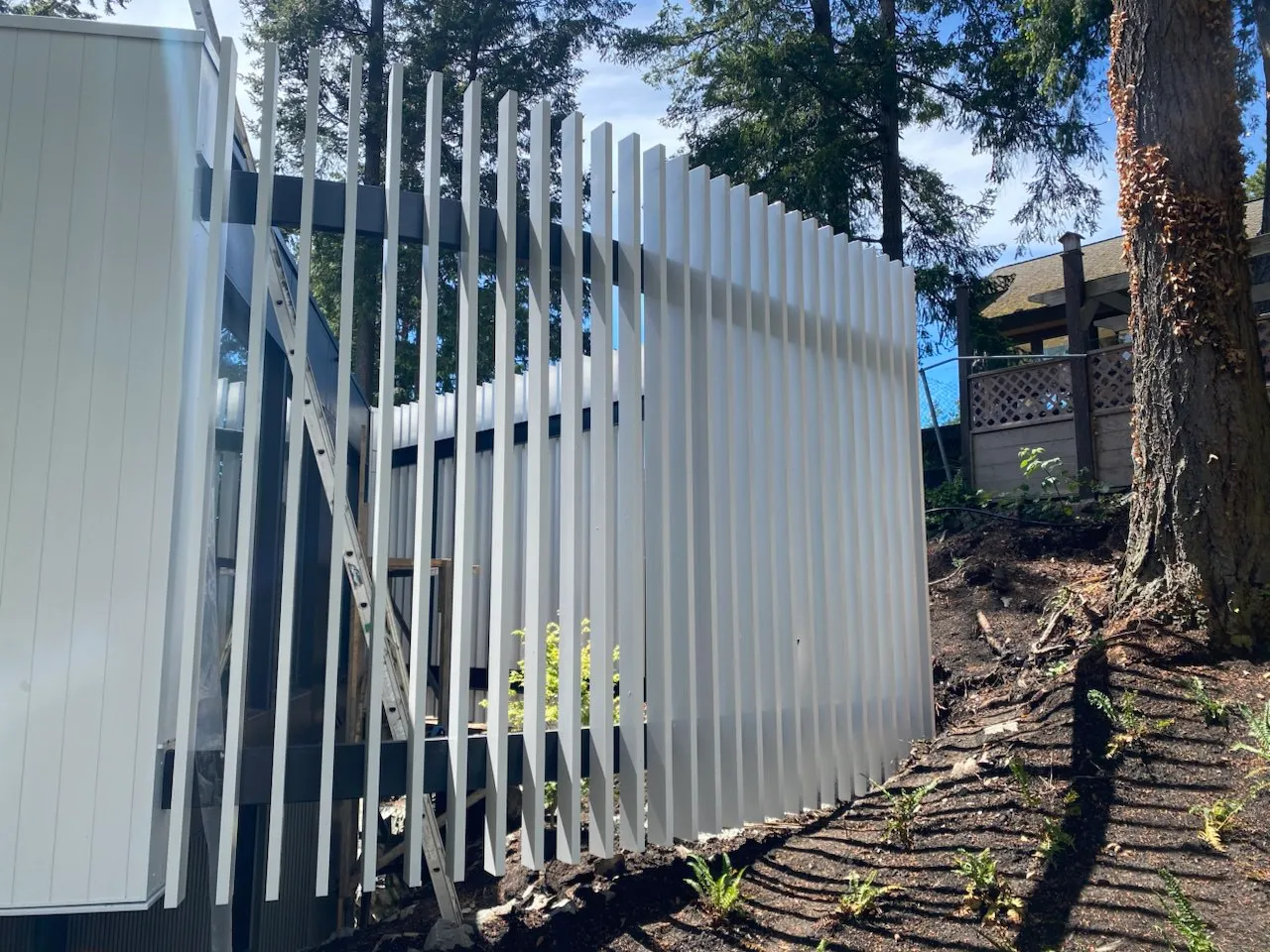
Aluminum picket railing (powder coated): $60–$150 per linear foot. The same 40-foot deck in aluminum runs $2,800–$5,200. Prefab systems at the low end, custom welded at the high end.
Stainless steel 316 cable railing: $200–$325 per linear foot. The premium option for waterfront and high-exposure sites. A 40-foot run comes in at $8,000–$13,000.
The gap between steel and aluminum narrows on complex projects. Once you’re doing custom post layouts, stair sections, and curved elements, the fabrication labour is similar regardless of material — and steel’s design flexibility means fewer compromises in the finished product.
Stainless steel: the third option
For waterfront properties and high-end builds, stainless steel deserves its own consideration. There are two common grades:
304 stainless is the standard for interior and sheltered exterior use. It resists corrosion well in most conditions but can develop pitting in sustained salt exposure. Fine for a covered balcony in Kitsilano. Not ideal for an open deck on the North Shore waterfront.
316 stainless contains molybdenum, which gives it significantly better resistance to chloride corrosion. This is what we specify for any railing within a few hundred metres of the ocean — West Vancouver waterfront, North Vancouver shipyards area, and Coal Harbour. The raw material cost is roughly 2–3x more than mild steel, but on a salt-exposed site, it’s the only metal that truly handles the conditions without ongoing maintenance concerns.
We’ve installed 316 stainless cable railings on several Deep Cove and Horseshoe Bay properties. Ten years later, a wipe-down with soapy water is all they’ve needed.
Finish options and how they hold up here
Powder coating is the standard finish for both steel and aluminum railings in Vancouver. A properly applied powder coat — sandblasted surface, correct primer, 3–5 mil thickness — lasts 15–20 years on steel over galvanizing. On aluminum, powder coat is mainly cosmetic since the base material won’t rust, but it does protect against oxidation staining and provides colour. The most popular colour in Metro Vancouver, by a wide margin, is matte black (RAL 9005). Satin bronze and dark grey are gaining ground on newer builds.
Hot-dip galvanizing is the critical undercoat for any exterior steel railing in our climate. The zinc layer bonds metallurgically to the steel and provides sacrificial corrosion protection — meaning the zinc corrodes preferentially before the steel does. A galvanized-and-powder-coated steel railing is the gold standard for durability in Vancouver rain. Cost adder: $12–$25 per linear foot over raw steel pricing.
Anodizing is the aluminum equivalent of galvanizing — an electrochemical process that thickens the natural oxide layer. Anodized aluminum is harder, more scratch-resistant, and holds colour better than powder-coated aluminum. It’s more expensive ($15–$30 per foot adder) and less common in residential railing, but it’s worth considering for high-traffic commercial applications.
When to choose steel
Pick steel when the railing is structural, the design is custom, or the project is commercial. Specifically:
- Guardrails on elevated decks and balconies where safety loads matter
- Custom designs with forged elements, curves, or ornamental details
- Staircase railings with complex geometry and landing transitions
- Commercial and multi-residential projects that require engineering stamps
- Any project where long-term value matters more than initial cost
Pair it with hot-dip galvanizing and quality powder coat, and steel will outlast the deck it’s mounted to.
When to choose aluminum
Pick aluminum when budget drives the decision, the design is simple, or weight is a constraint:
- Straight deck railings with standard picket infill
- Railing replacements on older structures with limited load capacity
- Budget-conscious projects where $60–$80 per foot needs to be the ceiling
- Low-maintenance situations where the homeowner won’t be touching up scratches
- Secondary railings on garden walls or landscape features where structural loads are minimal
The bottom line from our shop
Both materials work in Vancouver. Neither one is universally better. The right choice depends on what the railing needs to do, how long you want it to last, and what you’re willing to spend.
For most custom residential and commercial railing projects across Burnaby, Vancouver, North Vancouver, and the Tri-Cities, we recommend steel with proper galvanizing and powder coat. The upfront cost is higher than aluminum, but the strength, design flexibility, and longevity make it the better long-term investment — especially when the railing is doing real structural work as a safety guard.
For straightforward deck railings where the priority is low cost and low maintenance, aluminum is a solid choice that holds up well in our rain.
And for waterfront properties where salt air is a daily reality, stainless steel 316 is worth the premium. Nothing else performs as well in that environment over the long haul.
If you’re weighing materials for an upcoming project, reach out for a quote or call our Burnaby shop. We’ll walk through the specifics of your site and give you a recommendation based on what we’ve seen work — and fail — across thousands of feet of railing installed in Metro Vancouver.