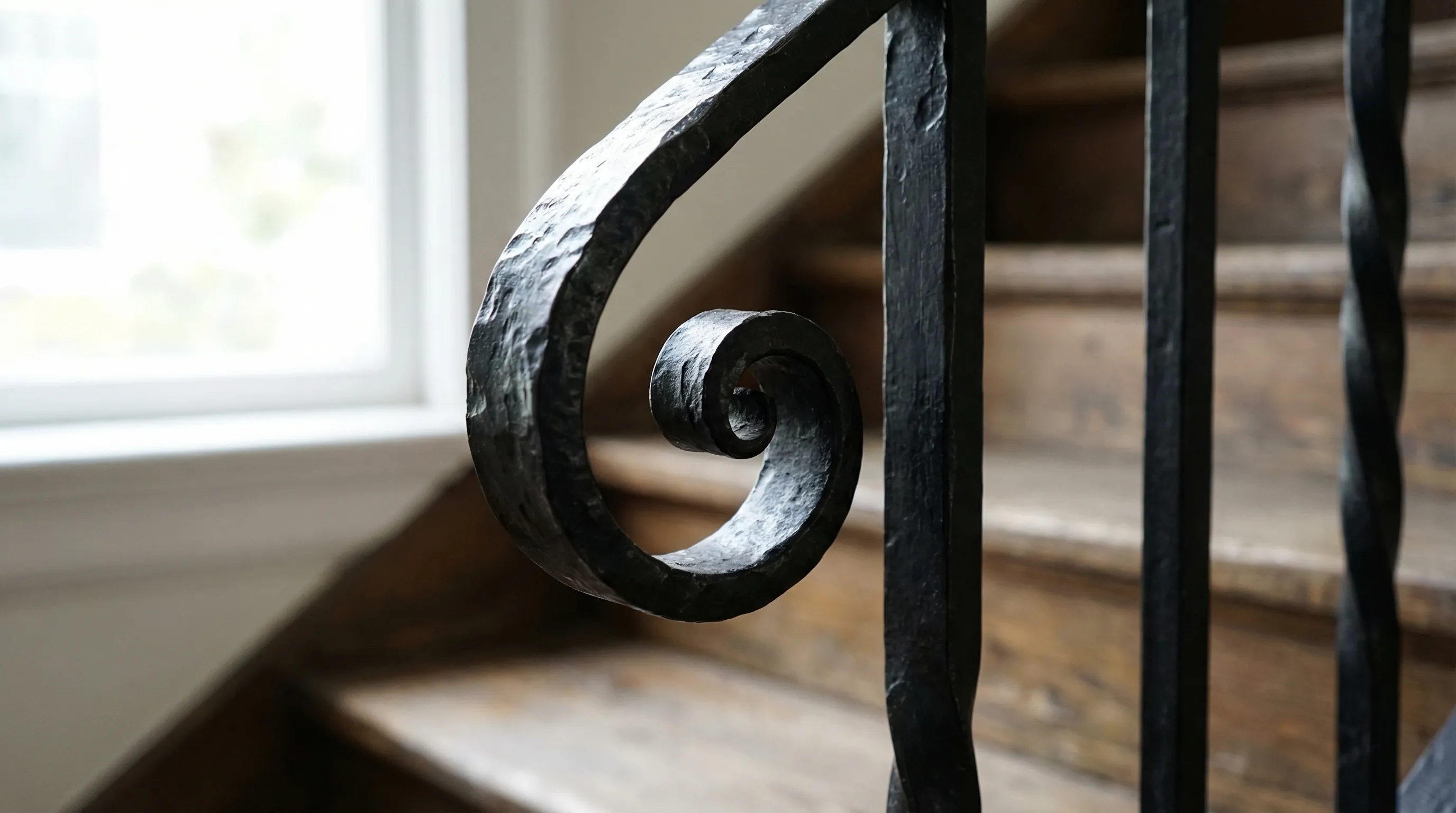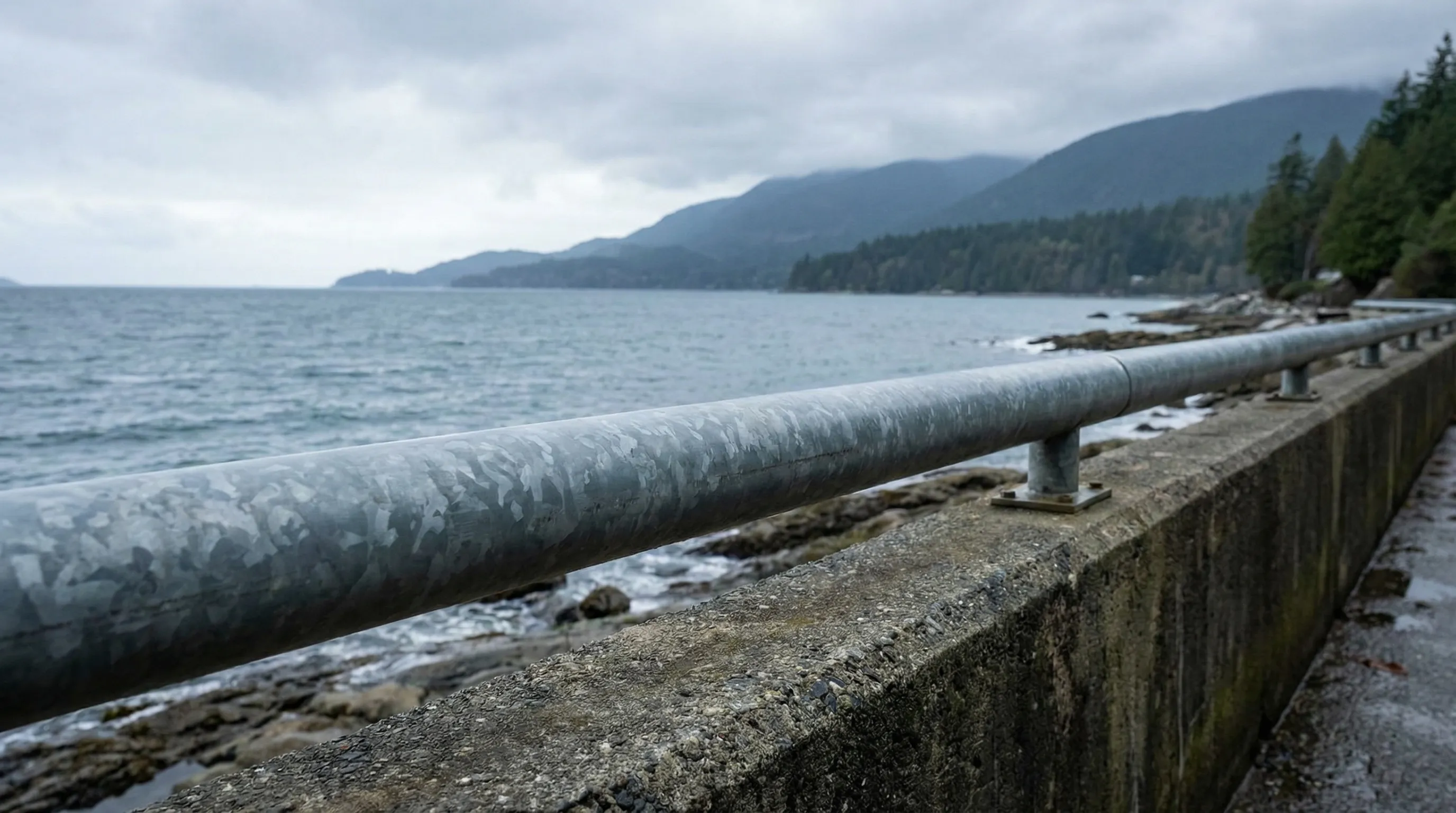
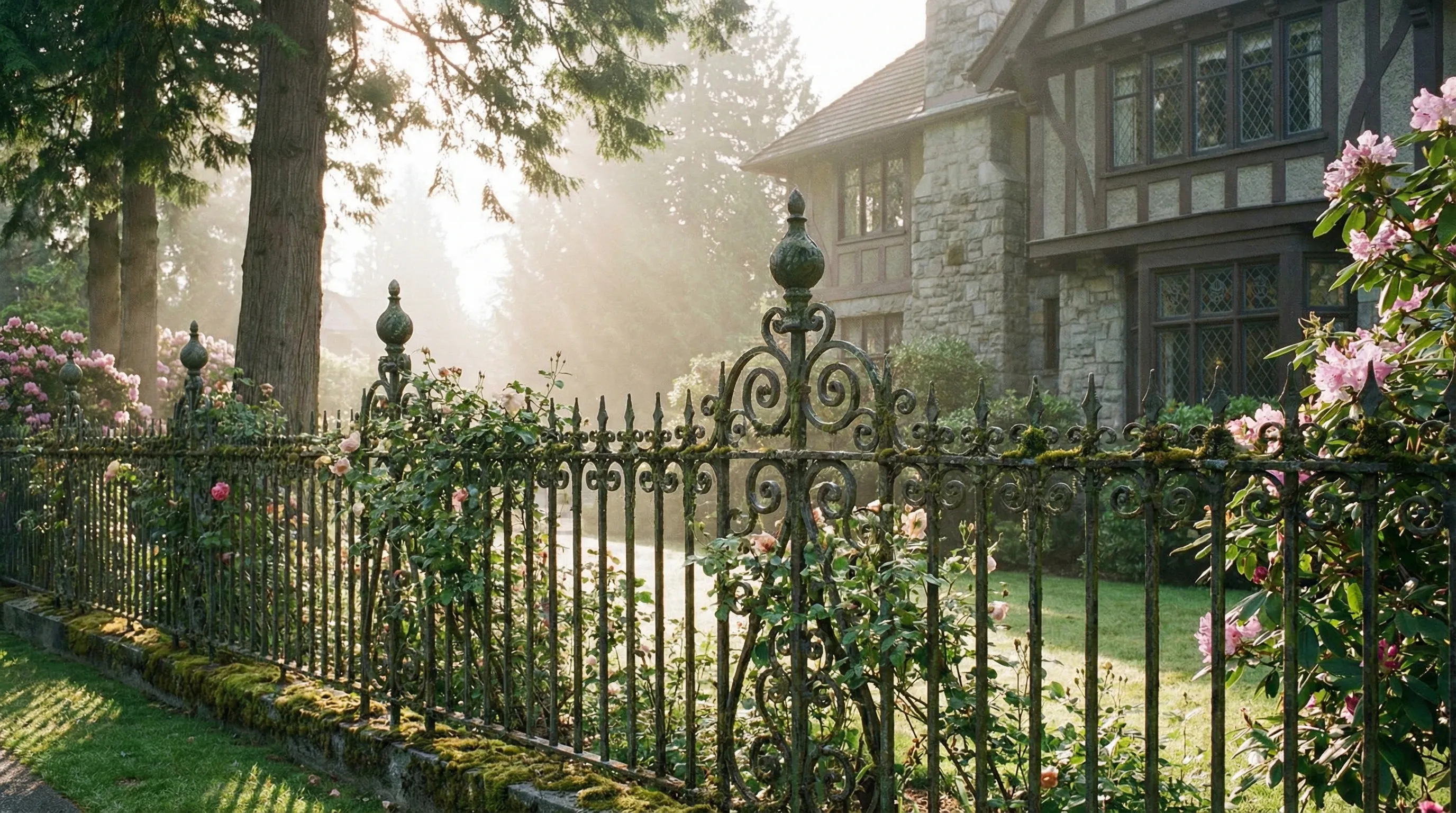
Walk First Shaughnessy on a misty April morning and the wrought iron tells you the story of the neighbourhood. The big estates between 16th and King Edward, built between 1907 and 1925 by the Canadian Pacific Railway as Vancouver’s first deliberately exclusive subdivision, were fenced and gated in the same period — hand-forged iron, much of it imported from Britain, designed to outlast the families that commissioned it. A century later it’s mostly still there. It just needs help.
This is what heritage iron restoration actually looks like in Vancouver — for First Shaughnessy estates, West End character apartment buildings, and the heritage homes scattered through Mount Pleasant, Strathcona, and Kitsilano. The work is genuinely different from fabricating new ironwork. The economics are different, the process is different, and the regulatory path through the City of Vancouver heritage planning team is different.
What’s actually still standing
The iron we restore in these neighbourhoods comes from a specific period and a specific tradition. First Shaughnessy was developed by the CPR starting in 1907 with minimum home values of $6,000 — equivalent to several million dollars today — and the fences and gates were spec’d to match. Glen Brae, the 1910 mansion at 1690 Matthews Avenue with its twin domed towers, has an outstanding wrought iron fence imported from Glasgow that’s still in place. That story is repeated quietly across the neighbourhood: hand-forged scrollwork, ornate finials, cast iron post caps, cast medallions, gates with original Birmingham latches.
The West End’s heritage ironwork is from a slightly different era. By the time Shaughnessy was developing, the West End’s role as Vancouver’s exclusive residential district was shifting. The wrought iron there is more often on apartment buildings, apartment courtyard gates, and surviving character houses from the 1900–1925 period. The detail work tends to be lighter and more residential in scale than the Shaughnessy estates.
The single most important fact about all of it: real wrought iron stopped being manufactured commercially in 1973. The iron these pieces are made from — low-carbon iron with silicate slag inclusions, fibrous grain, exceptional corrosion resistance — doesn’t exist anymore as a new material. Modern hand-forged “wrought iron” is mild steel forged in the same techniques. The visual result is similar; the underlying metallurgy is not.
How an assessment actually starts
When we get a call from a Shaughnessy or West End property owner about heritage iron, the first visit is an assessment, not a quote. We’re trying to answer four questions:
- What’s the original material? Real wrought iron versus early mild steel versus cast iron — each behaves differently under restoration. Wrought iron can be reforged. Cast iron cannot — it has to be replaced or arc-brazed
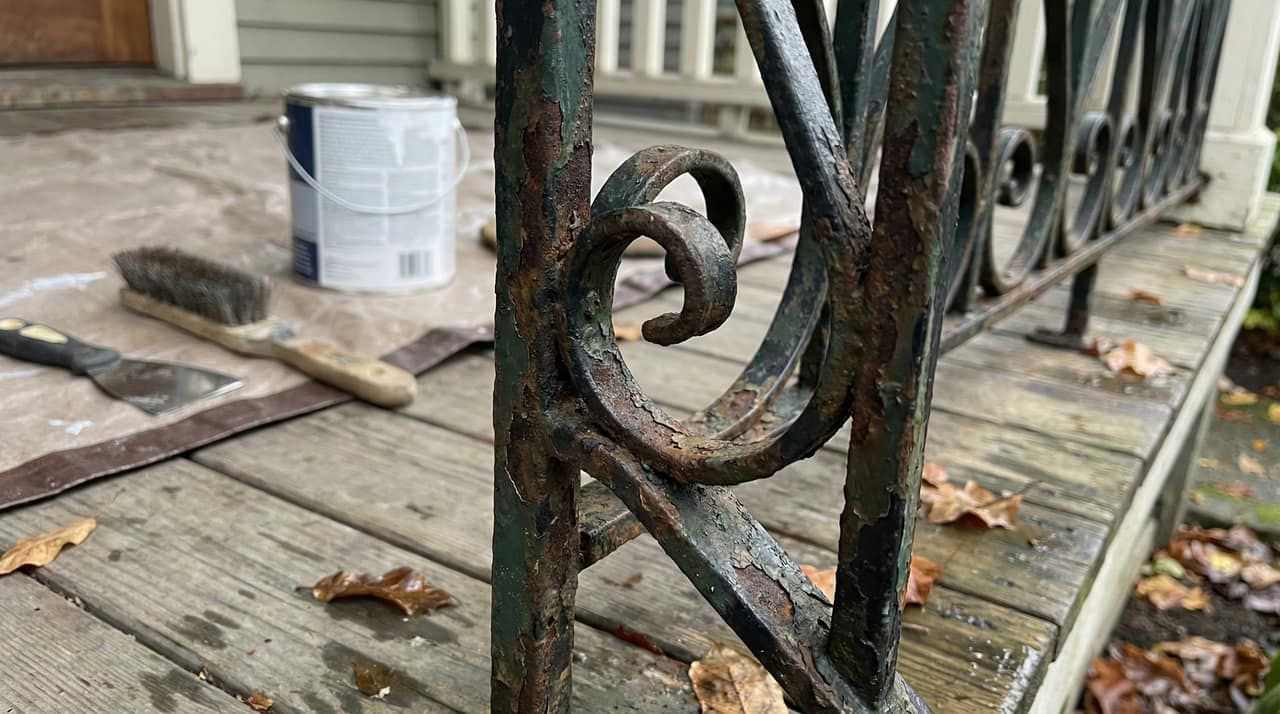
- What percentage is salvageable? A bad-looking fence is often 80% sound under the rust scale. A good-looking fence with hidden internal corrosion in the hollow elements can be the opposite
- What’s been changed? Most heritage iron in Vancouver has had at least one round of replacement or modification — sometimes a Sunday afternoon weld in the 1960s that’s holding up the whole gate. We need to know what’s original and what’s not
- What does the City heritage process require? If the home is on the Vancouver Heritage Register or in First Shaughnessy’s heritage conservation area, the City has approval rights over the restoration approach
The assessment usually takes 1–2 hours on site, plus time to pull historical photos from the Vancouver Archives if available. For homes with a documented history, we can sometimes find period photographs of the original fence in place — a huge help when matching missing elements.
The salvage and forge process
A typical restoration project — say a 60 ft section of Shaughnessy estate fence with 3 missing scrolls and significant rust scale across two gate posts — moves through the shop in a sequence:
Removal and inventory. The fence sections come down in numbered panels and come back to our Burnaby shop. Every original piece is photographed in situ first, then again on the bench, with notes on what’s intact, what’s structurally compromised, and what’s missing.
Stripping. Old paint and rust scale come off with a combination of media blasting (gentle aluminum oxide on the original metal, never aggressive steel grit) and hand work for the scroll details. The goal is to expose sound metal without damaging the hammer marks and tool work that define the original character.
Salvage and structural assessment. Each element is checked for remaining wall thickness. We’ve cut into pieces that looked solid and found the steel was 30% gone from the inside out. Anything below structural minimum gets replaced.
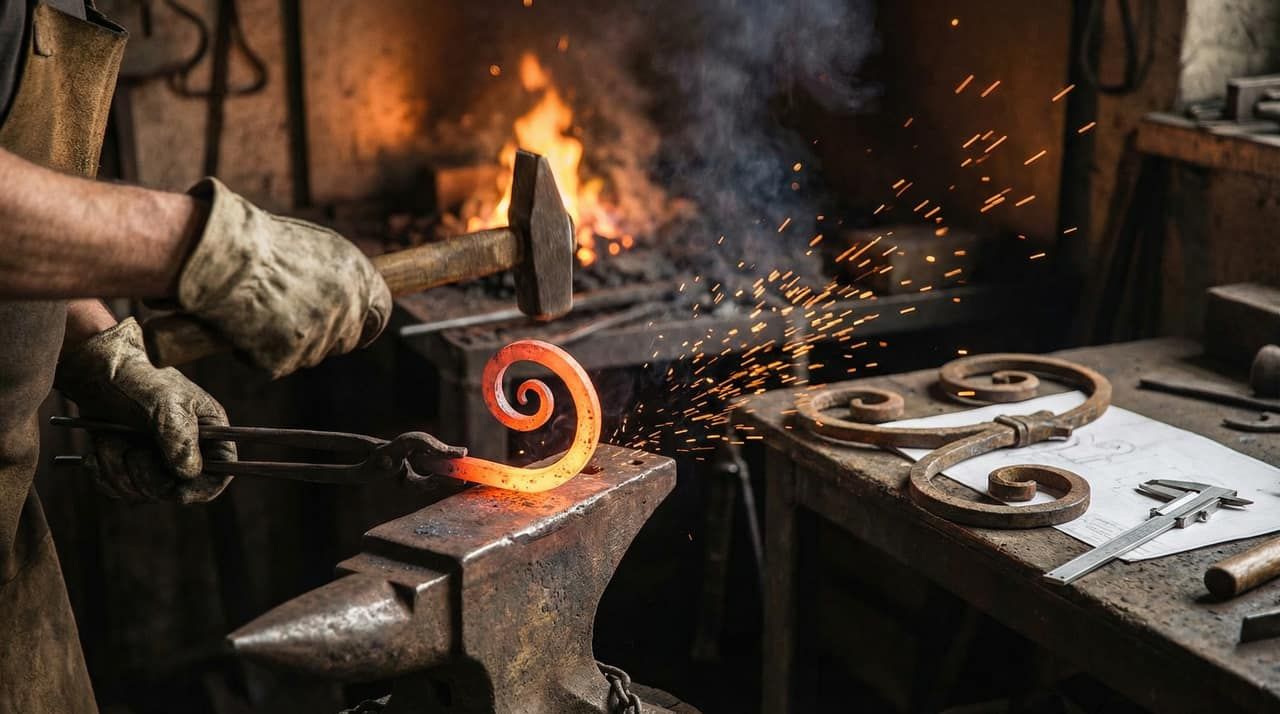
Forge matching. Replacement scrolls, finials, and joints are hand-forged at our shop’s anvil to match the original profile, taper, and hammer marks. The blacksmith works with the original piece on the bench beside the anvil for direct comparison. This is the slowest step — a single replacement scroll can take 3–6 hours including reheats and adjustment.
Reassembly. The restored panels go back together using period-appropriate joinery. Where original riveted or collared joints exist, we maintain that detailing rather than substituting modern welded connections. Hidden welded reinforcement is acceptable; visible welding on heritage joinery is not.
Finish. Historically accurate finishes for Vancouver heritage ironwork are an oil-based metal primer and one or two coats of flat or satin black metal paint. For longevity in the Pacific Northwest climate, we often specify a thin hot-dip galvanizing layer underneath as a duplex system, with the final paint applied over the galvanized substrate to give the same visual result as the historical finish but with much longer service life. We covered this in our galvanizing vs. powder coating for the Vancouver coast article.
The City of Vancouver heritage process
Heritage iron restoration in Vancouver is regulated through the Vancouver Heritage Register and, for First Shaughnessy specifically, the First Shaughnessy heritage conservation area policies. The process roughly:
- Confirm heritage status — is the home listed on the Heritage Register, is it in a designated conservation area, or is the iron itself a designated character feature?
- Pre-application meeting with heritage planning — for any non-trivial work, this 30-minute conversation usually saves weeks downstream
- Heritage Alteration Permit application if the work goes beyond pure like-for-like restoration
- Restoration drawings and method statement — what’s being kept, what’s being replaced, and how the new work will match
- Inspection during work for designated properties — the heritage planner may want to see the salvaged material before reinstall
Like-for-like restoration of an original iron fence with hand-forged matching elements is the easiest path. Modifications, height changes, or full replacement with reproduction are harder and sometimes refused.
What this costs in 2026
Real Metro Vancouver numbers:
- Light restoration (clean, repair, refinish, no forge work) — $200–$350 per linear foot
- Moderate restoration (some salvage, 5–15% forged replacement, period finish) — $400–$650 per linear foot
- Heavy restoration (significant salvage work, multiple forged replacement elements, post and base rebuild) — $700–$1,200 per linear foot
- Heritage gate restoration (single pedestrian gate, full process, period finish) — typically $8,000–$18,000
- Heritage gate restoration (carriage gate with original cast hardware, automated operator, period detail) — $25,000–$60,000+
These numbers are higher than equivalent new fabrication for one reason: forge time. A new ornamental fence built from welded mild steel can be detailed quickly. Hand-forging matching elements one at a time, with period-appropriate joinery, is a fundamentally slower process. The cost premium is usually justified by what it preserves — both the historic material and the home’s listing on the Heritage Register.
Where most projects start
Most of our heritage restoration clients in Shaughnessy, the West End, and Mount Pleasant come to us through one of three doors: their architect on a heritage renovation, the City’s heritage planning team referring them, or word of mouth from another heritage homeowner in the neighbourhood. The conversation always starts the same way — bring the photos, describe the condition, and we’ll come look. The on-site assessment is the only honest way to scope a heritage iron project.
For more on the forging techniques that make heritage matching possible, see our forged vs. welded ironwork guide. If you’re managing a heritage property and need an honest read on whether your existing iron can be restored, the Burnaby shop is the right place to start.