People use the words “forged,” “welded,” “wrought iron,” and “ornamental steel” interchangeably, and the result is a lot of confusion when an architect or homeowner is trying to spec a custom railing. The truth is that forged and welded ironwork are entirely different processes that produce different results, take different amounts of time, and cost different money. They’re also often combined on the same project — most of what we fabricate at our Burnaby shop uses both techniques in the same piece.
Here’s how to think about the choice for a Metro Vancouver project, including what hand-forging actually looks like in practice, where welded fabrication wins, and why the distinction matters for heritage work in places like Shaughnessy and the West End.
What forging actually is
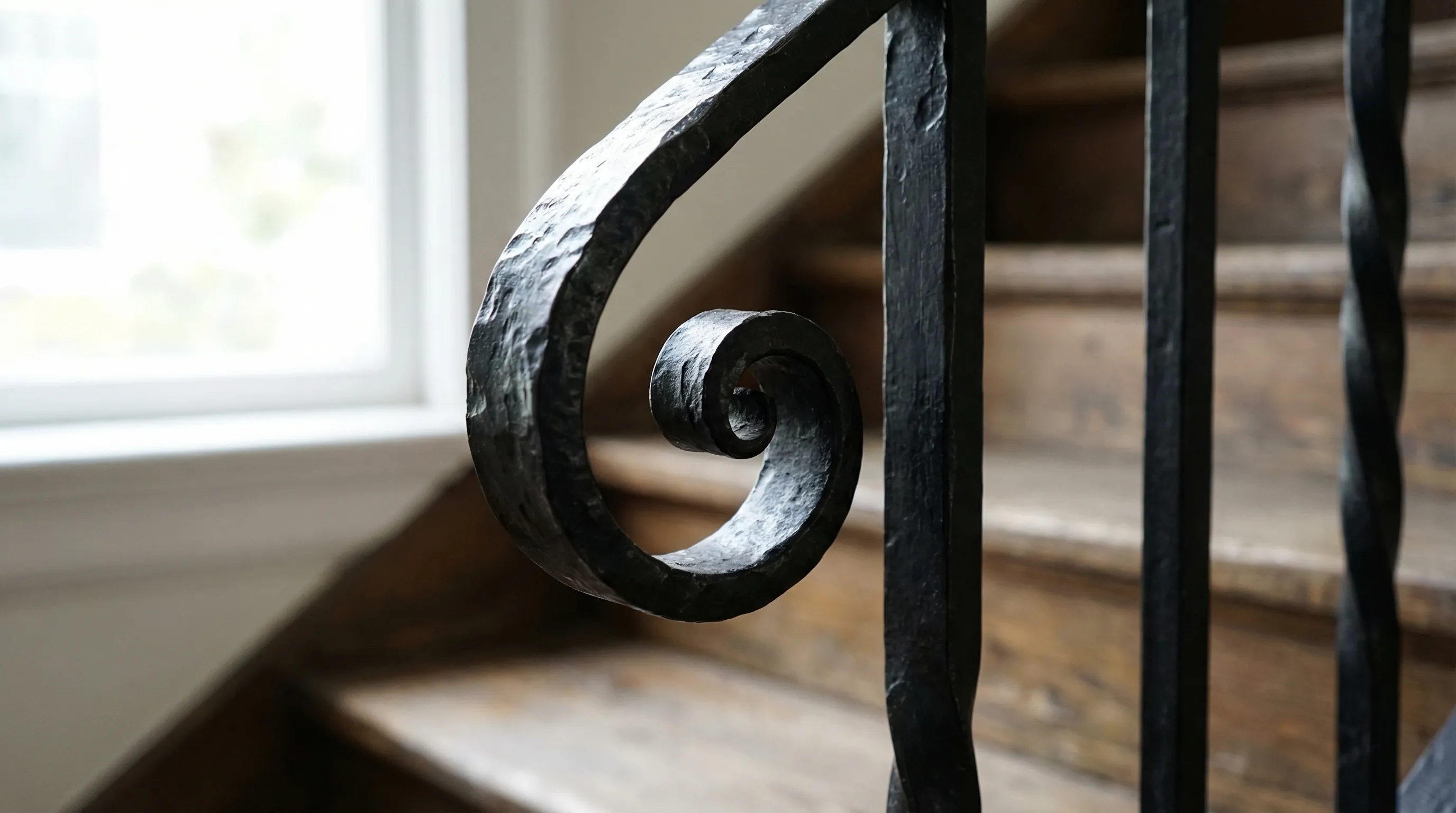
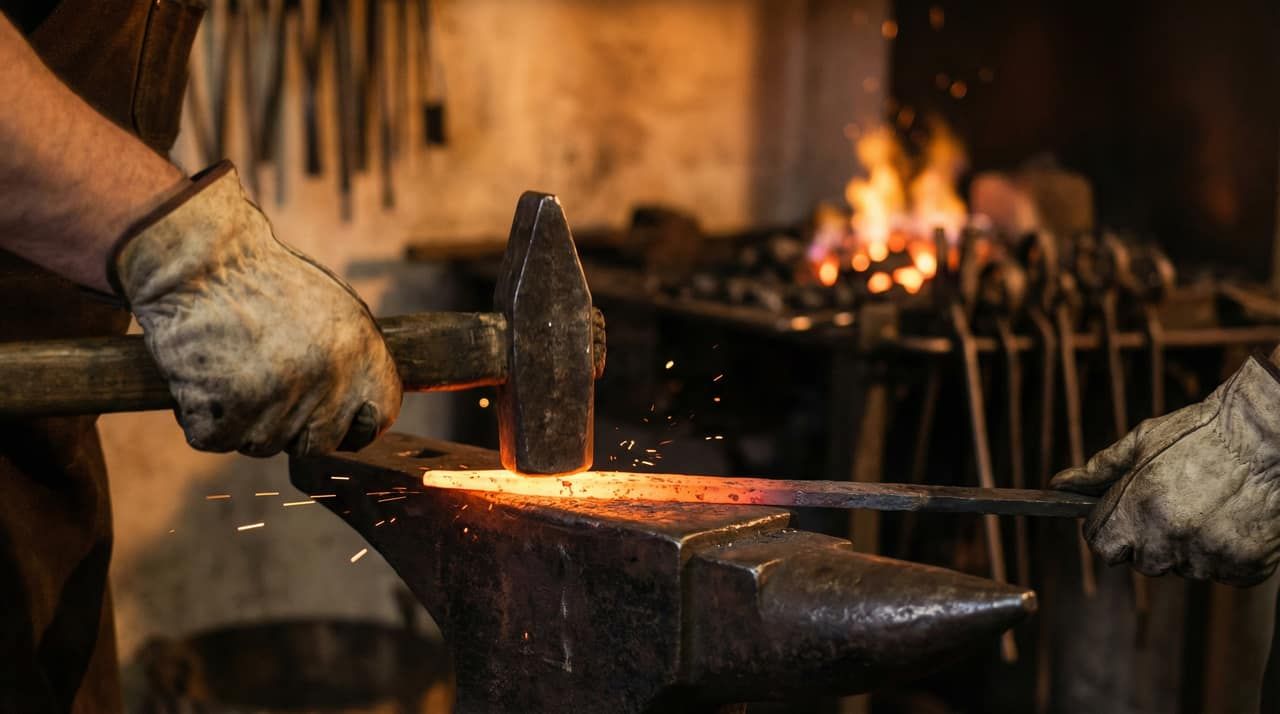
Forging is the original way iron was shaped — heat the metal until it glows orange (around 1,100°C / 2,000°F), then beat it on an anvil with a hammer until it takes the shape you want. A blacksmith doing forge work uses a coal or gas forge, an anvil, hammers, tongs, and a vise. The steel itself is the tool. There’s no welding rod, no filler metal, no electricity going through the joint.
When two pieces of forged steel need to be joined, traditional blacksmithing uses forge welding: bring both pieces to white-hot temperatures (above 1,200°C), overlap them on the anvil, and hammer them together hard enough to fuse them in the solid state. Done correctly, the joint is invisible and as strong as the parent metal. Done incorrectly, it falls apart the first time you stress it.
The other thing forging does is change the steel itself. Hammering hot steel re-aligns the grain structure along the lines of the hammer blows. A forged scroll or taper has continuous grain following the curve, which is one reason hand-forged hardware historically outlasted cast or machined parts.
What welded fabrication actually is
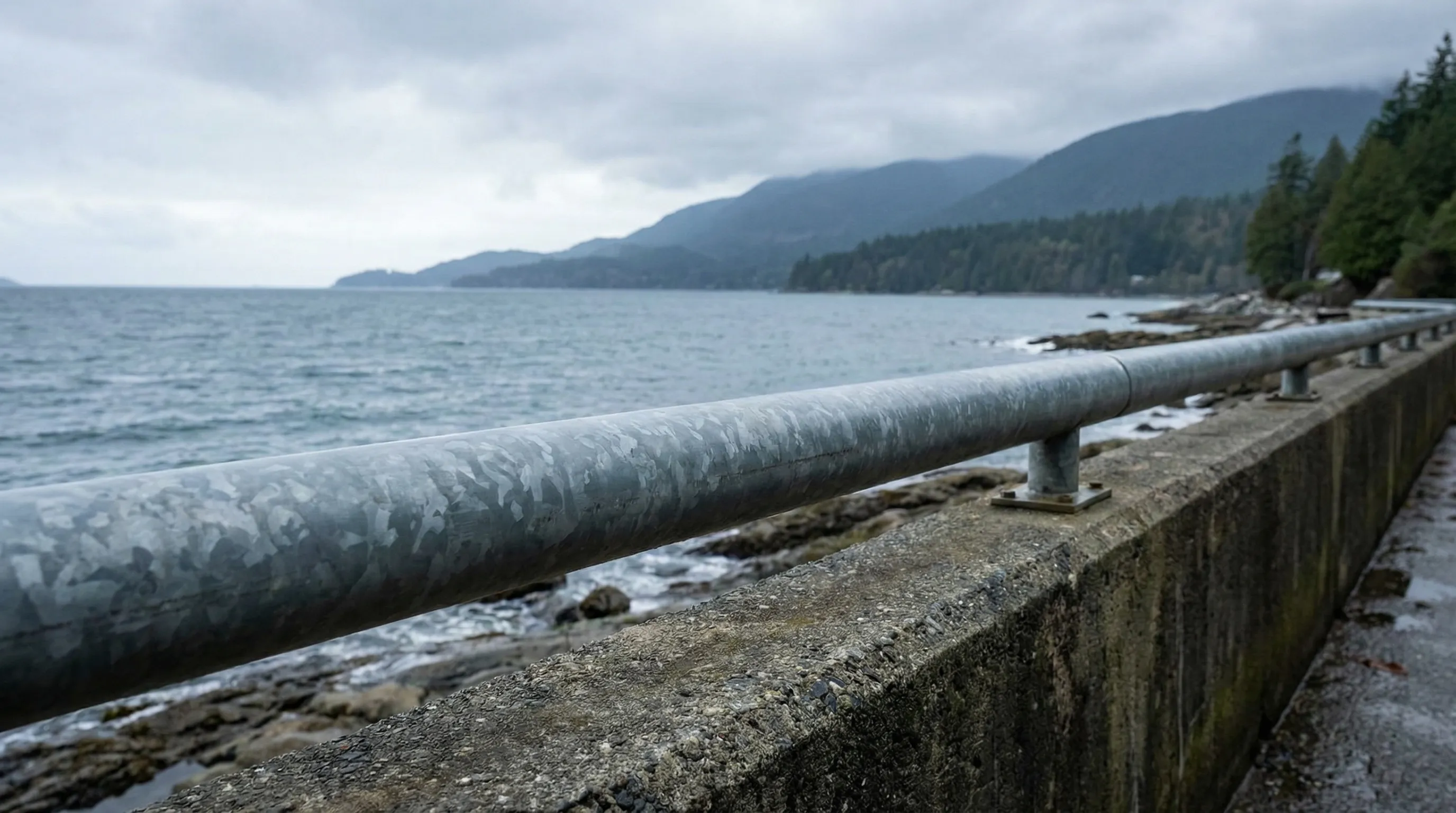
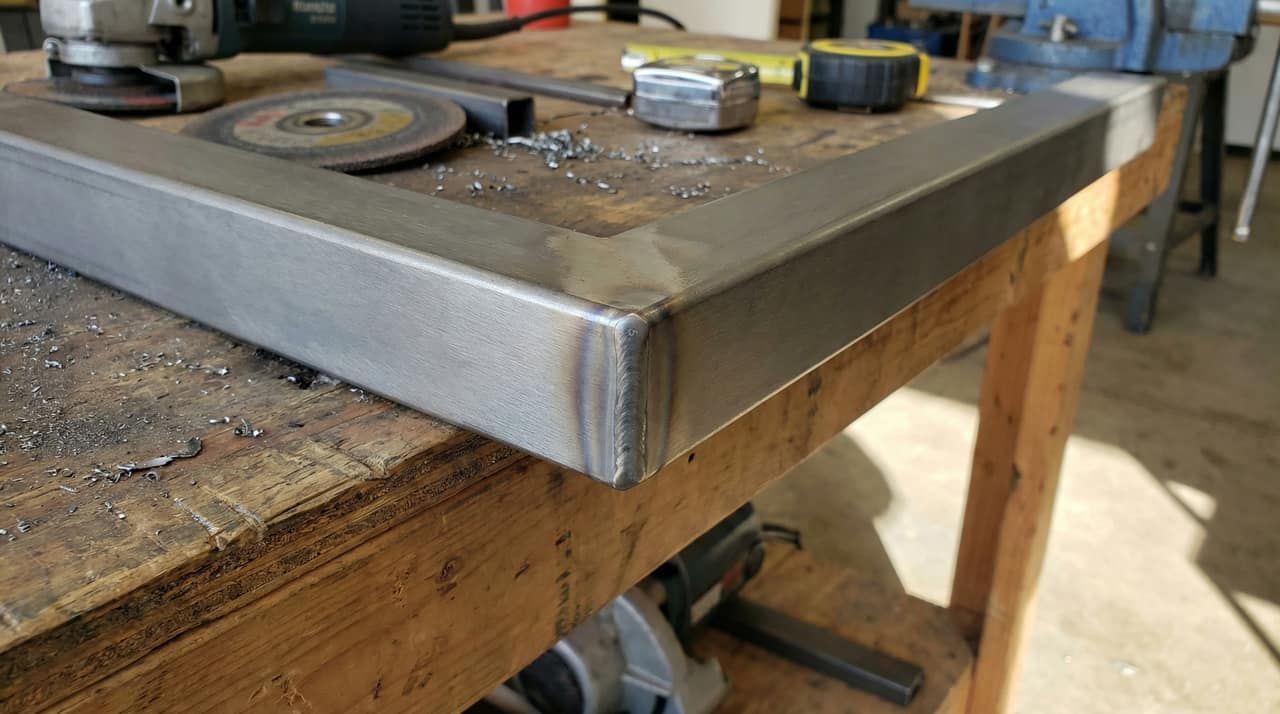
Welded steel fabrication starts with mild steel sections — flat bar, square tube, round bar, channel — that come pre-formed from a steel mill. The fabricator cuts them to length on a saw, machines the joint geometry, and joins them with arc welding: typically MIG (gas metal arc, fast and clean) or TIG (gas tungsten arc, slower but more precise).
The whole process happens cold. There’s no glowing steel, no anvil, no hammer marks. The fabricator works from shop drawings, measures everything to a fraction of a millimetre, and builds the same piece the same way every time. A welded railing made today and a copy made next year will be identical to within manufacturing tolerance.
Welded fabrication is fast and precise, which is why almost all structural steel and most modern architectural metalwork is welded rather than forged. A welded steel handrail can be ready in days; a forged version of the same railing takes weeks.
Where forging wins
Forging is the right answer when the project asks for character, organic shape, or historical accuracy. Specifically:
- Heritage restoration — anything that needs to match an original wrought iron piece from before 1950 should be hand-forged. The original maker did it that way and the visual language doesn’t translate to welded fabrication
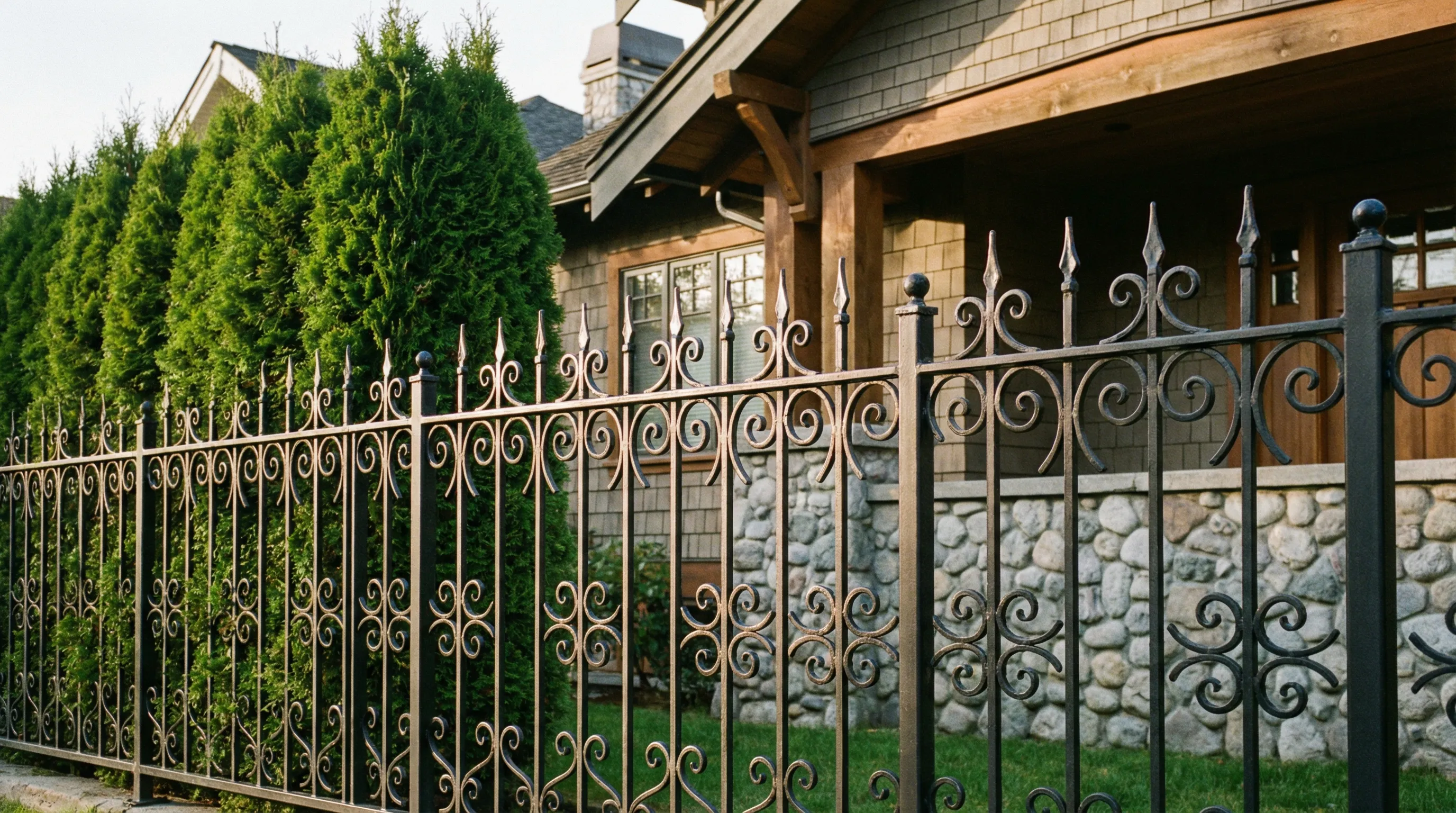
- Decorative scrolls, finials, leaves, baskets, twists — these elements look fundamentally different when shaped by hand. The hammer marks and slight irregularities are part of what makes them feel handmade
- Hammered handrails — a forged top rail with planishing marks reads completely differently from a smooth tube
- One-of-a-kind custom pieces — if the design will only be made once and the client wants it to feel hand-tooled, the cost premium is worth it
The other thing forging does well is forgive imperfection. A forged scroll doesn’t have to be mathematically identical to its neighbour — the slight variation is what makes it look hand-made. We’ve fabricated forged railings for projects in West Vancouver and Shaughnessy where the architect specifically asked for non-uniform scroll geometry to read as period-appropriate.
Where welded fabrication wins
Welded steel is the right answer for almost everything else:
- Structural steel — beams, columns, connections, moment frames. Forging is irrelevant here
- Modern architectural railings — clean lines, square tube, glass infill, cable infill. The aesthetic is precision, not handwork
- Repeatable production runs — 200 ft of identical commercial guardrail for a mid-rise lobby in downtown Vancouver
- Cost-sensitive residential projects — most homeowners want clean, contemporary, and within budget
- Anything load-bearing where the C.W.B. certified weld procedures matter — structural connections need documented welds with traceable filler metal
A welded mild steel railing made by a C.W.B. certified shop to CSA W47.1 standards meets every load requirement under the BC Building Code’s Section 9.8.8. Forging doesn’t add structural capacity to a modern railing — the steel section sizes already do that work. Forging adds visual character, not strength.
Why most real projects use both
Almost every custom iron project we deliver out of our Burnaby shop combines both processes. The structural frame — posts, top rail, bottom rail, gate hinges, brackets — is welded mild steel because that’s the fastest, most precise way to build the load-bearing skeleton. The decorative elements — scrolls, twists, leaves, hammered finials, basket details — are hand-forged because that’s what gives the piece visual character.
A typical project flow:
- Design and shop drawings — finalized with the architect or homeowner, detailing both the welded structure and the forged elements
- Welded frame fabrication — posts, rails, and brackets cut and welded on the shop floor by a qualified C.W.B. welder
- Forge work — the blacksmith heats and hammers each decorative element on the anvil, one at a time
- Assembly — forged elements welded into the welded frame, joints ground smooth where needed
- Finishing — sandblast, hot-dip galvanize for coastal exposure, then powder coat or hand-applied patina
The combination is what most clients actually want: the precision and code compliance of modern welded fabrication, with the visual character of traditional forging where it matters most.
What this means for cost and timeline
Real numbers from recent Metro Vancouver projects:
- Welded steel railing, modern design, residential interior — $250–$450 per linear foot installed, 4–6 week lead time
- Welded steel railing with light forged details (finials, twists) — $350–$550 per linear foot installed, 6–8 week lead time
- Hand-forged heritage-style railing, scrolls and ornamental elements throughout — $500–$900 per linear foot installed, 8–12 week lead time
- Restoration of a designated heritage iron piece in Shaughnessy or the West End — quoted custom, often $1,000+ per linear foot because of the matching and re-forging required
The lead time difference is the more important number. A welded railing for a Burnaby new build can be in fabrication two weeks after drawings approve. A hand-forged railing for a Shaughnessy heritage restoration needs forge time scheduled around the rest of the shop’s production, and that pushes lead times closer to three months.
How to make the call
If the design language is contemporary, the budget is constrained, or the project is structural, welded is the answer. If the project is heritage restoration, the design language is traditional, or the client specifically wants visible handwork, forged earns its premium. For everything in between — most custom residential ironwork in Metro Vancouver — the right answer is welded structure with forged decorative elements where they’ll be seen.
The conversation we have at the shop with every custom client starts with these questions: where will the piece be installed, who will see it close up, what’s the design era, and what’s the budget. The forged-vs-welded decision falls out of those answers, not the other way around.
For more on how custom metal projects actually move through fabrication, see our custom metal fabrication process guide and the broader guide to custom metal fabrication in Vancouver. If you’re starting a project that might want a forged element — even just a finial or a hand-hammered handrail — bring the drawings to the Burnaby shop and we can show you the difference in person.