For architects and general contractors
Custom fabrication for architects and general contractors
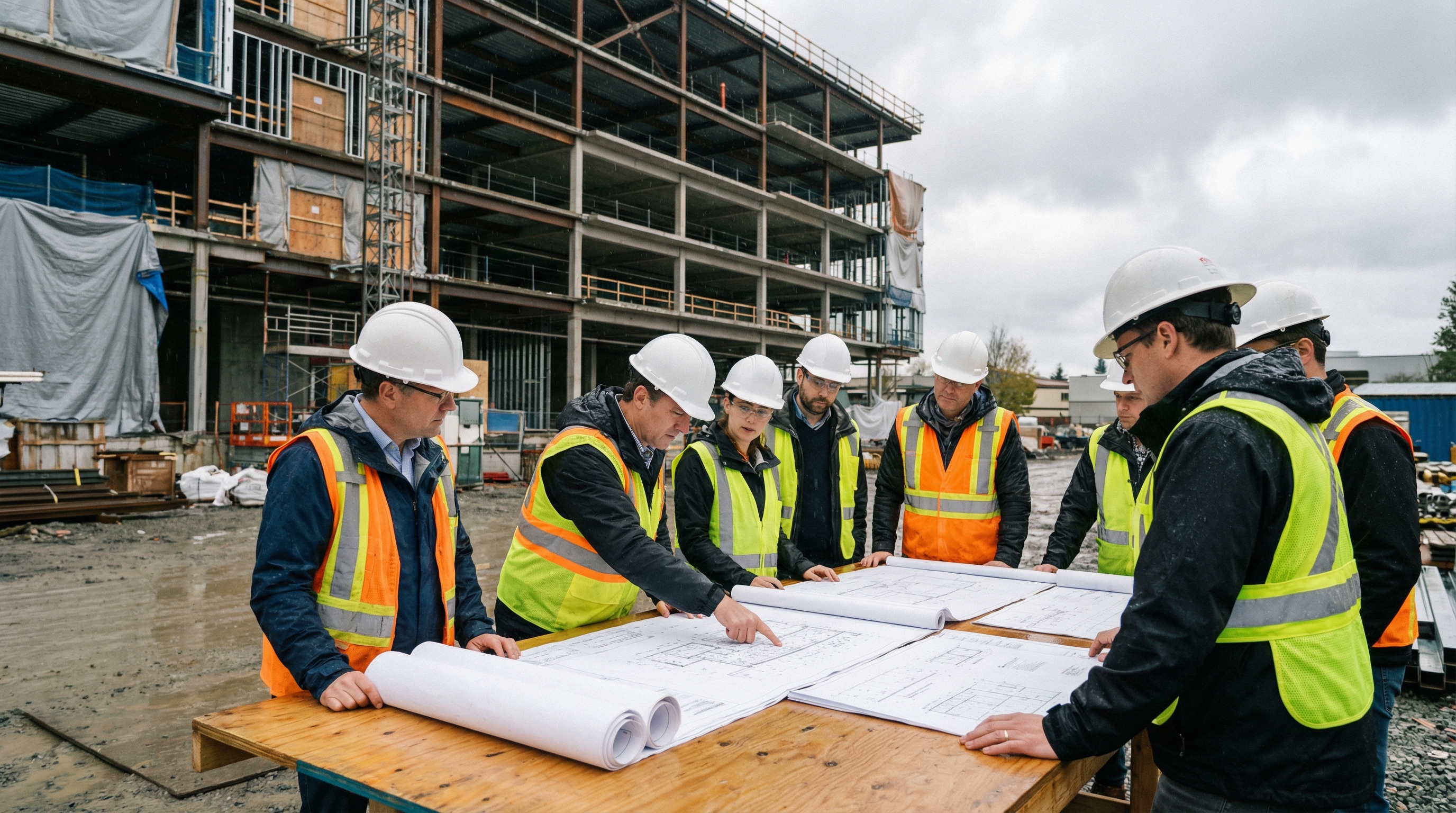
This page is for the people who specify and coordinate custom fabrication on commercial and institutional projects in Metro Vancouver. Architects designing the metalwork. Structural engineers reviewing the connections. GCs scheduling the trades. We have been working with all three for years and the coordination model is something we are set up for. Here is what that actually looks like.
For architects
On the architect side, the value of working with a real custom fabrication shop is that the design intent survives the trip from drawing to assembly. We read your drawings carefully, ask the questions that matter, and produce shop drawings that match what you specified.
What we need from you
- Architectural drawings showing the metalwork in context — plans, elevations, sections, details
- Material specifications and finish callouts (RAL colors, mechanical finishes, gauge requirements)
- Reference images or samples for any finish that requires visual matching
- Coordination notes for adjacent trades (drywall, glass, flooring, structure)
What we produce for you
- Detailed 3D shop drawings for review and approval
- Sample boards for finishes when required
- Material data sheets for products and coatings
- RFI responses within 24–48 hours during the review and fabrication phases
For general contractors
On the GC side, the value is that we hit our dates, our shop drawings come in on time, our installation crews show up, and we communicate proactively when something needs to change. The fabrication shop should be one of the easiest subs to manage on the project — and we work to be exactly that.
How we work with GCs
- Attend pre-construction coordination meetings when invited
- Submit shop drawings on the schedule the GC specifies
- Confirm material lead times before committing to fabrication dates
- Provide weekly status updates during fabrication on commercial projects
- Coordinate installation timing with adjacent trades (framers, drywall, glaziers)
- Handle change orders through formal documentation, not handshake deals
- Provide closeout documentation: as-builts, weld test reports, material certifications, warranty info
For structural engineers
On the engineering side, what you need from a fabrication shop is documentation that the welds will actually be made the way the drawings call for. Our CWB CSA W47.1 certification covers that. We provide weld procedure specifications, welder qualification records, and inspection documentation as part of every structural fabrication scope. See the CWB certification page for details on what the certification covers.
For seismic connections — which matter on every BC project — we coordinate directly with the engineer on connection details, fastener specifications, and any required testing or inspection.
Project history with architects, engineers, and GCs
We have project history with institutional clients across Metro Vancouver, including BCIT, Simon Fraser University, Surrey Memorial Hospital, Guildford Town Centre, Queen Mary School, and Collingwood School. We have collaborated on award-winning projects (VRCA 2021 Award of Excellence on Naikoon PH1, Georgia Awards experience). The references are available — call or email and we can connect you with architects, engineers, and GCs we have worked with.
How to engage us on a new project
- During design: Send drawings and ask for budgetary pricing. We can provide ROM pricing during DD or earlier to help with budgeting.
- During tender: We bid commercial projects through GC tender processes. Send tender packages to info@jeffandsimon.com.
- During construction: Once awarded, we kick off shop drawings, coordinate with the project team, and deliver to the schedule.
- During closeout: We provide as-built documentation, weld test reports, material certifications, and warranty information.
Common friction points and how we address them
Every architect and GC has been burned by fabricators at some point. Here are the friction points we see most often and how we work to avoid them:
- Slow shop drawing submission: We target 2–4 weeks for commercial shop drawings after project award. When the schedule is tight, we flex to meet it.
- Missing or incomplete submittals: Every submittal includes shop drawings, material data sheets, welder qualifications, and finish specs. Nothing gets forgotten.
- Late RFI responses: 24–48 hour response on incoming RFIs. When we need clarification, we ask promptly rather than guessing.
- Last-minute scope changes not documented: Every change request goes through formal change order process. We don\'t do verbal agreements on cost changes.
- Field modifications not captured in as-builts: Any field change is documented and rolled into the as-built drawings for closeout.
- Missing installation crews: Installation dates committed in writing are installation dates we show up for.
- Quality problems not caught before delivery: Final QC before anything leaves our shop. If something isn\'t right, we fix it before it goes on the truck.
Related reading
For the shop drawing and fabrication process in detail, see the shop drawings & process page. For the CWB certification that matters on structural work, see the CWB certified welding page. For the broader context on custom fabrication, start at the custom metal fabrication hub.
FAQs about working with architects and contractors
Do you handle the full RFI cycle on commercial projects?
Yes. We respond to RFIs within 24–48 hours on most commercial projects. We coordinate directly with the architect, structural engineer, and GC, and we keep RFI logs as part of project documentation. Slow RFI response is one of the most common complaints about fabricators on commercial work — we are set up to respond promptly because schedule depends on it.
Can you provide CSI-format submittals?
Yes. For commercial and institutional projects with formal submittal requirements, we produce shop drawings, product data sheets, sample boards (for finishes), and coordination documents in the format the spec requires. We have done CSI-format submittals on institutional projects across the Lower Mainland.
How do you handle change orders?
Change orders happen on every commercial project. We document the change request, price the impact (material, labour, schedule), submit the change order for approval, and then proceed once approved. We don't make changes without authorization, and we don't back-charge for changes that should have been caught earlier.
Do you carry the insurance levels commercial GCs require?
Yes. We carry general liability insurance at the levels typical for commercial construction in BC, and we are in good standing with WorkSafeBC. Insurance certificates are provided to GCs as part of project setup.
How do you handle scheduling on multi-trade commercial projects?
We attend coordination meetings, work to the GC's schedule, and provide installation crews on the dates committed. For complex sequences (e.g., stair installation between framing and drywall), we coordinate with the framer and the drywall contractor directly to make sure the handoff works.
What are your typical submittal timelines?
For residential scopes, shop drawings are usually submitted within 1–2 weeks of project award. For commercial scopes, submittal timelines follow the GC's construction schedule — we target 2–4 weeks for initial shop drawing submission after receiving approved contract documents. Revisions and resubmittals typically run 3–5 business days per round.
Do you provide Division 05 specifications guidance?
Yes. For architects developing project specifications, we can provide input on Division 05 (Metals) and related sections — Miscellaneous Metal Fabrications (05 50 00), Metal Fabrications (05 50 00), Decorative Metal (05 70 00), and related. We'll review draft spec sections and flag requirements that are unusual, cost-prohibitive, or overly prescriptive.
Can you participate in design assist or design-build delivery?
Yes. For design-build projects, we're comfortable participating from early concept through construction. For design assist, we can provide cost feedback during DD and CD, recommend structural solutions, and coordinate with the design team on details that affect fabricability. This is especially valuable for projects where custom metalwork is a significant cost driver.
How do you handle LEED and sustainability documentation?
For LEED projects, we provide material certifications showing recycled content (most structural steel has 90%+ recycled content from EAF production), regional sourcing documentation (where relevant), and EPDs (Environmental Product Declarations) from our steel suppliers. We can also provide fabrication waste diversion records for projects tracking construction waste.
What insurance and bonding do you provide on commercial projects?
We carry general liability and commercial auto insurance at standard BC commercial construction levels, plus builders risk coverage where required. We're in good standing with WorkSafeBC and we provide clearance letters on request. For bonded projects, we can obtain performance and labour & material payment bonds through our surety when the GC requires them.
Do you work on projects outside of Metro Vancouver?
Our primary service area is Metro Vancouver and the Sea-to-Sky corridor. For projects outside this area, we consider scope, schedule, and logistics — some projects are a fit, others aren't. Commercial work in Whistler and Squamish is common for us. Projects on Vancouver Island and in the Interior require specific logistics planning.
Can you provide cost estimates during design development?
Yes. For projects where metalwork is a significant scope item, we can provide ROM (rough order of magnitude) pricing during DD based on preliminary architectural drawings. This helps the design team understand the budget implications of different design options before CDs are finalized. ROM pricing is less precise than a formal bid but can prevent expensive surprises.
How do you handle commissioning and punch lists at closeout?
We attend punch walks when invited, document any identified items, and return to correct them within the timeframe agreed with the GC. Most of our fabrication work doesn't have formal commissioning requirements (we're not installing mechanical or electrical systems), but for projects with specific functional requirements (automated gates, for example), we verify the full operation and provide O&M documentation as part of closeout.
Get in touch
Need a fabrication quote?
Send drawings, photos, or even a rough description. We will review what you have and follow up with a quote or a conversation about next steps.